Physical Address
304 North Cardinal St.
Dorchester Center, MA 02124
Physical Address
304 North Cardinal St.
Dorchester Center, MA 02124

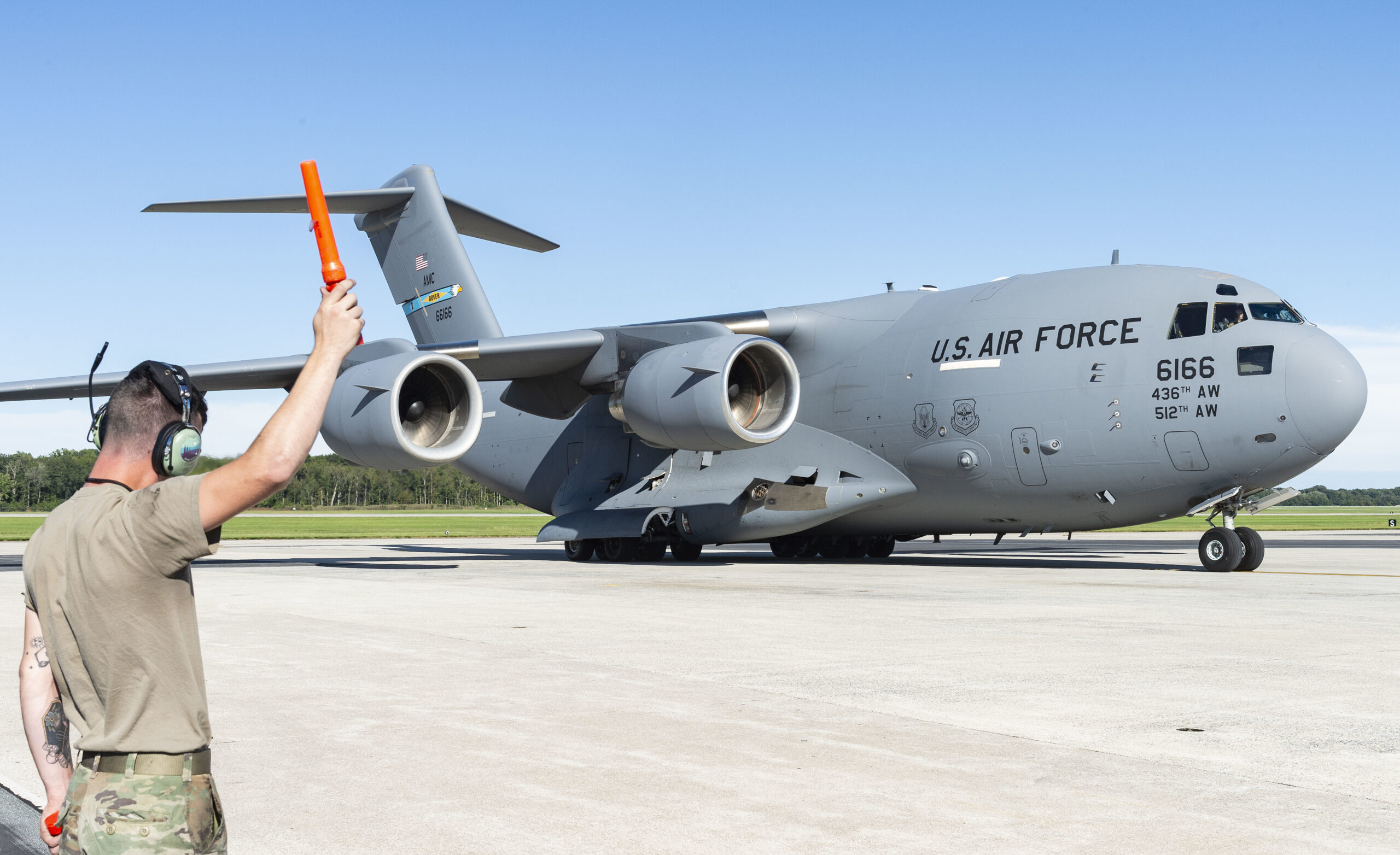
Military Sentinel, Washington – The U.S. Air Force has formally initiated an assessment into whether reviving the dormant C-17 production restart is viable as part of its overarching Next-Generation Airlift (NGAL) Analysis of Alternatives, Air Mobility Command (AMC) leadership confirmed this week. The study examines whether reconstituting the heavy airlifter line can provide an interim capacity bridge or whether the service must rely entirely on service-life extensions until an all-new platform emerges in the 2040s.
Speaking at a media roundtable at the Air, Space & Cyber Conference, AMC Commander Lt. Gen. Daniel Tulley acknowledged the effort while tempering expectations. “There’s always the option to service life extend the C-17, but the question came up… Once we terminate an assembly line, can we ever bring it back?” Tulley remarked. “Does somebody store all the machinery and the dies and whatnot, and can you bring that out? So we’re asking that question.”
The evaluation follows legislative pressure from Capitol Hill. In report language accompanying the Fiscal Year 2027 National Defense Authorization Act (NDAA), the House Armed Services Committee directed the Secretary of the Air Force to provide a formal briefing by March 1, 2027.
The congressional inquiry mandates a detailed accounting of:
Tooling, dies, and assembly jigs preserved following the 2015 shutdown of Boeing’s Long Beach plant.
Qualified tier-1 and sub-tier supplier availability across the airframe, Pratt & Whitney F117 turbofan engines, and avionics suites.
Non-recurring restart costs and schedule barriers required to re-establish a warm assembly pipeline.
Viability of foreign partner participation to defray reconstitution expenditures.
Boeing shuttered the final assembly line in Long Beach, California, in late 2015 after delivering the 279th airframe. With the site now largely repurposed, any line reopening would require establishing fresh manufacturing infrastructure rather than dusting off an idle plant.
Historic independent analyses underline substantial fiscal friction. A legacy RAND Corporation study estimated non-recurring costs of $2.1 billion to $2.7 billion simply to re-establish baseline C-17A production. Modernized derivatives such as a C-17B incorporating centerline gear for austere airstrips, advanced flaps, and upgraded defensive suites were projected between $4.6 billion and $7 billion prior to recurring unit buy costs. In current fiscal terms, acute supply chain inflation would push those threshold estimates higher.
The strategic rationale behind revisiting the platform centers on sheer fleet usage. The active mobility inventory relies on roughly 220 C-17s alongside 52 C-5M Super Galaxies. With C-5M mission-capable rates hovering near 37%, operational burden has shifted almost entirely onto the Globemaster III fleet during sustained logistics surges across European and Indo-Pacific theaters.
The Air Force Life Cycle Management Center issued a market survey RFI in mid-2026 seeking a unified successor to replace both airframes under NGAL. However, with initial operational capability (IOC) for NGAL not anticipated until roughly 2041, the Pentagon faces an operational gap. If industrial reconstituting costs prove prohibitive, the Air Force will double down on depot-level SLEP (Service Life Extension Programs) and digital avionics upgrades pushing current airframes to operate past the half-century mark.

James Whitfield is a defense news writer at Military Sentinel, covering military technology, naval operations, military aviation, international security, and global defense developments. His work focuses on providing informative reporting, relevant context, and accessible explanations of modern military affairs and emerging defense technologies.
Contact: [email protected]