Physical Address
304 North Cardinal St.
Dorchester Center, MA 02124
Physical Address
304 North Cardinal St.
Dorchester Center, MA 02124

Military Sentinel, Point Mugu – The U.S. Navy has successfully demonstrated a new mission-planning architecture designed to translate traditional human strike directives into machine-executable code for unmanned combat aircraft during the Gray Flag 2026 exercise at Point Mugu Sea Range, California.
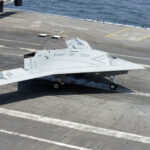
The live demonstration evaluated the Collaborative Autonomy Mission Planning (CAMP) system using a General Atomics MQ-20 Avenger jet as a surrogate platform. Managed by engineers within the Strike Planning and Execution Systems program office (PMA/PMX-281), the trial demonstrated that established mission generation software can directly interface with uncrewed systems operating in complex airspace.
Historically, carrier air wings plan strikes, reconnaissance, and defensive sweeps via the Collaborative Mission Planning Continuum (CMPC). However, converting conventional strike plans into actionable flight commands, sensor parameters, and tactical behaviors for autonomous aircraft requires substantial manual oversight.
CAMP acts as a real-time translation layer between human commanders and autonomous software stacks:
Ingestion: Directly imports human-authored operational parameters from standard CMPC mission files.
Translation: Compiles high-level objectives into machine-readable behavioral constraints and flight profiles.
Execution & Review: Uplinks instructions to the autonomous surrogate and captures flight data for post-mission operational debriefs.
“CAMP is about making autonomy more usable by integrating into mission environments with both manned and unmanned platforms,” said Capt. Todd “Toby” Keith, PMX-281 program manager. “This demonstration showed how we can connect the way operators plan missions today in the CMPC with the way autonomous aircraft will execute those missions.”
Capt. Keith noted that integrating these automated translation layers reduces operational strain on mission commanders and sharpens joint interoperability ahead of serial production.
The trial marks the latest milestone under the Navy’s Program Executive Office for Unmanned Aviation and Strike Weapons. While past initiatives such as the December 2025 EPIC trials linking BQM-177A target drones via Shield AI’s Hivemind autonomy centered on swarm combat dynamics, CAMP solves the upstream command-and-control pipeline.
Naval Air Systems Command (NAVAIR) recently initiated its formal Collaborative Combat Aircraft (CCA) tender, soliciting industry designs for carrier-compatible, weaponized unmanned platforms to fly from Nimitz– and Ford-class flight decks by the end of the decade. By standardizing the digital command interface now, the Navy ensures that future CCA platforms will fold into existing carrier strike group command structures without forcing aviators to learn separate planning tools.
While service officials have yet to announce a formal operational deployment timeline for CAMP, the software-defined translation architecture is designed to remain platform-agnostic, supporting both carrier-based CCA variants and future land-based uncrewed combat platforms.