Physical Address
304 North Cardinal St.
Dorchester Center, MA 02124
Physical Address
304 North Cardinal St.
Dorchester Center, MA 02124


Military Sentinel, Washington – The United States Navy has formally extended its flight test program for the Trident II D5 Submarine-Launched Ballistic Missile through 2031, securing a continuous operational validation pipeline as the service prepares to transition its strategic deterrent fleet to the upcoming Columbia-class ballistic missile submarines.
The multi-year extension ensures that the naval nuclear deterrent remains thoroughly evaluated for reliability, accuracy, and structural integrity under operational conditions. As the Ohio-class submarines gradually approach the end of their operational lifespans, the extended testing cadence guarantees that the Trident II D5 missile system will maintain an unbroken reliability record before transferring as the primary strategic payload for the next-generation hull design.
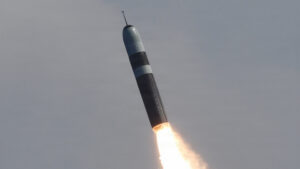
The Trident II D5 represents the backbone of the United States’ maritime nuclear triad. Flight evaluations are conducted periodically to verify the performance of aging components, guidance packages, and solid-propellant rocket motors under realistic flight profiles. By extending the testing timeline into the next decade, the Navy seeks to mitigate technical risks associated with component obsolescence and manufacturing shifts.
Naval ordnance officials emphasize that routine testing provides essential telemetry data regarding missile performance across extended service lives. These evaluations typically involve unarmed test launches conducted from submerged platforms in the Atlantic and Pacific test ranges, monitored closely by specialized tracking assets to measure trajectory precision and reentry vehicle separation.
The timing of the testing extension directly aligns with the ongoing construction and scheduled deployment of the Columbia-class ballistic missile submarines. The lead ship of the class, the future USS District of Columbia, is currently under construction to replace the aging Ohio-class boats, which have served as the mainstay of strategic deterrence since the late 1980s.
Each Columbia-class submarine is designed with 16 missile launch tubes, fewer than the 24 tubes found on the Ohio class, but built with a larger diameter and advanced Common Missile Compartment architecture. The Trident II D5 Life Extension (D5LE) variant is slated to serve as the baseline strategic weapon system for the new class well into the 2040s, making continuous flight testing a critical risk-reduction measure during the fleet transition.
The Trident II D5 missile system, manufactured primarily by Lockheed Martin Space, has undergone continuous modernization since its introduction into service in 1990. The D5 Life Extension program, initiated to update onboard electronics and guidance systems without altering the missile’s core aerodynamic and propulsion characteristics, ensures compatibility with modern defense networks.
Defense planners note that sustaining an active flight test schedule requires close coordination between naval ordnance commands, test range operators, and prime industrial contractors. The extended timeline through 2031 accommodates scheduled Commander’s Evaluation Tests and Follow-on Commanders Evaluation Tests, which serve as the definitive audit of the nation’s sea-based strategic readiness.
Maintaining a visible and rigorously tested strategic deterrent remains a core tenet of U.S. defense policy amidst evolving global security dynamics. The decision to extend testing through 2031 underscores the Department of Defense’s focus on seamless capability transitions, ensuring that no operational capability gap emerges as the Columbia-class submarines phase into active service alongside the existing fleet.
As the program progresses toward the next decade, naval officials will continue to review telemetry data from scheduled test flights to certify ongoing system reliability, validate manufacturing updates, and confirm alignment with strategic deterrence requirements.