Physical Address
304 North Cardinal St.
Dorchester Center, MA 02124
Physical Address
304 North Cardinal St.
Dorchester Center, MA 02124

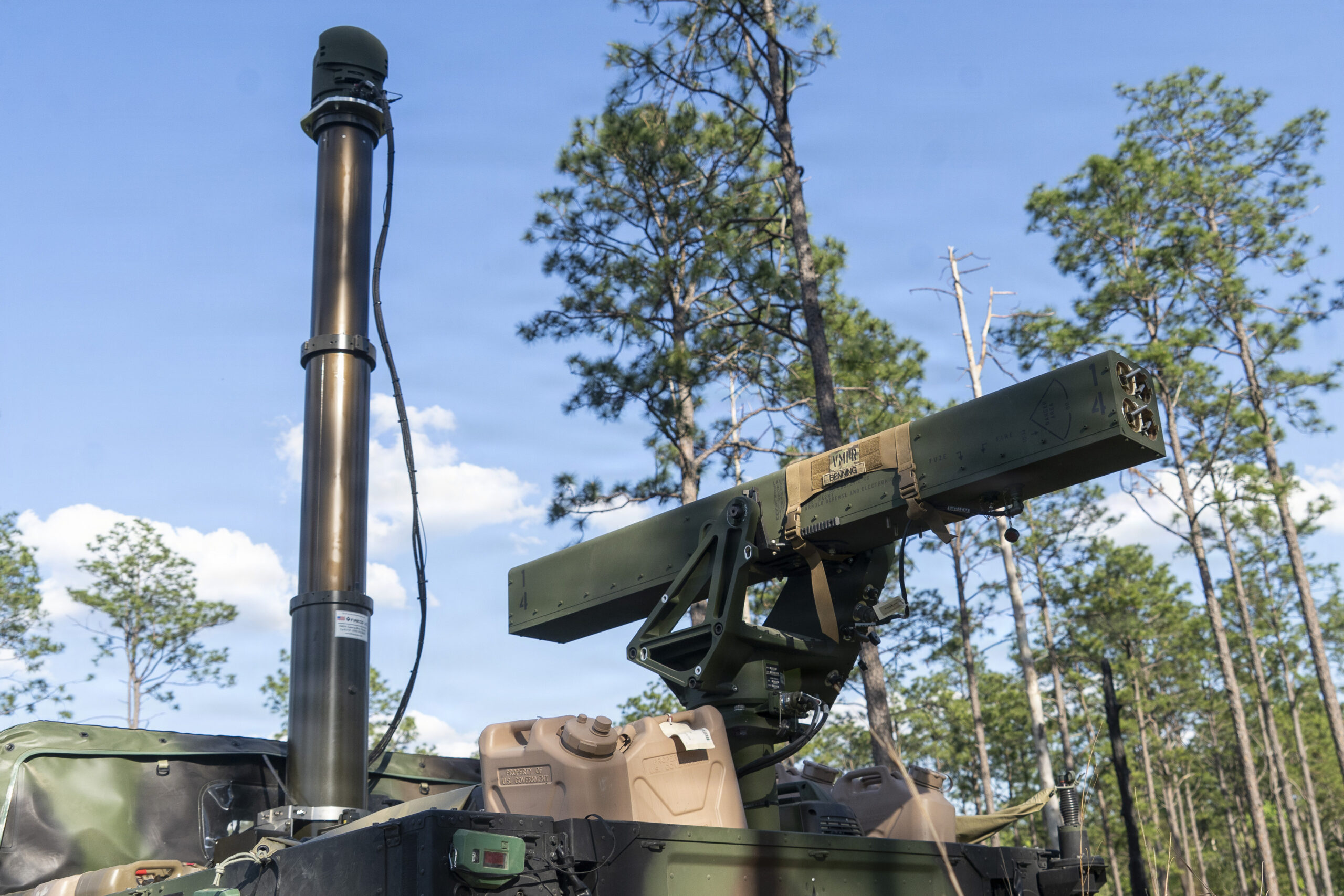
Military Sentinel, Washington – The U.S. Navy has selected defense contractor L3Harris Technologies to deliver its Vehicle-Agnostic Modular Palletized ISR Rocket Equipment (VAMPIRE) system for maritime deployment, addressing an urgent operational requirement to neutralize hostile unmanned aerial systems (UAS) without expending high-end missile inventories.
The acquisition signals a pivotal shift in naval air defense doctrine following sustained engagements in contested choke points like the Red Sea, where warships repeatedly expended multimillion-dollar interceptors against low-cost attack drones. By integrating the VAMPIRE counter-drone system, the service aims to rebalance unfavorable cost-exchange ratios across littoral combat environments.
Combat operations against Houthi-launched Shahed-family loitering munitions exposed an operational vulnerability for surface combatants. Standard surface-to-air interceptors—such as the RIM-162 Evolved SeaSparrow Missile (ESSM) and RIM-66 Standard Missile-2 (SM-2)—cost between $1 million and $2.5 million per shot, whereas opposing one-way attack drones cost under $30,000.
Deploying VAMPIRE directly aboard surface ships or fixed coastal outposts gives ship commanders a kinetic layer between short-range machine guns and vertical-launch missile cells.
“VAMPIRE is a flexible and effective system that meets the unique requirements of the U.S. Navy for littoral C-UxS defense,” said Tony Calderon, President of Targeting & Sensor Systems at L3Harris. “We’re engineering new capabilities to adapt to our customers’ missions and ruggedizing VAMPIRE against the environmental stresses of maritime environments.”
VAMPIRE was originally fielded in Ukraine in 2023 under rapid-acquisition pathways, logging over 350,000 combat operational hours defeating Group 1 through Group 3 aerial targets. The maritime-ruggedized configuration maintains a self-contained footprint that can mount to deck space on amphibious transports, auxiliary ships, or shore installations without penetrating the hull.
Effector: 70 mm Advanced Precision Kill Weapon System (APKWS II) laser-guided rockets
Launcher Capacity: 4-round palletized LAND-LGR4 launcher
Sensor Suite: WESCAM MX-10D RSTA independent stabilized electro-optical/infrared (EO/IR) turret with laser designator
Software Core: Widow mission management architecture paired with RF-sensing Wraith Shield tracking
Target Envelopes: Group 1 to Group 3 UAS, rotary-wing aircraft, and fast inshore attack craft (FIAC)
Cost Per Intercept: Approximately $30,000–$40,000 per guided rocket round
The system’s APKWS II rockets leverage proximity fuzes engineered specifically for aerial drone defeat, turning standard Hydra 70 unguided rockets into point-defense interceptors.
The deployment reflects a broader Department of Defense push toward tiered, distributed point defense. By offloading low-tier drone threats to modular 70 mm rocket stations, guided-missile destroyers and coastal combat units can conserve their limited vertical launch system (VLS) cells for hypersonic, ballistic, and anti-ship cruise missile threats.
The procurement also tests whether palletized roll-on/roll-off weapon stations can bridge current surface fleet capacity shortfalls while directed-energy systems and high-power microwave weapons mature for broad fleet adoption.