Physical Address
304 North Cardinal St.
Dorchester Center, MA 02124
Physical Address
304 North Cardinal St.
Dorchester Center, MA 02124

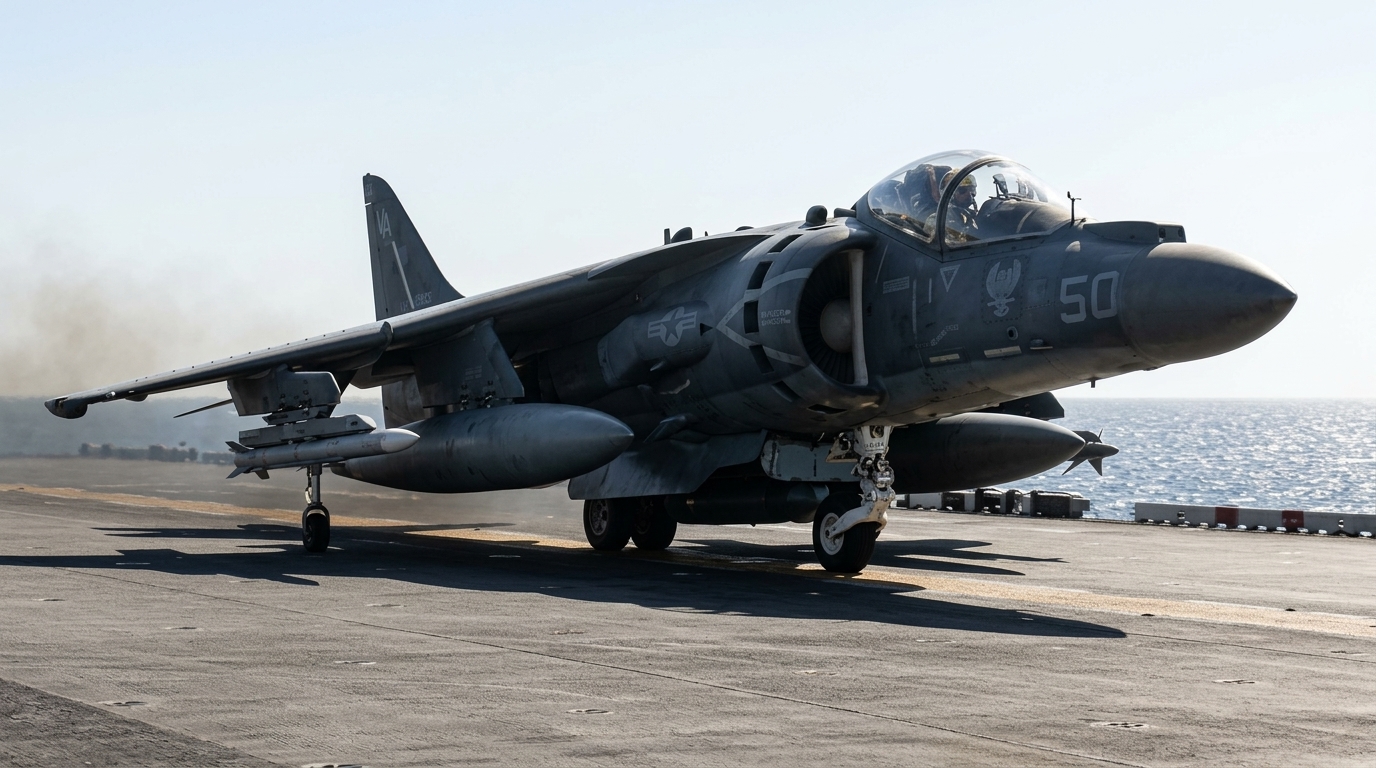
Military Sentinel, PENSACOLA – The US Marine Corps has officially transitioned its final-production AV-8B Harrier II to the National Naval Aviation Museum, reallocating the historic aircraft following the fleet’s recent retirement from active duty. After over five decades of pioneering vertical/short takeoff and landing (V/STOL) operations, the venerable attack platform is finding new life as an educational monument to marine aviation.
The specific aircraft, registered under Bureau Number (BuNo) 166288, holds the unique distinction of being the absolute last Harrier manufactured for the Marines. It completed its final operational transit in July, arriving at Naval Air Station Pensacola in Florida. Prior to departing from its home base at Marine Corps Air Station Cherry Point in North Carolina, specialized crews demilitarized the jet and meticulously configured it for overland road transport.
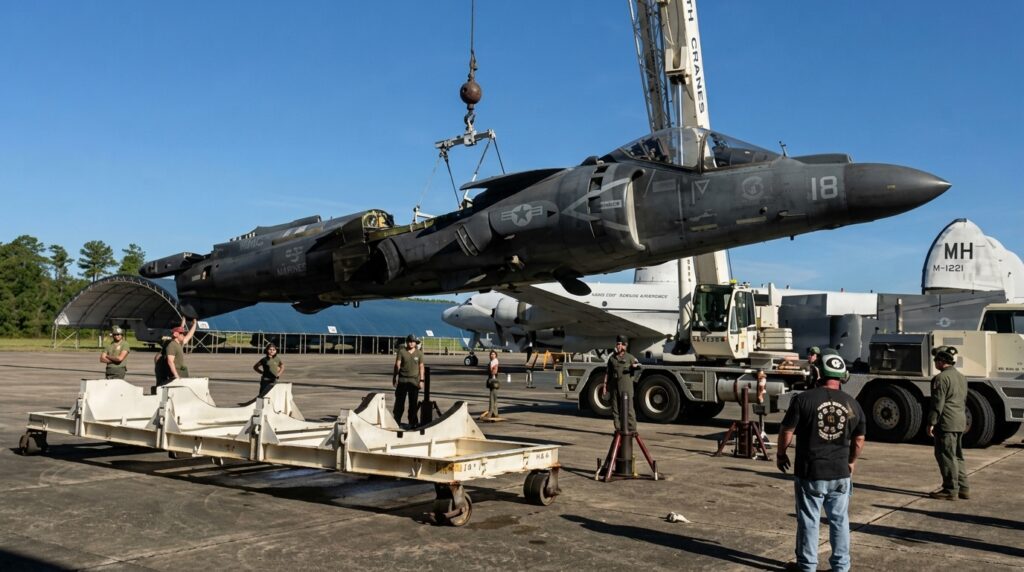
The museum transfer publicly cements the end of Harrier flight operations for the Marine Corps. Marine Attack Squadron 223 (VMA-223), known as the “Bulldogs,” was the final unit to operate the aircraft, conducting the platform’s official final flight on June 3, 2026. This milestone concluded a continuous 55-year operational relationship that began with the British-built AV-8A and evolved with the introduction of the significantly upgraded AV-8B Harrier II in 1985.
The final iteration, the AV-8B Harrier II Plus, brought modern capabilities to the fleet, integrating a multimode radar that allowed for expanded weapons employment and all-weather operations.
According to military analysts, preserving these historic assets serves an important cultural purpose. “For those who participated in the program, from pilots and maintenance personnel to sustainment managers, the conversion of these aircraft into exhibition pieces is a way to keep alive the legacy of a community that operated one of the most unique combat aircraft of its generation,” reported defense outlet Zona Militar.
Delivered to the fleet by Boeing in September 2003, BuNo 166288 served extensively across various combat theaters. The airframe amassed an impressive 5,800 flight hours during its two-decade lifespan. It deployed heavily as a core component of Marine Expeditionary Unit (MEU) air combat elements, routinely launching from L-class amphibious assault ships and spartan land bases to deliver critical close air support.
To properly showcase the aircraft’s revolutionary engineering, the National Naval Aviation Museum will exhibit the platform’s intricate propulsion system separately. The engine represents a defining milestone in aviation history, proving that fixed-wing combat jets could effectively operate without traditional runways.
Key Technical Specifications:
Variant: AV-8B Harrier II Plus
Powerplant: Rolls-Royce F402-RR-408 turbofan engine (to be displayed as an independent structure)
Design Features: Counter-rotating compressors and distinct thrust-vectoring exhaust nozzles
System Upgrades: Integrated multimode radar, advanced avionics, and enhanced protection suites
Service Record (BuNo 166288): Delivered in 2003, logging over 5,800 operational flight hours
As the AV-8B Harrier II assumes its new role in preservation, the expeditionary close air support mission has been entirely inherited by the F-35B Lightning II. The fifth-generation stealth fighter replicates the Harrier’s V/STOL capabilities but introduces overwhelming advantages in sensor fusion, situational awareness, and supersonic speed.
While the Harrier established the modern blueprint for operating fixed-wing aircraft from short-deck amphibious carriers, the contemporary threat environment demands the survivability intrinsic to the Lightning II. This sweeping transition underscores the Pentagon’s aggressive modernization strategy, aiming to ensure Marine air elements remain lethal against modern anti-access/area denial (A2/AD) networks.
Looking ahead, the complete retirement of the Harrier fleet is expected to streamline Marine Corps logistics. By reallocating the maintenance hours, supply chains, and funding previously required to sustain the aging AV-8B fleet, the service will rapidly accelerate F-35B readiness. This structural consolidation ultimately solidifies the Marines’ agile combat employment doctrine, prepping the force for impending operational requirements and high-end peer conflicts in the Indo-Pacific theater.