Physical Address
304 North Cardinal St.
Dorchester Center, MA 02124
Physical Address
304 North Cardinal St.
Dorchester Center, MA 02124

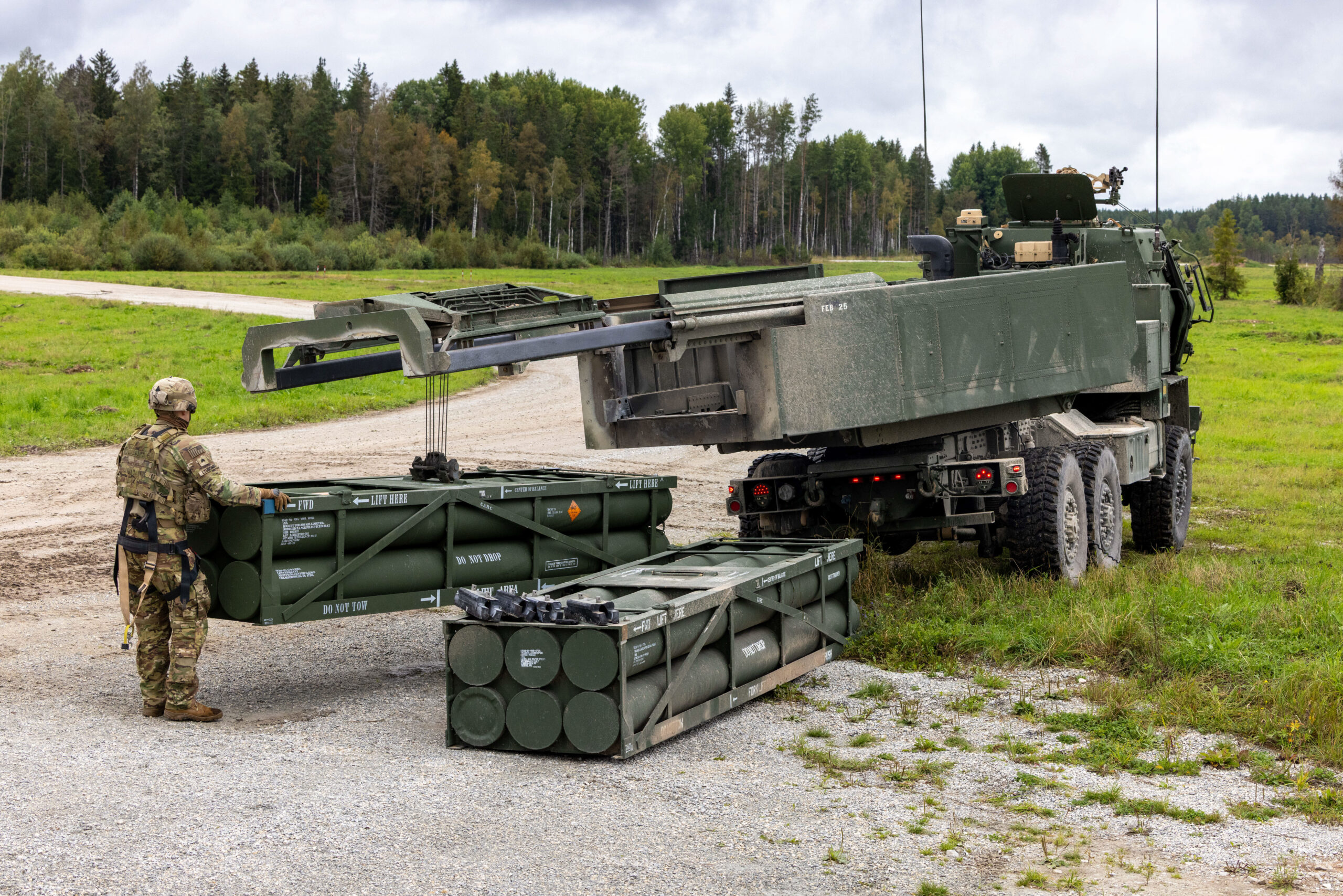
Military Sentinel, Washington – The U.S. Army has awarded five defense industry teams prototype development contracts to build a next-generation HIMARS missile capable of striking moving land and maritime targets at ranges exceeding 1,000 kilometers (621 miles).
The Other Transaction Authority (OTA) agreements, announced September 29, 2026, by the Army’s Long Range Precision Fires enterprise at Redstone Arsenal, advance the service’s Precision Strike Missile (PrSM) Increment 4 requirement. The contract awards tap both traditional defense primes and non-traditional defense tech startups:
Lockheed Martin Missiles and Fire Control
RTX (Raytheon)
Anduril Industries
Castelion
Mach Industries
The PrSM program originally launched to replace the legacy MGM-140 Army Tactical Missile System (ATACMS), which capped operational strike distances at 300 kilometers. PrSM Increment 1 achieved early operational fielding with an initial range of approximately 500 kilometers.
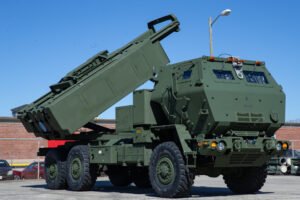
Increment 4 more than doubles that envelope, transforming the wheeled M142 HIMARS and tracked M270A2 MLRS platforms from tactical corps-level artillery into strategic theater-strike assets. Crucially, the mandate demands full launch-pod compatibility with existing launchers, removing the operational burden of procuring and fielding new heavy vehicle infrastructure.
Operational Range: 1,000+ kilometers (621+ miles)
Target Profiles: Relocatable land targets (air defenses, mobile C2) and moving surface warships
Propulsion Approaches: Advanced solid-fuel rocketry, ramjet, or air-breathing propulsion configurations
Launcher Integration: Standard pod fit for M142 HIMARS (single-cell pod envelope) and M270A2 MLRS (dual-pod carrier)
The contract structure highlights the Pentagon’s aggressive shift toward fast-tracking mature, cost-scalable designs by pairing established defense primes with venture-backed defense tech contenders.
Lockheed Martin—the incumbent manufacturer of HIMARS and baseline PrSM—and RTX bring extensive missile engineering and sensor-seeker integration pedigrees. Meanwhile, Anduril, Castelion, and Mach Industries represent a modern push for rapid prototyping, additive manufacturing, and affordable high-rate mass production intended to drive down per-unit munitions costs.
According to Army program acquisition timelines, prototype development will run through Fiscal Year 2027, culminating in an initial competitive fly-off and down-select. Qualifying vendors will then transition to a secondary phase through Fiscal Year 2028, ending with an operational fly-off to determine a final production solution.
The strategic driver behind a 1,000-km HIMARS missile is the Indo-Pacific theater. In contested maritime environments, ground formations dispersed across allied island chains require the reach to hold hostile surface fleets and anti-access/area-denial (A2/AD) bastions at risk.
Equipping mobile HIMARS batteries with multi-domain anti-ship and long-range strike capability complicates adversary target prioritization. Highly mobile wheeled launchers can “shoot and scoot” rapidly from expeditionary strips, drastically reducing vulnerability to counter-battery fire while denying freedom of movement across critical maritime choke points.