Physical Address
304 North Cardinal St.
Dorchester Center, MA 02124
Physical Address
304 North Cardinal St.
Dorchester Center, MA 02124

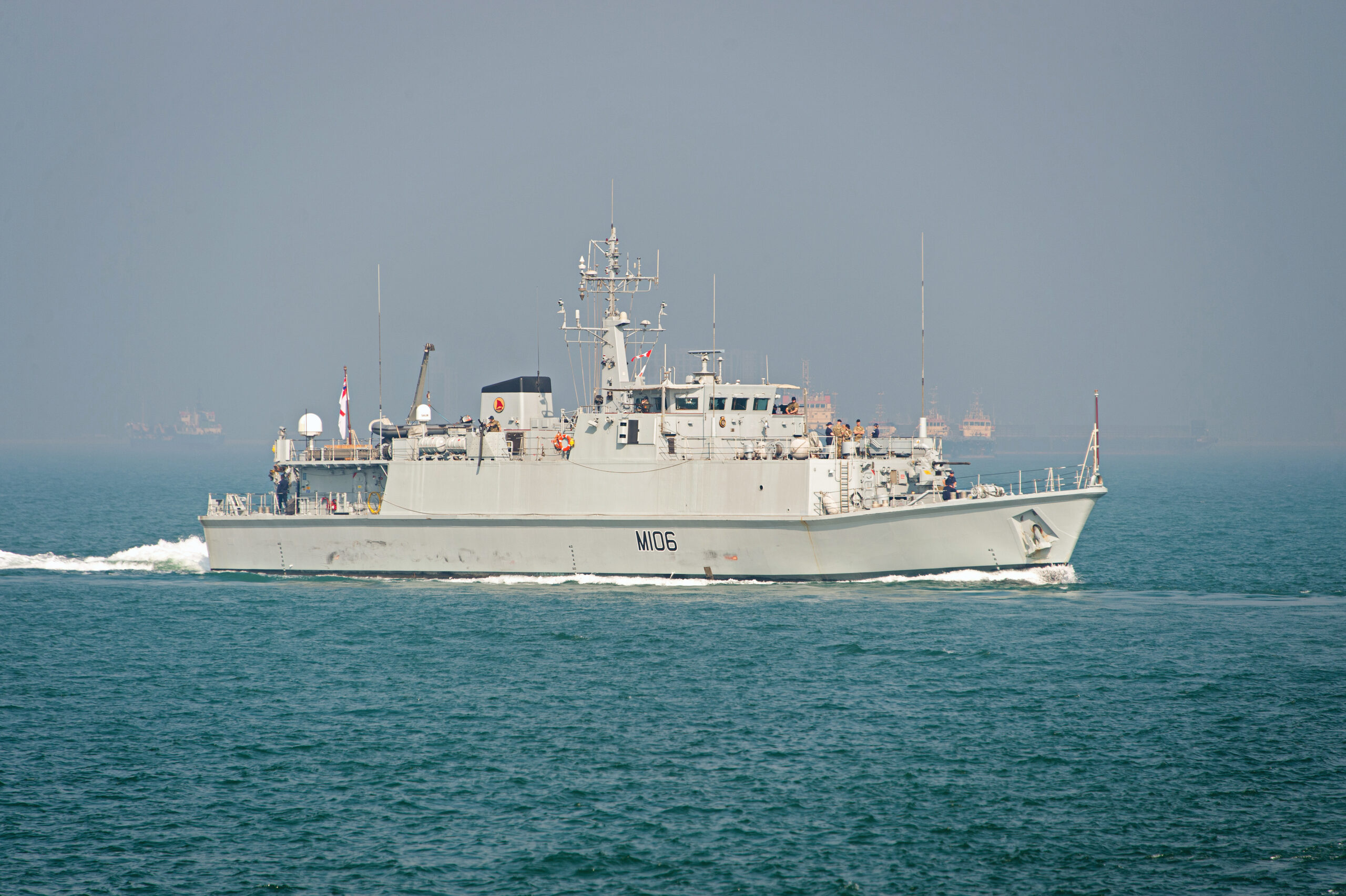
Military Sentinel, London – Five Ukrainian minesweeping vessels have concluded joint training operations with the United Kingdom’s Royal Navy, participating in multilateral defense drills off the southern coast of England to prepare for future maritime demining missions.
The training deployment brought together Ukrainian crews and naval assets from Joint Expeditionary Force (JEF) nations during Exercise Lion Protector. While the Ukrainian Navy has steadily expanded its mine countermeasures (MCM) fleet through international transfers, strategic conventions currently prevent the vessels from deploying to operational zones in the Black Sea until active hostilities cease.

The recent exercises involved five Ukrainian minesweepers: the Sandown-class vessels UNS Chernihiv and UNS Cherkasy formerly serving as Royal Navy ships before their transfer alongside three Alkmaar-class minehunters transferred from the Belgian and Dutch navies, designated UNS Henichesk, UNS Mariupol, and UNS Melitopol.
Operating along the Dorset, Hampshire, and Isle of Wight coastlines under the escort of Royal Navy assets including the destroyer HMS Dauntless, the Ukrainian crews practiced detecting, identifying, and neutralizing naval mines. The training incorporated live gunnery exercises for ship defense and the deployment of Seafox remotely operated submersibles to handle explosive ordnance disposal tasks.
Following the conclusion of Exercise Lion Protector, the vessels are homeported at His Majesty’s Naval Base in Portsmouth. The training forms part of ongoing multinational military assistance coordinated through international frameworks to build long-term Ukrainian naval capabilities.
Although Kyiv has formed specialized mine countermeasures brigades utilizing surface ships, autonomous systems, and specialized diving teams, the newly acquired vessels remain stationed outside the operational theater due to international maritime law.
Since February 2022, Turkey has enforced transit restrictions through the Bosporus and Dardanelles straits pursuant to the 1936 Montreux Convention. The treaty blocks warships of belligerent nations from entering or leaving the Black Sea during wartime, effectively preventing the Ukrainian minesweepers from reaching regional waters.
Consequently, the five vessels will remain based in the United Kingdom under the protection of allied naval forces until a legal transition can occur following the resolution of the conflict.
Defense analysts emphasize that maritime mine clearance in the Black Sea will represent a complex, long-term undertaking once hostilities conclude. Drifting naval mines, unexploded ordnance, and defensive fields laid throughout the sea lanes have repeatedly threatened commercial shipping, grain exports, and local fishing fleets, leading to higher insurance costs and interrupted maritime trade.
In addition to maritime hazards, land-based contamination across Ukraine presents significant security and humanitarian challenges, underlining the necessity for specialized clearance engineering training. Naval authorities indicate that allied cooperation will continue to focus on preparing Ukrainian crews for the extensive demining efforts required once peacetime access to Black Sea shipping lanes is established.

James Whitfield is a defense news writer at Military Sentinel, covering military technology, naval operations, military aviation, international security, and global defense developments. His work focuses on providing informative reporting, relevant context, and accessible explanations of modern military affairs and emerging defense technologies.
Contact: [email protected]