Physical Address
304 North Cardinal St.
Dorchester Center, MA 02124
Physical Address
304 North Cardinal St.
Dorchester Center, MA 02124

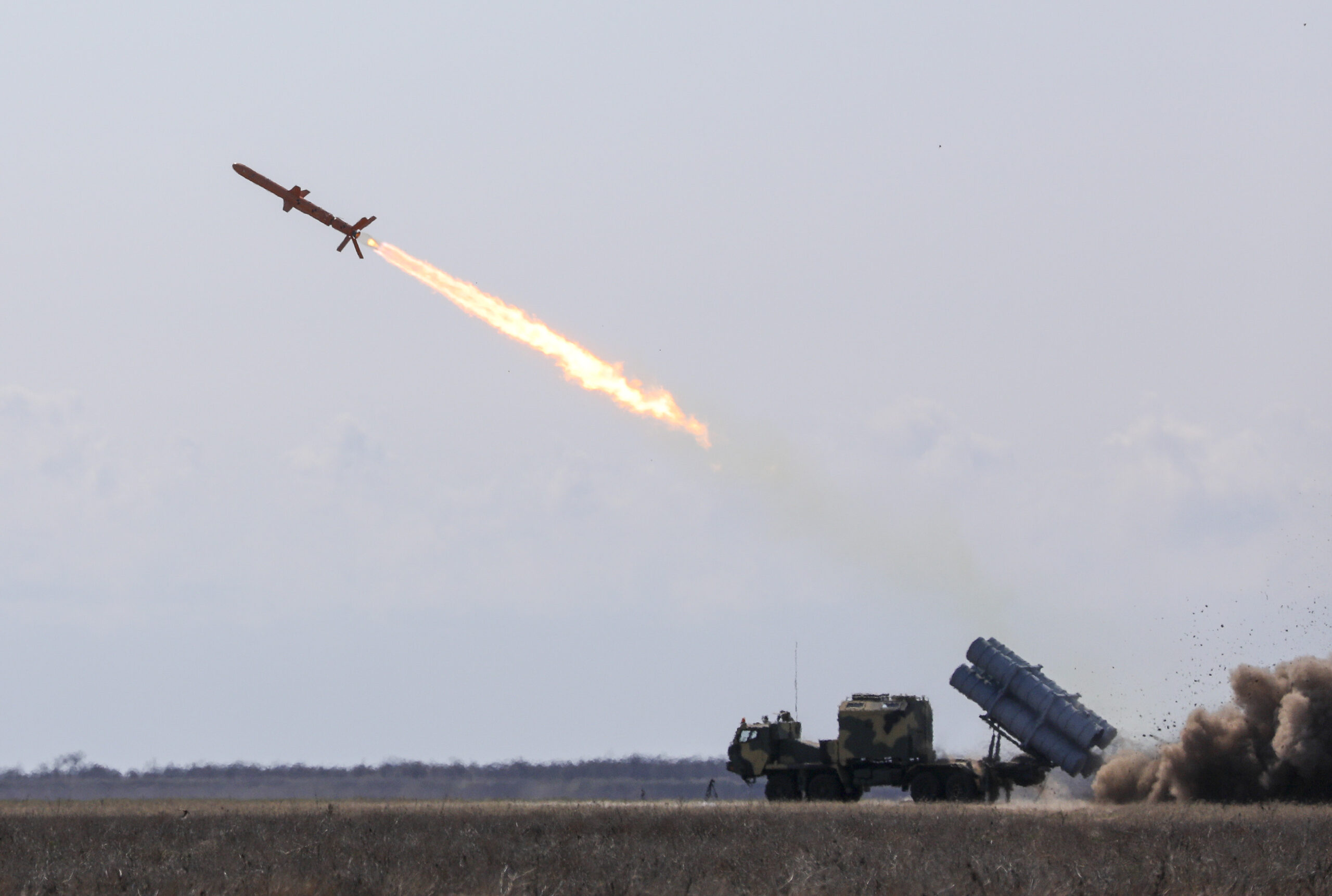
Military Sentinel, Kyiv – Ukrainian defense forces struck the Azov Optical-Mechanical Plant in Russia’s Rostov region overnight on September 26, deploying domestically produced Neptune missiles alongside advanced jet drones to disrupt key component supply chains feeding Moscow’s precision weapon stockpiles.
The joint strike targeted specialized production infrastructure belonging to Russia’s Tactical Missiles Corporation, which produces microelectronics, guidance systems, and optoelectronic sensors for frontline artillery, anti-tank units, and tactical guided missiles.
According to an official statement from Ukraine’s Security Service (SBU), the operation was conducted jointly by its Alpha Special Operations Center and the Ukrainian Navy. The operational profile integrated conventional cruise missile assets with attritable, high-speed unmanned platforms:
R-360 Neptune Missiles: Domestically built cruise missiles modified from their original anti-ship role into precision land-attack vectors.
Jet-Powered Drone Missiles: Accompanying strike packages comprised Ruta, Palianytsia, and Bars jet-powered unmanned systems designed to overwhelm layered air defense nets.
Preliminary damage assessments provided by the SBU and confirmed by the Ukrainian General Staff indicate hits across five key functional structures at the Azov facility. Documented impacts include fires in the foundry workshop, alongside structural disruption to electroplating areas, optical assembly bays, and dedicated printed circuit board (PCB) fabrication facilities.
Ukrainian President Volodymyr Zelenskyy publicly acknowledged the operation, highlighting the disruption of defense supply lines feeding Russian missile regiments and confirming a secondary impact on an associated Pantsir-S2 air defense system in the area.
The Azov Optical-Mechanical Plant operates under European Union sanctions due to its direct role within Russia’s state-owned defense industrial base. The site serves as a bottleneck supplier for high-end optical seekers, thermal imaging sensors, and radar components:
Radar Seekers: Terminal tracking hardware for tactical air-to-surface and surface-to-surface guided munitions.
Fire-Control Optics: Sighting mechanisms and optoelectronics mounted on heavy armor and anti-tank guided missile (ATGM) platforms.
Precision Artillery Electronics: Components regulating modern corrected munitions and digital ballistic fire coordination.
The installation was struck as part of a synchronized regional campaign that included strikes against the Ilsky oil refinery in Krasnodar Krai, an ammunition staging area near occupied Sievierodonetsk, and a Russian P-18 Terek early-warning surveillance radar in Donetsk Oblast.
The deployment of Neptune missiles in combined salvos with jet-powered loitering systems marks an intensifying focus on asymmetric attrition of Russia’s defense-industrial supply chain. By utilizing indigenous standoff cruise missiles and rapid-cycle drone variants, Kyiv operates outside of Western restrictions on cross-border strikes using foreign-donated ordnance.
Looking ahead, strikes against specialized component facilities rather than finished munitions depots represent a strategic pivot. While weapon assembly plants frequently maintain decentralized or buffered operations, facilities capable of complex optical glass casting, electroplating, and microcircuit printing present critical manufacturing single points of failure that require lengthy lead times and foreign machine tooling to restore.