Physical Address
304 North Cardinal St.
Dorchester Center, MA 02124
Physical Address
304 North Cardinal St.
Dorchester Center, MA 02124

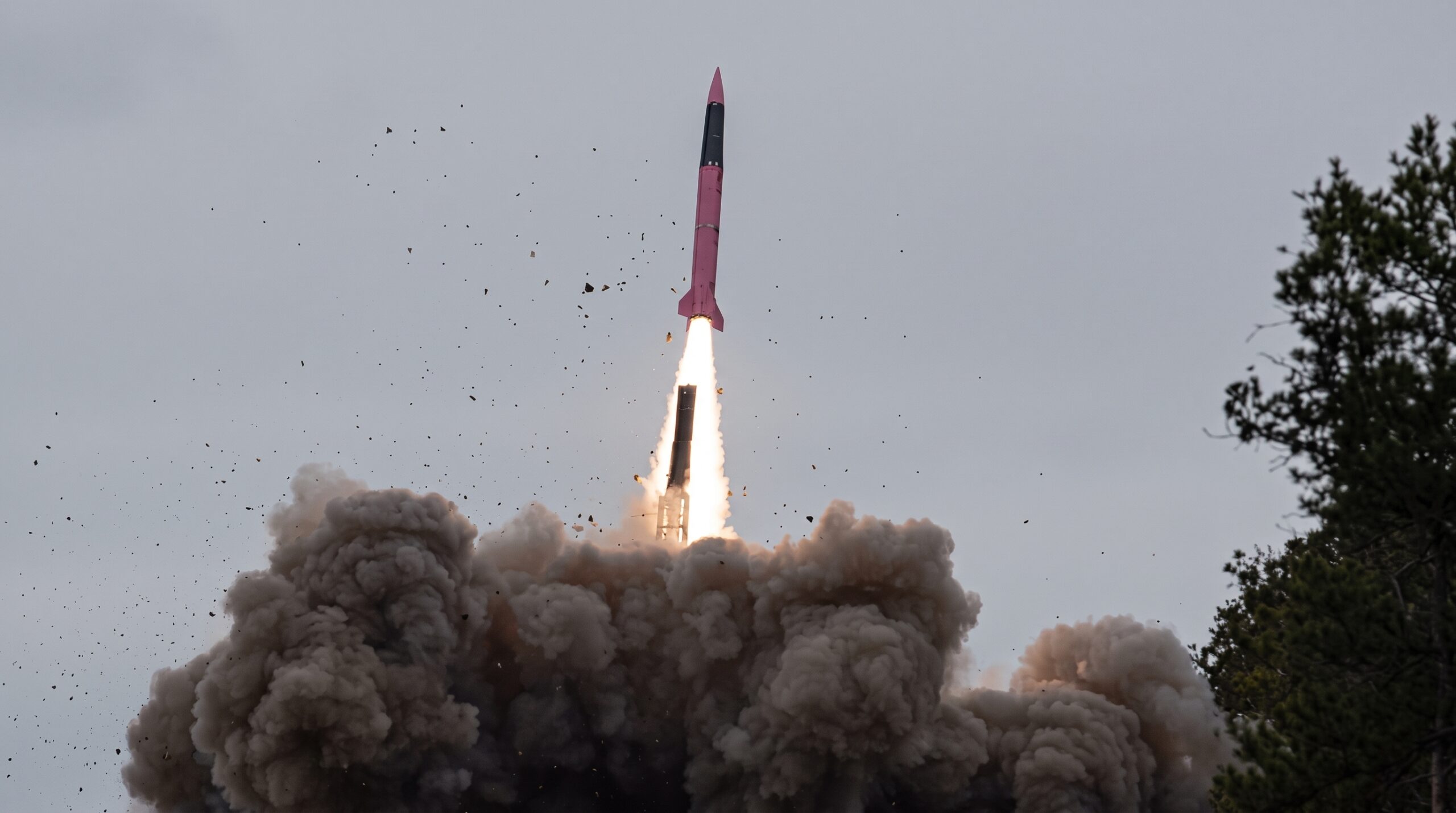
Military Sentinel, Kyiv – Ukrainian defense developer Fire Point has updated the technical specifications for its domestic FP-7.x Freyja anti-ballistic interceptor, equipping the low-cost air defense weapon with a dual-mode infrared and active radar seeker. The design revision replaces the previously planned infrared-only terminal guidance configuration, reflecting an effort to harden the indigenous missile against electronic jamming while matching the guidance fidelity of Western platforms such as the MIM-104 Patriot PAC-3 MSE.
The shift to a dual-mode seeker architecture addresses the physics of terminal-phase ballistic missile defense. While imaging infrared (IIR) tracking delivers high optical resolution during terminal intercept, active radio-frequency (RF) radar guidance ensures target lock during atmospheric degradation or thermal signature masking. Integrating both seeker domains into a single compact nose cone is widely considered one of the highest engineering hurdles in missile technology.
According to published company documentation, domestic production of the dual-frequency seeker assembly relies significantly on foreign industrial cooperation. Fire Point is collaborating with European defense contractors, including Germany’s Diehl Defence, to secure core optical and radio-frequency guidance hardware that Ukrainian industrial facilities cannot yet fabricate domestically.
The developer has stated that interceptor flight readiness hinges on component delivery schedules from European partners. Fire Point aims to assemble initial FP-7.x interceptors by late 2026, with live-fire interception trials against simulated ballistic targets projected for July 2027.
FP-7.x “Freyja” Preliminary Baseline Specifications:
• Developer: Fire Point (Ukraine)
• Guidance: Combined Imaging Infrared (IIR) + Active Radar Homing (Dual-mode)
• Target Set: Tactical ballistic missiles, high-speed cruise missiles
• Maximum Engagement Altitude: Approx. 25 kilometers (reported)
• Estimated Unit Cost: ~$700,000 (vs. ~$3.8M–$4M for Patriot PAC-3 MSE)
• Target Initial Interception Test: Mid-2027
Ukraine’s push for an organic interceptor is dictated by air defense inventory math. With incoming Iskander-M and Kinzhal ballistic salvos placing continuous strain on Western-supplied interceptor stocks, existing supplies of Lockheed Martin-built PAC-3 MSE rounds remain constrained by global production backlogs.
At a target production cost around $700,000 per round, the FP-7.x is envisioned to operate at less than one-fourth the price of standard Western anti-ballistic munitions. While the platform’s ground radar integration architecture and command links remain unclarified flagged in early design releases as an open question the move to a hybrid seeker indicates Ukraine’s domestic sector is transitioning from makeshift “FrankenSAM” hybrid conversions toward purpose-built, mass-producible ballistic missile defense.