Physical Address
304 North Cardinal St.
Dorchester Center, MA 02124
Physical Address
304 North Cardinal St.
Dorchester Center, MA 02124

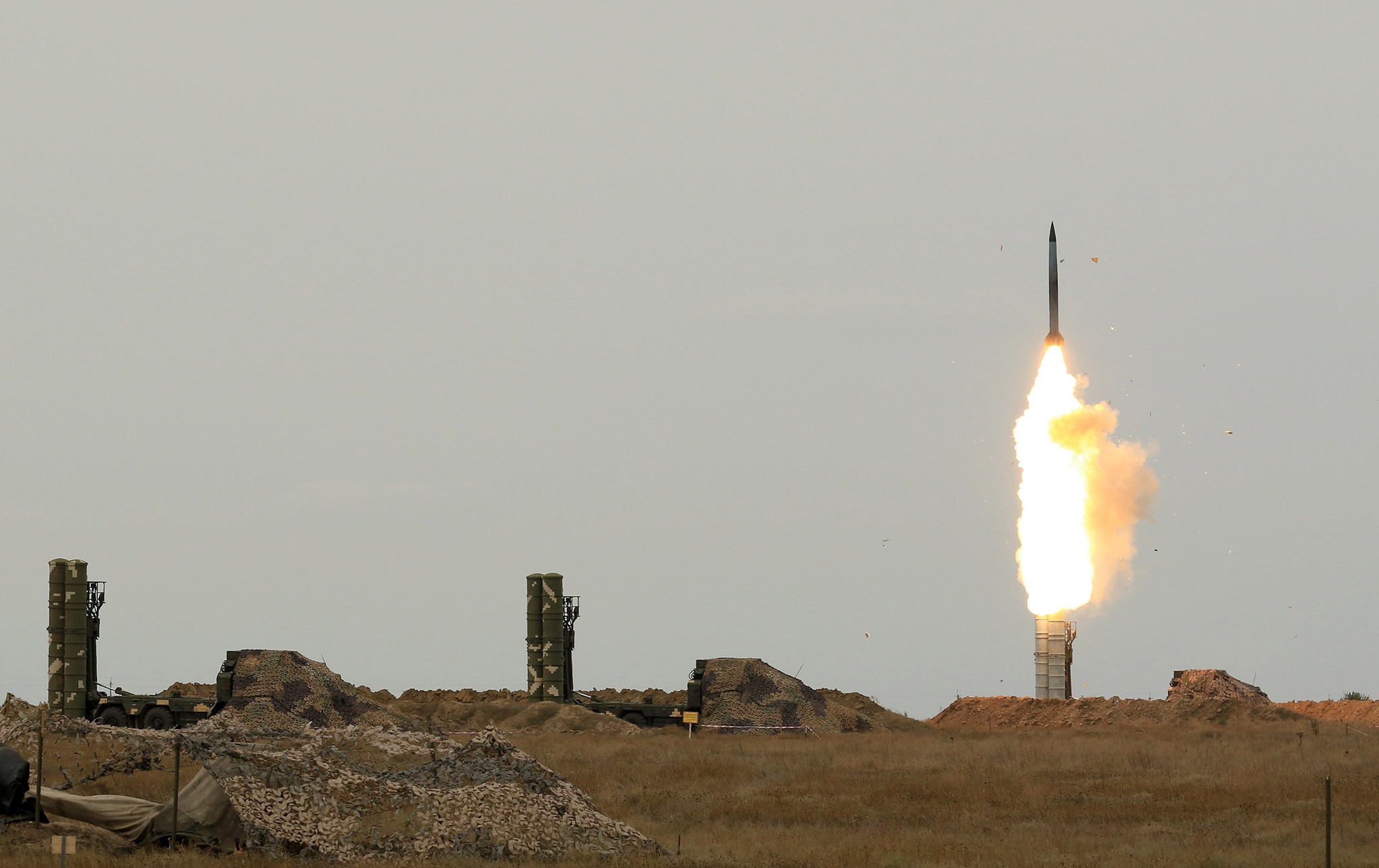
Military Sentinel, Washington – The U.S. Department of State has approved a potential Foreign Military Sale (FMS) to Ukraine valued at up to $2.68 billion, greenlighting a substantial package of interceptors, mobile launchers, and counter-drone radar suites aimed at shoring up the nation’s battered layered air defense network.
The determination, delivered via formal congressional notification by the Defense Security Cooperation Agency (DSCA), responds to urgent requests from Kyiv to reinforce its defensive perimeter amid escalating long-range Russian drone and missile strikes.
The notified export request covers a specialized mix of legacy-compatible munitions, novel launcher configurations, and surveillance sensors designed to integrate into Ukraine’s heterogeneous air defense architecture.
The package includes:
“S-300 Clone” Missiles: Munitions designated in U.S. export documentation as replacements built to operate with Ukraine’s existing Soviet-standard S-300 surface-to-air missile batteries. Specific manufacturers and technical performance figures remain classified.
Specialized Strike and Defense Munitions: Allocations of GAM-67 missiles alongside Range-Extended Air Defense Laser-Guided Rockets.
Launch Architecture: Improvised Transporter Erector Launchers (ITEL) 1.5 and field modification kits for mobile launch platforms, expanding Kyiv’s “FrankenSAM” hybrid launcher initiatives.
Surveillance and Tracking Sensors: Shipments of RPS 202 tactical radars and deployable trailers equipped with folding masts to improve low-altitude horizon coverage against one-way attack drones.
Sustainment Infrastructure: Comprehensive programmatic support including maintenance toolsets, spare parts, software packages, technical manuals, and U.S. contractor-led logistical services.
The transaction diverges from direct presidential drawdown authorities (PDA), relying instead on a multinational financial hybrid. Under the approved framework, Ukraine will finance the procurement using a blend of direct contributions from European allies alongside U.S. Foreign Military Financing (FMF) funds appropriated under the prior administration. The U.S. portion will be credited through a 1:1 reimbursement mechanism linked to the Ukraine Reconstruction Investment Fund.
The State Department confirmed that implementing the potential sale will require no permanent stationing of additional U.S. personnel inside Ukraine. Program execution will instead depend on established remote technical assistance and allied maintenance conduits outside Ukrainian territory.
The inclusion of newly produced, western-supplied “S-300 Clone” interceptors addresses one of the most critical structural vulnerabilities confronting Ukraine’s defense planners: the steady attrition of Soviet-legacy 5V55 and 48N6 missile stocks. While Western supplies of Patriot PAC-3, NASAMS, and IRIS-T systems have shielded select urban hubs, Ukraine’s foundational medium-to-long-range umbrella still relies heavily on legacy S-300 batteries across wide operational fronts.
Deploying Western-manufactured munitions capable of operating natively from Soviet-era radars and TELs enables Ukrainian air defense brigades to preserve their irreplaceable Patriot and SAMP/T interceptors strictly for advanced aero-ballistic threats. Concurrently, elevating RPS 202 radar apertures on folding masts provides vital early-warning telemetry against terrain-masking Shahed-series loitering munitions, minimizing saturation risks across Ukrainian energy and industrial nodes ahead of winter operational cycles.