Physical Address
304 North Cardinal St.
Dorchester Center, MA 02124
Physical Address
304 North Cardinal St.
Dorchester Center, MA 02124

Military Sentinel, Kyiv – Ukrainian naval forces destroyed a Russian uncrewed surface vessel (USV) in the Black Sea using a remote weapon system mounted to a sea drone, marking what military officials claim is history’s first direct surface engagement between two uncrewed vessels.
The Ukrainian Navy announced the incident following an interdiction operation carried out in close coordination with the Main Intelligence Directorate (HUR). While exact dates and operational coordinates were withheld, Ukrainian authorities released operational footage showing the engagement. The incident represents a notable shift in naval warfare from one-way kinetic strikes toward autonomous surface-to-surface counter-drone combat.
According to official Ukrainian statements, HUR reconnaissance units first identified the hostile vessel operating in the northwestern Black Sea. The Ukrainian Navy subsequently vectored a Sargan-3000 uncrewed platform to intercept.
Open-source intelligence and maritime defense analysts identified the targeted Russian craft as an upgraded Orcan-type (also designated Zefir) kamikaze surface vessel. The Russian platform, driven by a steerable waterjet, was reportedly intended for one-way strike operations against Ukrainian port infrastructure before being engaged.
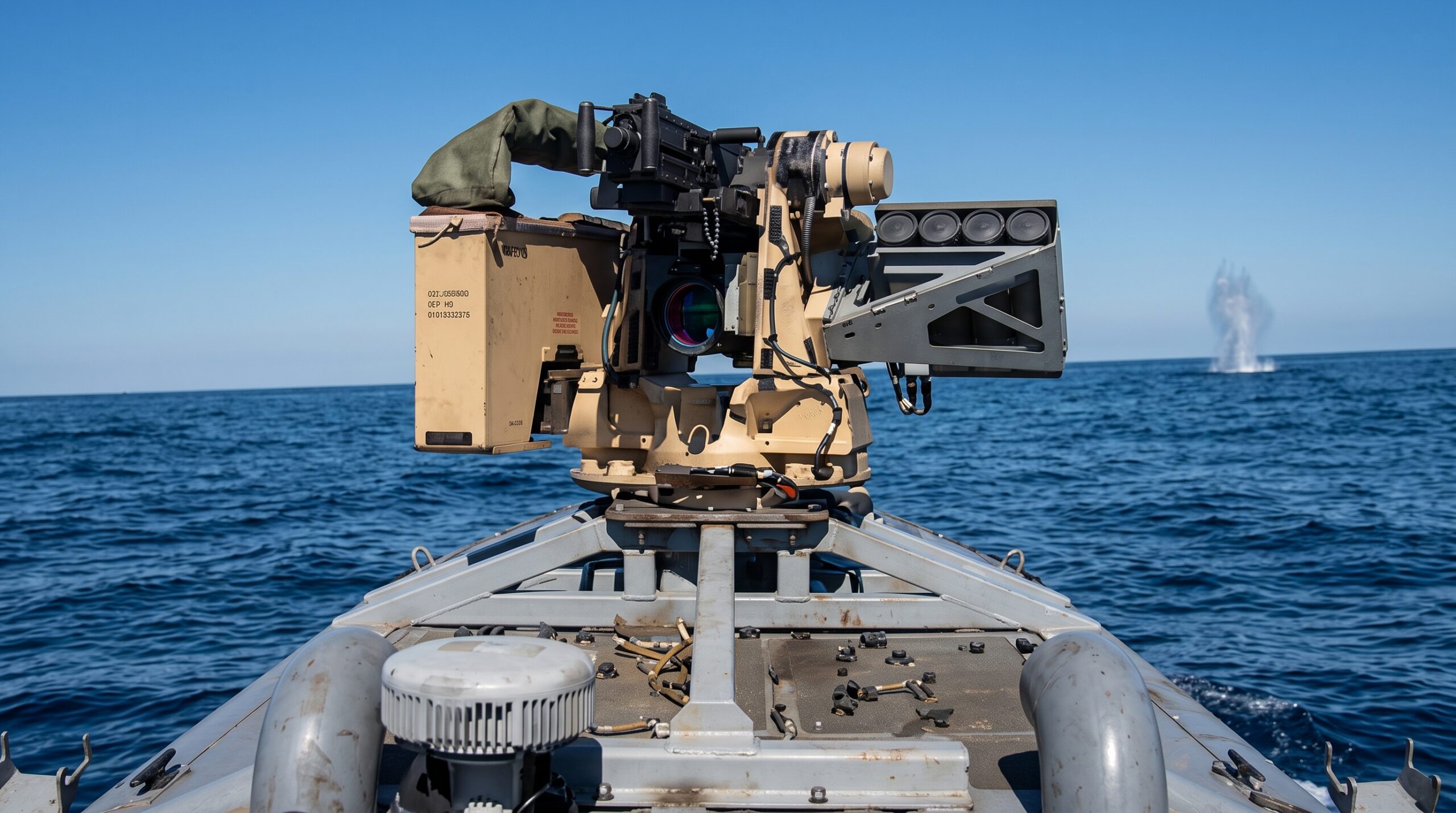
Rather than conducting a collision detonation, the Ukrainian vessel engaged the target at standoff distance using an integrated remote weapon station (RWS):
Intercepter Platform: Sargan-3000 USV (Nordex / Ukrainian Navy)
Weapon System: Kongsberg Protector RWS armed with a 12.7mm heavy machine gun
Target System: Russian Orcan / Zefir strike USV
Target Fate: Neutralized and sunk by direct gunfire
Earlier iterations of Black Sea naval drones primarily served as low-profile, single-use explosive surface rams. The integration of stabilized remote weapon stations transforms these craft into reusable, multipurpose combatants capable of patrol, defense, and counter-USV tasks.
Engaging a dynamic, fast-moving surface target at sea requires advanced low-latency data links, electro-optical tracking, and active gyroscopic stabilization. The Sargan-3000 has previously demonstrated multi-role modularity, including deployments carrying short-range air defense missiles and electronic warfare payloads.
Independent confirmation of the engagement’s full tactical details remains pending [VERIFY SOURCE: Independent Black Sea telemetry]. However, Russian forces have escalated their own deployment of strike and reconnaissance USVs launched from littoral facilities across western Crimea.
The encounter signals the opening of a dedicated counter-USV arms race in closed-sea theaters. As both navies deploy robotic vessels for offense, the requirement for reusable hunter-killer platforms with automated fire control will shape fleet procurement worldwide. Future littoral doctrine will likely prioritize hardened mesh networking, AI-assisted target acquisition, and layered defensive screens of armed uncrewed interceptors.