Physical Address
304 North Cardinal St.
Dorchester Center, MA 02124
Physical Address
304 North Cardinal St.
Dorchester Center, MA 02124

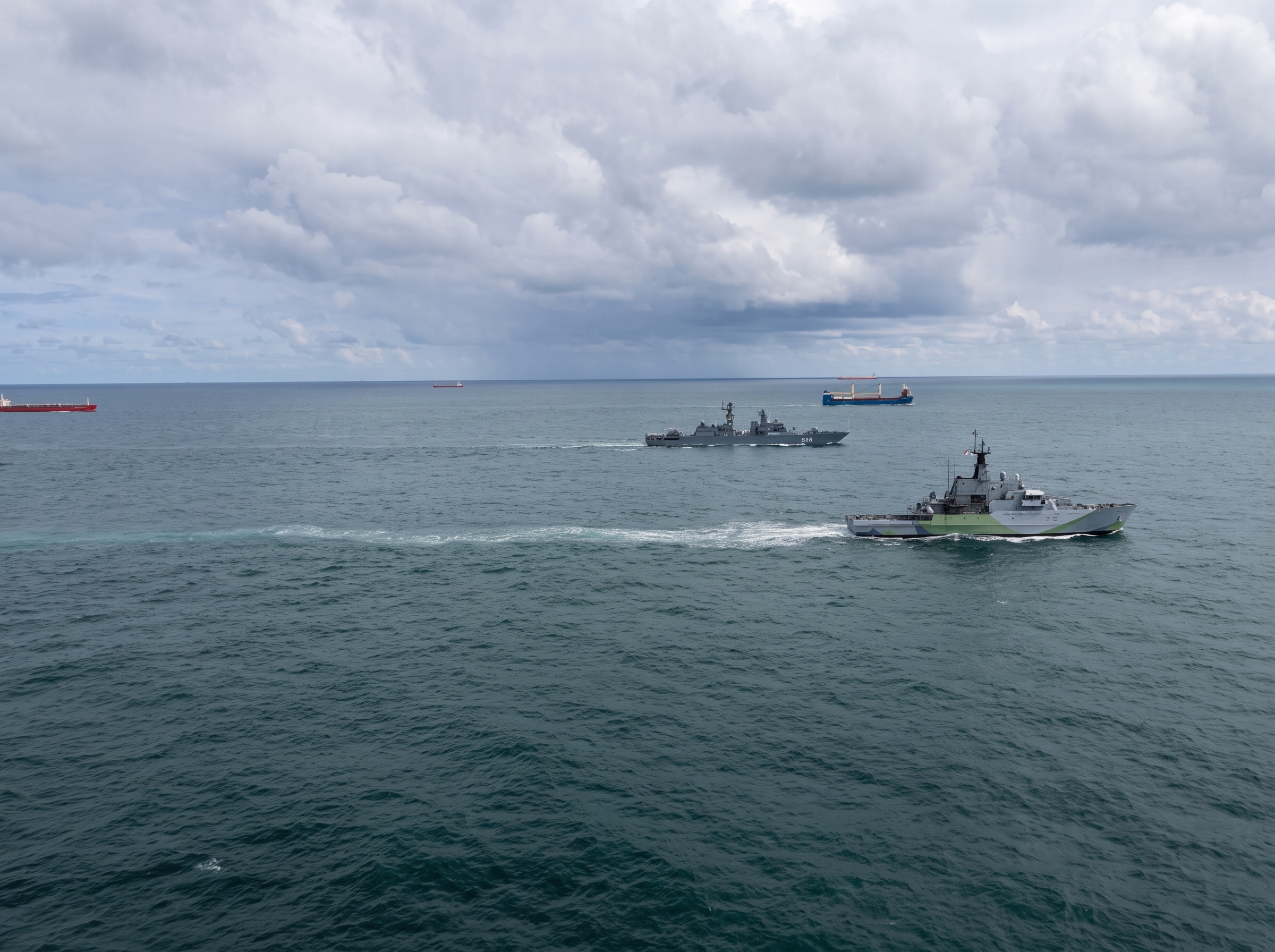
Military Sentinel, London – In a blunt assessment of Euro-Atlantic maritime security, the head of the Royal Navy warned that Russia represents the single greatest threat to the United Kingdom, urging immediate investment in allied fleet readiness and subsea infrastructure defense to deter potential conflict in the High North.
Delivering an address at Admiralty House in London, First Sea Lord Gen. Sir Gwyn Jenkins stated that Moscow’s naval operations are directly challenging Western dominance across the North Atlantic. Jenkins stressed that maintaining sea control is no longer a given and called for an expanded fleet footprint alongside deeper integration with the U.K.-led Joint Expeditionary Force (JEF).
“The reason why we need this is simple: the greatest threat to our security today is Russia,” Jenkins said. “That threat is felt most acutely in the maritime domain in the North Atlantic, in the High North.”
The warning comes amid elevated operational friction beneath the surface. Royal Navy tracking operations have surged over the past two years, with service leadership confirming that up to two major surface combatants per week are routinely assigned to monitor Russian naval vessels and submarines skirting territorial waters.
Western defense officials have observed a qualitative leap in Russian submarine doctrine, driven primarily by quiet nuclear-powered guided-missile submarines (SSGNs) and specialized deep-sea research assets operated by the Russian Ministry of Defense’s Main Directorate of Deep-Sea Research (GUGI).
Key areas of operational concern highlighted by naval planners include:
Critical National Infrastructure (CNI): Systemic mapping and probing of vital subsea fiber-optic cables, energy pipelines, and electrical interconnectors across the seabed.
Acoustic Stealth: Deployment of refined Yasen-M class SSGNs capable of launching 3M22 Zircon hypersonic and Kalibr cruise missiles from deep patrol envelopes.
Special-Mission Motherships: Heightened operational tempos for seabed-warfare platforms such as the Belgorod and intelligence-collection vessels like the Yantar.
Jenkins warned that while allied capabilities remain formidable, NATO navies are experiencing strain tracking increasingly elusive undersea platforms across expansive ocean approach corridors.
To counter these structural vulnerabilities, the Royal Navy is pushing forward with a rapid transformation toward a “hybrid fleet.” Under this posture, traditional crewed combatants will operate in tandem with autonomous uncrewed surface vessels (USVs), uncrewed underwater vehicles (UUVs), and distributed sensor grids.
Central to this effort is Project Atlantic Bastion, a layered maritime surveillance program designed to secure the Greenland-Iceland-U.K. (GIUK) Gap and shield British nuclear deterrent patrol areas. A major component, Atlantic Net, focuses on procuring autonomous distributed acoustic sensor nodes linked via secure tactical data relays. Jenkins confirmed the service has down-selected a preferred industrial consortium, with the initial operational sensors scheduled for wet testing by the end of the year.
Jenkins’ remarks reflect an urgent push across European defense ministries to recalibrate force structures away from peripheral constabulary missions and toward high-end, contested anti-submarine warfare (ASW).
The U.K. fleet faces significant fleet-size pressures, operating a streamlined frigate and attack submarine force amid tight defense expenditure targets. Securing northern sea lines of communication (SLOCs) will require the Royal Navy to leverage automated subsea networks to multiply the effectiveness of allied surface combatants, ensuring the trans-Atlantic bridge remains intact if regional tensions boil over.