Physical Address
304 North Cardinal St.
Dorchester Center, MA 02124
Physical Address
304 North Cardinal St.
Dorchester Center, MA 02124

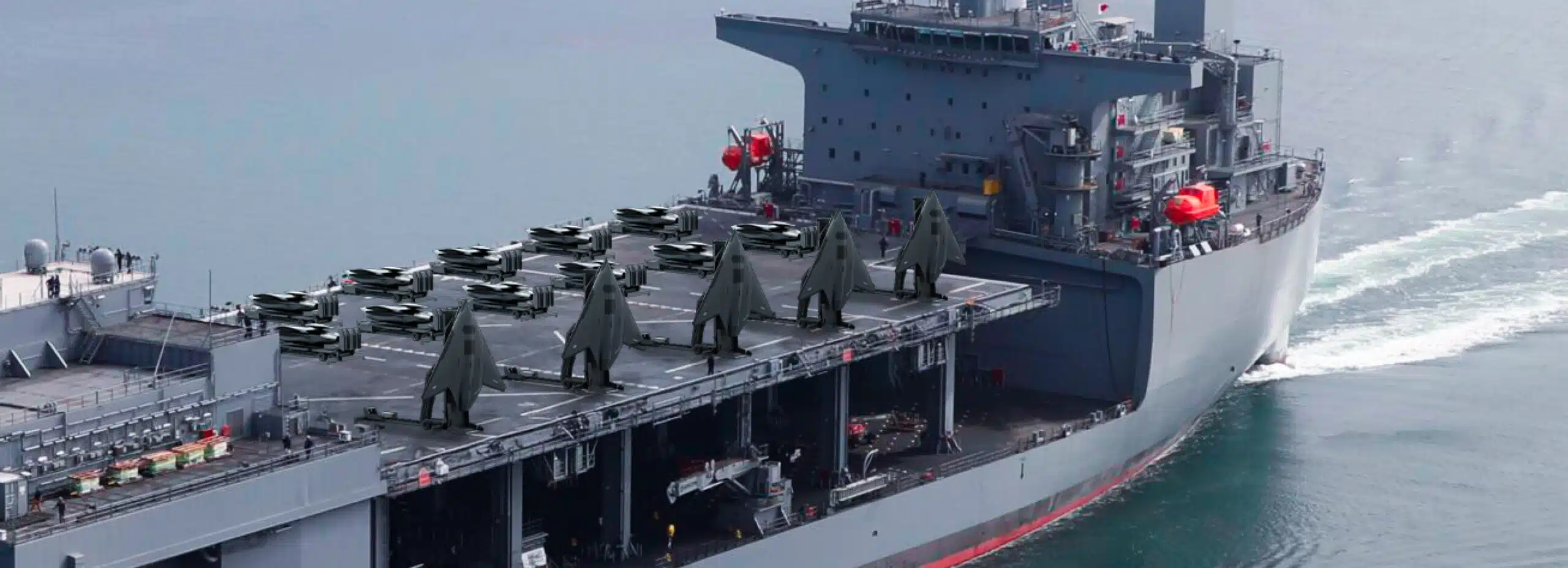
Military Sentinel, Washington – The U.S. Navy is expanding its technical commitment to runway-independent air systems, directing new development resources toward the X-BAT vertical takeoff and landing tactical uncrewed aerial system. The platform, engineered by defense aerospace firm Shield AI, represents an effort to field high-performance, runway-free autonomous aircraft capable of operating from surface vessels and austere forward operating sites.
The increased backing reflects a broader strategic pivot within naval aviation. As peer-competitor precision missile arsenals place traditional airfields and large-deck aircraft carriers under growing threat, naval planners are aggressively pursuing distributed operational concepts. Deploying high-speed, long-range uncrewed combat platforms from expeditionary decks without catapults or arresting cables directly addresses persistent logistical vulnerabilities across littoral operating environments.

The expanded effort focuses on accelerating the engineering maturity, autonomous architecture, and flight-control integration of the X-BAT airframe. Originally conceived as an advanced tail-sitting vertical takeoff and landing (VTOL) configuration, the design seeks to blend the operational flexibility of a helicopter with the speed, range, and payload capacity of a conventional jet-powered strike fighter.
Under recent developmental agreements, engineers are refining the transition dynamics between vertical hovering and horizontal flight modes. Flight dynamics for tail-sitting aircraft present acute aerodynamic challenges, particularly during the transition phase where crosswinds and aerodynamic stalls pose substantial operational risks. Autonomous control software, specifically Shield AI’s Hivemind autonomy suite, manages the dynamic control surfaces and propulsion vectoring to ensure stability without direct human stick-and-rudder intervention.
Funding tracks and developmental support from the naval service aim to validate the platform’s suitability for shipboard operations. Fleet integration requirements stipulate that such systems must withstand harsh maritime environments, including corrosive salt fog, aggressive sea states, and restricted landing areas on non-aviation surface combatants such as guided-missile destroyers, littoral combat ships, and amphibious transports.
Unlike traditional VTOL drones that rely on tilt-rotors or lift-plus-cruise multi-rotor designs, the X-BAT uses a streamlined, jet-powered airframe that takes off and lands vertically on its empennage. This layout eliminates the mechanical complexity, weight penalties, and parasitic drag associated with tilt-rotor nacelles or auxiliary lift fans.
Key design attributes include:
Runway Independence: The platform requires no catapult systems, arresting cables, or dedicated flight decks. It can deploy directly from small surface combatants, auxiliary vessels, or unprepared remote land locations.
High-Subsonic Speed: Jet propulsion provides significantly higher dash speeds and transit velocities compared to conventional rotorcraft or turboprop uncrewed aerial vehicles, shrinking target response timelines over vast maritime theaters.
Modular Payload Bays: The internal structure accommodates interchangeable sensor suites, electronic warfare equipment, and communications relay nodes, allowing mission commanders to reconfigure the aircraft rapidly between operational sorties.
Autonomous Edge Computing: Powered by onboard autonomy algorithms, the platform can conduct search, tracking, and tactical maneuvers in communications-denied environments without constant satellite data-link connections.
These operational traits allow the aircraft to operate as an airborne sensor extension, pushing the radar horizon of surface action groups well beyond shipboard mast heights while hunting low-radar-cross-section anti-ship cruise missiles or surface threats.
The Navy’s intensified interest in the X-BAT architecture stems from several years of exploratory uncrewed technology programs aimed at solving the “tyranny of distance” in contested maritime theaters such as the Indo-Pacific. While large uncrewed carrier-aviation platforms—such as the Boeing MQ-25 Stingray tanker—address carrier air wing reach, they still require carrier deck space.
Concurrently, the U.S. Marine Corps and the U.S. Special Operations Command have pursued independent runway-independent concepts to support expeditionary advanced base operations. The maturation of robust, high-bandwidth computing hardware and artificial intelligence algorithms has made viable what was historically an intractable aerodynamic problem. Tail-sitting aircraft tested during the 1950s, such as the Convair XFY-1 Pogo, failed largely because human pilots could not reliably judge closure rates while looking over their shoulders during vertical landings. Modern fly-by-wire automation and active sensor feedback loops have effectively mitigated those piloting constraints.
The project also mirrors broader Pentagon efforts under initiatives like the Collaborative Combat Aircraft (CCA) and Replicator programs, which seek to field attritable, highly capable robotic systems in significant quantities to counter adversaries’ numerical mass.
Integrating jet-powered VTOL drones across non-carrier surface combatants fundamentally alters naval distributed lethality doctrines. By equipping guided-missile destroyers (DDGs) and amphibious platforms with autonomous strike and reconnaissance nodes, the fleet reduces its reliance on a limited number of high-value nuclear-powered aircraft carriers to establish regional air awareness.
Significant hurdles remain before operational fleet fielding occurs. Naval aviation evaluators must verify deck-handling procedures, launch-and-recovery limits under elevated sea states, and the integration of secure shipboard datalinks. Furthermore, ordnance handling, refueling procedures, and maintenance workflows must conform to space-constrained shipboard hangars designed primarily for MH-60 Seahawk helicopters.
Subsequent program phases will center on full-scale aerodynamic flight demonstrations, expanded payload-integration trials, and autonomous deck landings aboard moving naval vessels. Fleet planners will closely observe these upcoming milestones to assess whether tail-sitting jet architectures can transition from innovative experimental prototypes to standard components of distributed naval task forces.