Physical Address
304 North Cardinal St.
Dorchester Center, MA 02124
Physical Address
304 North Cardinal St.
Dorchester Center, MA 02124

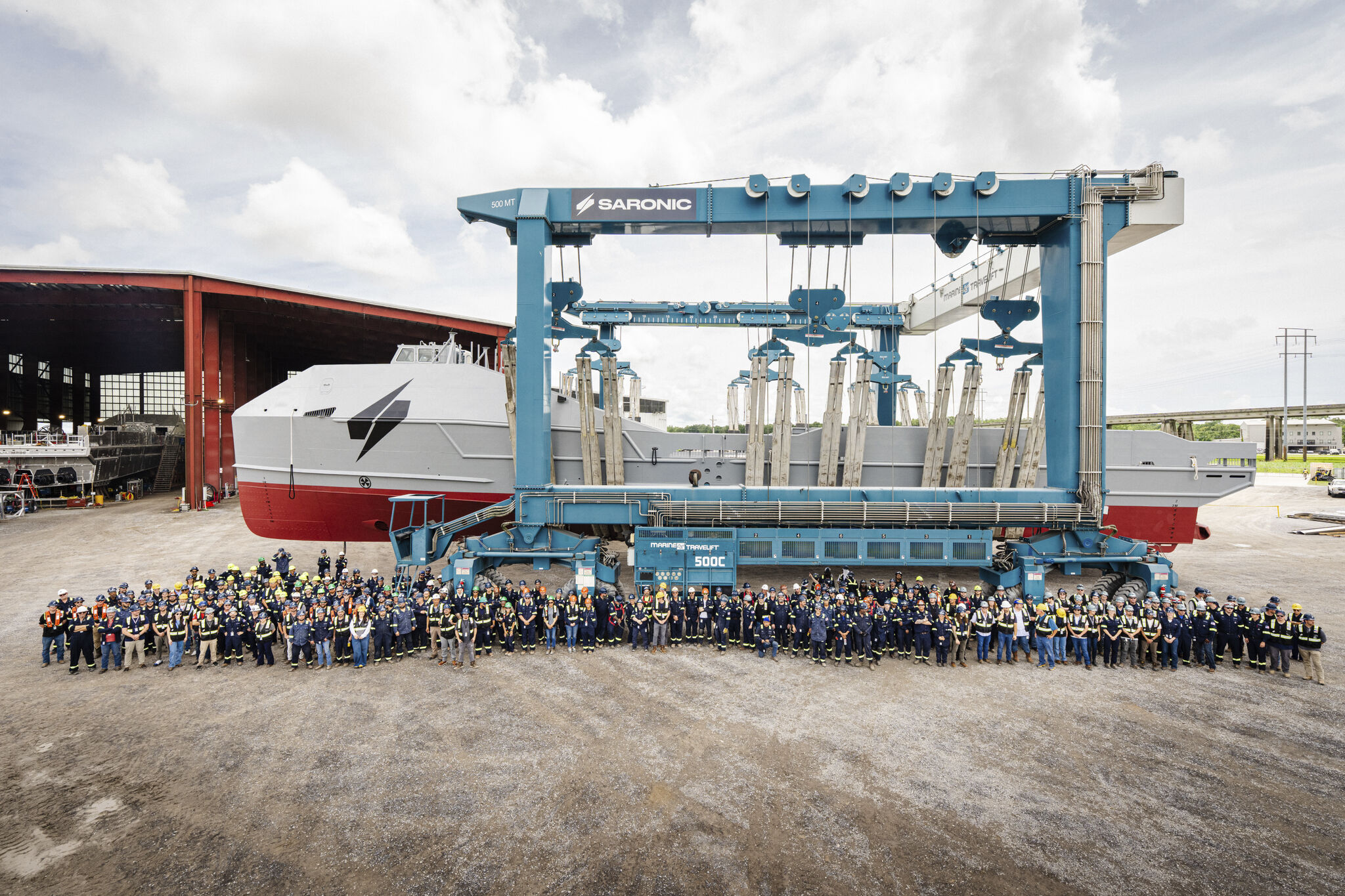
Military Sentinel, Washington – The U.S. Navy has selected three Louisiana-based shipbuilders to construct up to 30 medium unmanned surface vessels, executing a major Navy MUSV deal intended to accelerate autonomous platforms into operational fleet architectures.
The move marks one of the service’s most significant production commitments to date under its hybrid-fleet roadmap. By distributing serial production across commercial and midsized yards along the Gulf Coast, naval planners aim to bypass backlog bottlenecks at Tier-1 combatant shipyards while accelerating the delivery of attritable, persistent scout and sensor craft.
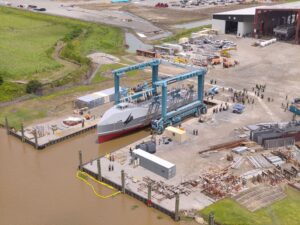
The Medium Unmanned Surface Vessel (MUSV) initiative is designed to field autonomous, self-deploying vessels capable of operating alongside crewed surface action groups. Rather than carrying heavy kinetic strike payloads, these craft are optimized for long-endurance reconnaissance, electronic warfare, and data-relay missions.
Length & Displacement: Typically 45 to 60 meters (150–200 feet), displacing approximately 500 tons [VERIFY SOURCE: Program Office baseline].
Endurance: 60 to 90 days of autonomous operations at sea without human intervention.
Core Missions: Over-the-horizon targeting, intelligence, surveillance, and reconnaissance (ISR), and acting as modular distributed sensor nodes.
Propulsion & Hull: Commercial off-the-shelf (COTS) derived hull forms with redundant, low-maintenance diesel propulsion systems.
By keeping the platform within medium dimensions, the Navy leverages commercial shipbuilding design practices rather than expensive military-standard combatant specifications.
Contract awards across three separate Louisiana facilities highlight a conscious effort by the Pentagon to build redundant manufacturing capacity. While larger shipyards remain consumed with backlogs on the Constellation-class frigate program and Virginia-class attack submarines, smaller yards with commercial tug, supply, and patrol boat pedigree offer faster build cycles.
Naval Sea Systems Command (NAVSEA) officials have previously stressed that scaling autonomous vessels requires an industrial base model closer to commercial workboat construction than traditional warship procurement [VERIFY SOURCE: NAVSEA Public Statement]. Dividing the 30-ship allocation ensures steady yard throughput while mitigating delivery risks tied to single-facility disruptions.
The acquisition directly underpins the Navy’s Distributed Maritime Operations (DMO) concept, particularly in wide expanses like the Indo-Pacific. A single crewed guided-missile destroyer can control multiple MUSVs acting as forward radar pickets, forcing adversary sensors to reckon with a broader, more deceptive tactical picture.
Going forward, the critical metric for this 30-ship buy will not simply be launch velocity from Louisiana slipways, but the speed at which autonomous command-and-control architectures and automated reliability standards can prove themselves during frontline fleet exercises.