Physical Address
304 North Cardinal St.
Dorchester Center, MA 02124
Physical Address
304 North Cardinal St.
Dorchester Center, MA 02124

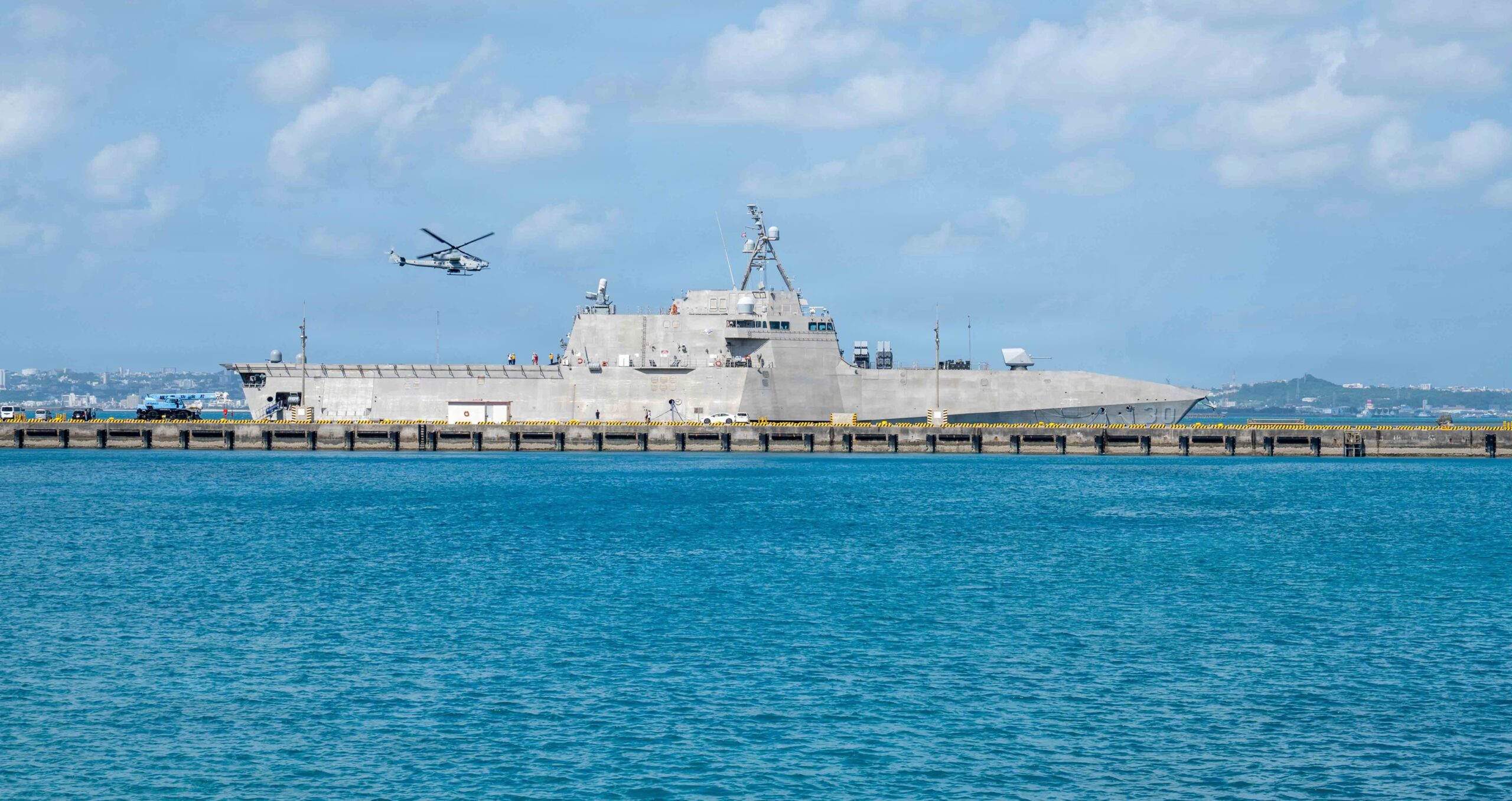
Military Sentinel, Washington – The U.S. Navy and Marine Corps have completed initial operational evaluations exploring the use of Independence-class Littoral Combat Ships as mobile forward-operating aviation nodes for Marine AH-1Z Viper attack helicopters. The recent flight deck and refueling integration tests mark an important step in expanding distributed maritime operations across contested littoral regions.
By evaluating surface combatants as flexible aviation staging platforms, naval leaders seek to provide tactical commanders with more resilient options for distributed power projection. The initiative aims to bridge the gap between traditional amphibious assault ships and smaller surface action groups operating in shallow waters.
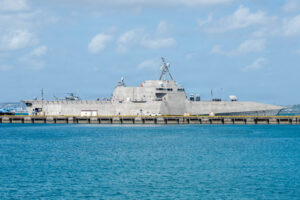
The integration trials, highlighted by flight operations aboard the Independence-class vessel USS Canberra (LCS 30) in the Philippine Sea, validate the operational feasibility of landing, servicing, and launching rotary-wing combat assets from smaller surface platforms. Littoral Combat Ships were originally designed for speed, shallow-draft access, and modular mission packages. However, evolving strategic requirements in the Indo-Pacific have driven naval planners to maximize the secondary aviation capabilities of existing hulls.
Integrating the twin-engine AH-1Z Viper onto these ships allows naval and marine task forces to establish dispersed aviation nodes without relying exclusively on large-deck amphibious ships. This operational flexibility supports modern expeditionary advanced base operations, enabling rapid redeployment of offensive air support across decentralized island chains and narrow seas.
Operating heavy attack helicopters from non-aviation-centric hulls presents distinct logistical and engineering hurdles. Littoral Combat Ships feature compact flight decks and limited hangar configurations compared to dedicated amphibious landing ships or aircraft carriers. Maintenance teams must manage refueling, ordnance loading, and minor structural inspections within restricted spatial footprints.
Furthermore, securing heavy rotorcraft during high sea states requires precise deck-handling procedures and specialized securing gear. While the AH-1Z shares a high degree of parts commonality and maintenance philosophy with the utility-focused UH-1Y Venom, sustainment footprints aboard surface combatants must be carefully balanced against primary shipboard mission requirements and magazine capacities.
The Bell AH-1Z Viper serves as the primary attack platform for the U.S. Marine Corps, optimized specifically for littoral and expeditionary warfare environments. Equipped with a four-bladed composite main rotor system, two General Electric T700 turboshaft engines, and an advanced digital cockpit, the aircraft delivers high agility and low acoustic signatures.
Its targeting architecture centers on the Lockheed Martin AN/AAQ-30 Target Sight System (TSS), providing high-definition mid-wave forward-looking infrared capabilities. For offensive action, the Viper carries a three-barreled 20mm rotary cannon alongside six wing stations capable of loading AGM-114 Hellfire missiles, AGM-179 Joint Air-to-Ground Missiles (JAGM), and precision-guided APKWS rocket configurations.
The ability to operate strike-capable helicopters from surface combatants fundamentally alters tactical calculations in narrow maritime choke points. Adversaries operating anti-access and area-denial (A2/AD) networks must account for distributed platforms capable of projecting precision firepower from unexpected vectors.
As naval forces refine these tactics, future deployments will likely focus on expanding communications interoperability, hot-refueling procedures, and sustained multi-day operations. These developments ensure that surface action groups can maintain persistent air support and surface surveillance without tethering themselves to fixed regional airbases.

James Whitfield is a defense news writer at Military Sentinel, covering military technology, naval operations, military aviation, international security, and global defense developments. His work focuses on providing informative reporting, relevant context, and accessible explanations of modern military affairs and emerging defense technologies.
Contact: [email protected]