Physical Address
304 North Cardinal St.
Dorchester Center, MA 02124
Physical Address
304 North Cardinal St.
Dorchester Center, MA 02124
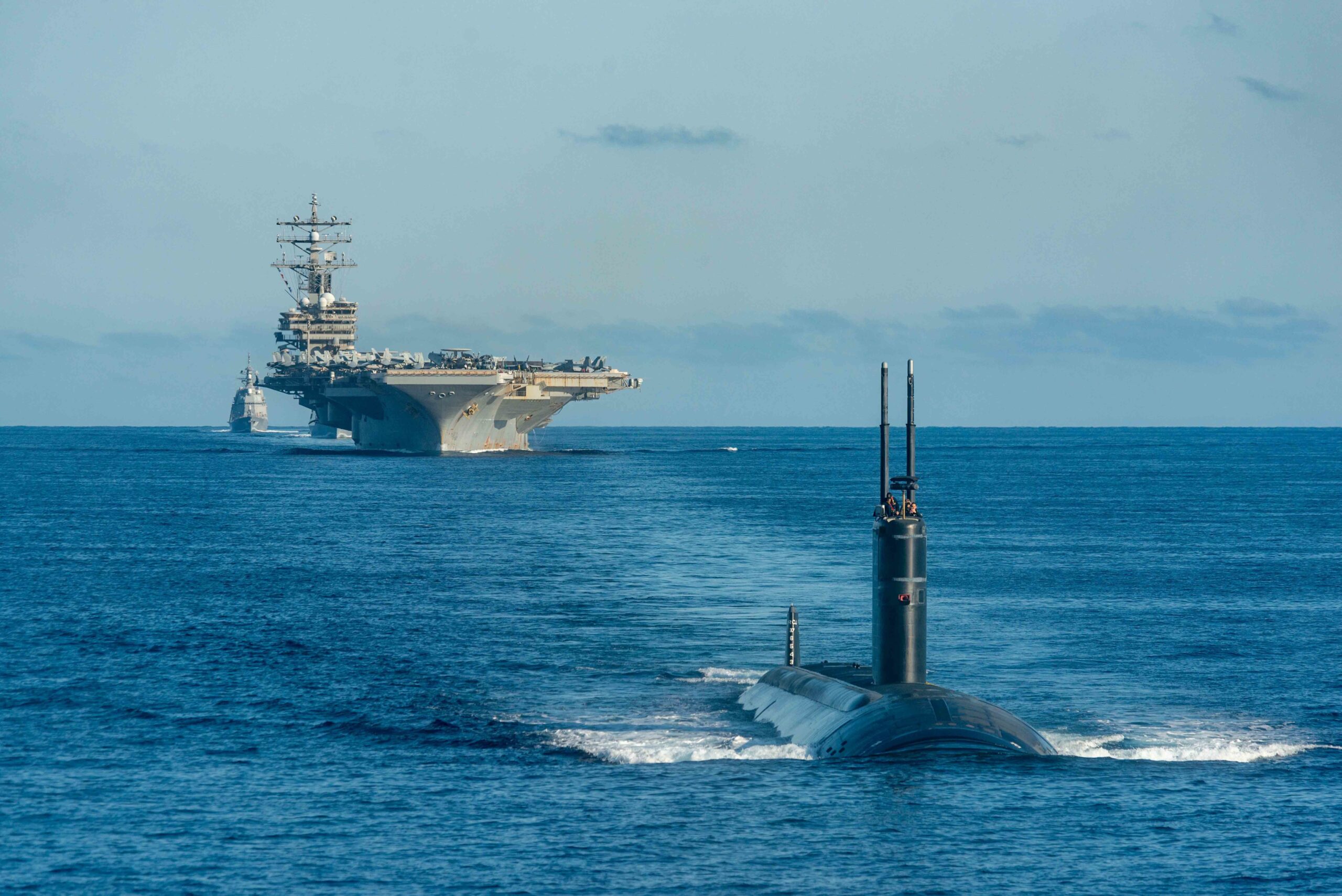
Military Sentinel, Yokosuka, Japan – U.S., Japanese, and South Korean submarines conducted direct anti-submarine warfare (ASW) training in the Western Pacific from August 25–27, 2026, tracking one another and simulating undersea engagements in a rare display of trilateral submarine cooperation, according to a disclosure made by U.S. Navy Submarine Group Seven on September 4.
A Royal Australian Air Force P-8A Poseidon maritime patrol aircraft supported the exercise, adding airborne acoustic search and targeting capability and turning the drill into a four-nation undersea warfare scenario. Submarine Group Seven, headquartered in Yokosuka, disclosed the exercise roughly a week after it concluded.
Beyond mutual tracking, the three submarine crews practiced joint water-space management the deconfliction procedures that keep allied submarines from mistaking one another for hostile contacts, or interfering with each other’s operating areas. A Royal Australian Navy liaison officer worked from Commander Task Force 74’s Theater Undersea Warfare Commander Maritime Operations Center in Yokosuka, tying the tactical-level activity to U.S. theater-level command and control.
The U.S. Navy did not identify the submarines involved, their hull classes, or the precise operating area, and it stopped short of naming China as the simulated adversary. No independent confirmation of submarine identities or exact location is currently available; readers should treat those specifics as undisclosed rather than assumed.
Submarine-on-submarine training between allied navies is unusual. Surface and air exercises among the U.S., Japan, South Korea, and Australia are routine in the Indo-Pacific, but submarine forces closely guard acoustic signatures and tactical procedures, so combined undersea drills signal a deeper level of operational trust than most public exercises.
The training comes as the People’s Liberation Army Navy continues to expand and modernize its submarine fleet and push operations farther beyond the first island chain into the Philippine Sea and wider Western Pacific a trend widely reported by defense researchers and the Pentagon’s annual China military power assessments in prior years. The general trajectory of Chinese submarine modernization is well documented in open-source defense literature, though this specific article does not cite current PLAN submarine numbers, and any such figures would need separate verification.
Japan’s geography straddling key chokepoints along the first island chain makes its submarine force central to monitoring routes between Chinese coastal waters and the open Pacific. South Korea’s participation extends what has historically been a bilateral U.S.-Japan undersea relationship, adding another advanced conventional submarine force oriented toward the Korean Peninsula and surrounding waters.
Analysts frame the drill as part of a broader shift from allied presence in the Pacific toward genuine coalition undersea warfare layering submarines, long-range maritime patrol aircraft, and shared command architecture so that a transiting adversary submarine must account for multiple national sensor networks rather than one. Whether this specific exercise meaningfully changes operational outcomes in a contingency is not something that can be assessed from the available disclosure alone, since no details on sensor performance, detection ranges, or exercise outcomes were released.
The U.S. Navy has not announced whether the trilateral submarine format will recur on a fixed schedule. The future cadence, participating classes, and formal agreements (if any) should be confirmed against subsequent U.S. Navy, Japan Maritime Self-Defense Force, or Republic of Korea Navy statements as they emerge.