Physical Address
304 North Cardinal St.
Dorchester Center, MA 02124
Physical Address
304 North Cardinal St.
Dorchester Center, MA 02124

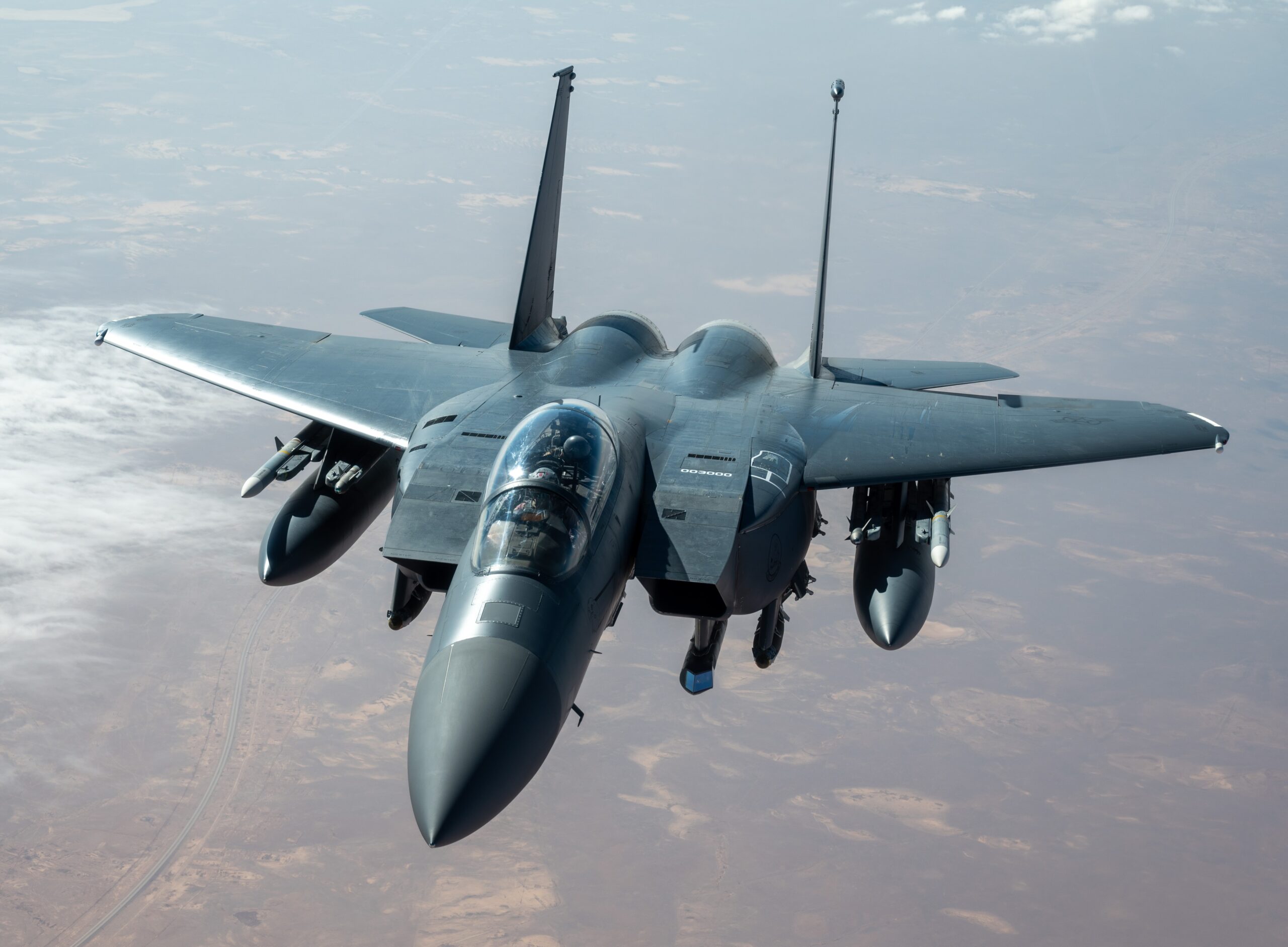
Military Sentinel, Washington – The United States Air Force has integrated and operationally fielded the Advanced Precision Kill Weapon System (APKWS) on F-15E Strike Eagle multirole fighters to counter massed Iranian-designed one-way attack drones across the U.S. Central Command (CENTCOM) area of responsibility.
The emergency integration, accelerated by the 96th Test Wing and the 53rd Wing at Eglin Air Force Base, Florida, equips the heavy strike fighter with a high-capacity, low-cost interceptor designed to solve a worsening cost-exchange curve in modern counter-unmanned aerial systems (C-UAS) warfare.
During major aerial barrages where adversaries deploy hundreds of low-flying, slow-speed Shahed-family loitering munitions U.S. and allied combat air patrols previously relied on medium-range AIM-120 AMRAAMs and infrared-guided AIM-9X Sidewinders.
These frontline air-to-air missiles carry per-unit procurement costs ranging from $450,000 to over $1 million each. Intercepting expendable drones valued at $20,000 to $40,000 with high-end radar-guided weapons created severe inventory strain and an unsustainable financial imbalance. In previous engagements, fighter crews quickly exhausted onboard air-to-air stores, forcing pilots to resort to gun runs or attempt unconventional intercepts.
The operational deployment of F-15E APKWS rockets directly remedies this dilemma. By inserting BAE Systems’ mid-body guidance unit between an unguided Hydra 70 rocket motor and standard warhead, service branches transform legacy ordnance into laser-guided precision munitions costing approximately $35,000 per round.
Originally engineered for precision close air support against light ground targets, the air-to-air variant designated AGR-20F FALCO was initially validated on USAF F-16 Fighting Falcons before rapid adaptation to the Strike Eagle fleet.
Guidance: Semi-active laser seeker (distributed aperture on guidance fins)
Designation: Onboard targeting pod (e.g., AN/AAQ-33 Sniper ATP)
Unit Cost: ~$35,000 (versus ~$1M+ for AIM-120)
Carriage Capacity: Seven-tube LAU-131/A pods; F-15E configurations can carry multiple pods, supporting deep magazines of up to 42 APKWS rockets alongside standard air-to-air missile loads
Propulsion: Standard 2.75-inch (70 mm) Mk 66 rocket motor
Because the rocket requires continuous semi-active laser designation until impact, weapon systems officers (WSOs) track and “lase” targets using the aircraft’s high-definition targeting pod. This operational profile aligns with non-maneuvering, slow-flying targets like suicide drones and cruise missiles.
“The need for the system was clear,” noted Air Force weapons integration officials, highlighting that operational squadrons abroad began receiving gear and training within days of initial test completion.
The move reflects a broader doctrine shift across the Department of Defense to safeguard high-end air-to-air interceptors for peer air-superiority contingencies. With distributed drone swarms becoming a fixture of regional asymmetric warfare, fielding deep-magazine laser rockets ensures fighter wings can sustain extended defensive patrols without risking magazine depletion or prohibitive operational costs.