Physical Address
304 North Cardinal St.
Dorchester Center, MA 02124
Physical Address
304 North Cardinal St.
Dorchester Center, MA 02124

Military Sentinel, Washington – The United States is actively expanding its national counter-drone defense architecture beyond forward combat zones to safeguard critical domestic infrastructure from asymmetric, low-cost unmanned aerial strikes.
The Pentagon and interagency homeland defense partners are shifting strategic emphasis away from relying solely on active kinetic interceptors toward an integrated, layered posture. The updated doctrine integrates physical hardening, electronic warfare, and multi-agency operational resilience to ensure domestic power grids, refineries, transportation hubs, and military bases sustain essential operations even during saturating drone attacks.
The global proliferation of commercial off-the-shelf and low-cost uncrewed aerial systems (UAS) has transformed modern operational risks. Conventional high-tier integrated air and missile defense systems such as Patriot or THAAD are economically unviable and technically ill-suited against swarms of cheap, low-altitude quadcopters and loitering munitions.
To counter this threat, the Department of Defense is bridging operational gaps through the Joint Counter-small UAS Office (JCO), Defense Innovation Unit (DIU), and the newly established Joint Interagency Task Force 401 (JIATF 401). The strategic pivot focuses heavily on solving the “cost-exchange curve” when engaging massed aerial targets.
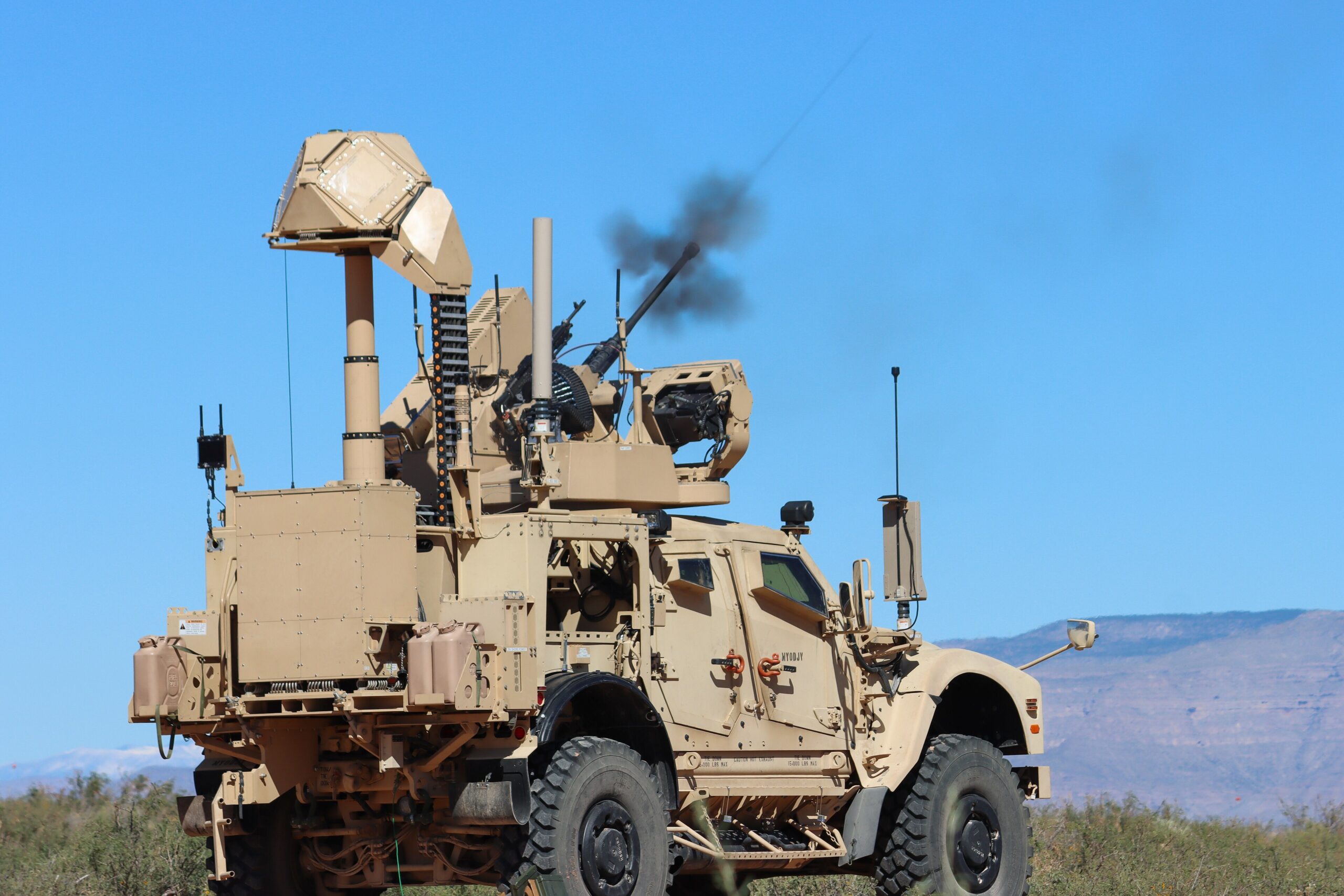
Central to the Pentagon’s tactical procurement pipeline is the Low, Slow, Small Unmanned Aircraft Integrated Defeat System (LIDS) architecture, fielded across two core variants:
FS-LIDS (Fixed Site): Designed for persistent installation defense, combining Ku-band Multi-Function Radio Frequency System (KuRFS) radar, electro-optical/infrared (EO/IR) turrets, and Forward Area Air Defense Command and Control (FAAD C2).
M-LIDS (Mobile): Mounted on tactical vehicles such as mine-resistant ambush-protected (MRAP) platforms to protect mobile formations and rapidly deployable sites.
The LIDS ecosystem relies extensively on Raytheon’s Coyote family of interceptors. Alongside kinetic Block 2 interceptors, the military has successfully tested the Coyote Block 3NK (Non-Kinetic) variant, which provides recoverable, reusable electromagnetic defeat capabilities to engage multiple drone groupings without expending a munition for every intercept.
Complementing service-specific acquisitions is Replicator 2, an initiative aimed at standardizing and fielding counter-UAS capabilities across vulnerable military installations and force concentrations within both the continental United States and forward theaters.
Air defense planners acknowledge that no interceptor network guarantees a 100% defeat rate against swarm incursions. Consequently, federal doctrine emphasizes systemic resilience:
Low-Collateral Defeat: Deploying high-power microwave (HPM), directed energy lasers, and targeted RF jammers around urban and industrial centers to neutralize drones without explosive debris.
Infrastructure Hardening: Designing redundant pathways for power, fuel, and data pipelines to maintain uptime if an asset is damaged.
Unified Domestic C2: Integrating military radar feeds with civilian monitoring networks operated by the Department of Homeland Security (DHS) and the Federal Aviation Administration (FAA).
The defense industrial base faces rapidly expanding requirements as counter-drone procurement shifts toward software-defined radars, modular command suites, and non-kinetic effectors. Moving forward, safeguarding critical infrastructure will depend not on a single silver-bullet weapon, but on whether the United States and its allies can seamlessly integrate cost-effective interceptors with robust, passive defensive engineering.