Physical Address
304 North Cardinal St.
Dorchester Center, MA 02124
Physical Address
304 North Cardinal St.
Dorchester Center, MA 02124

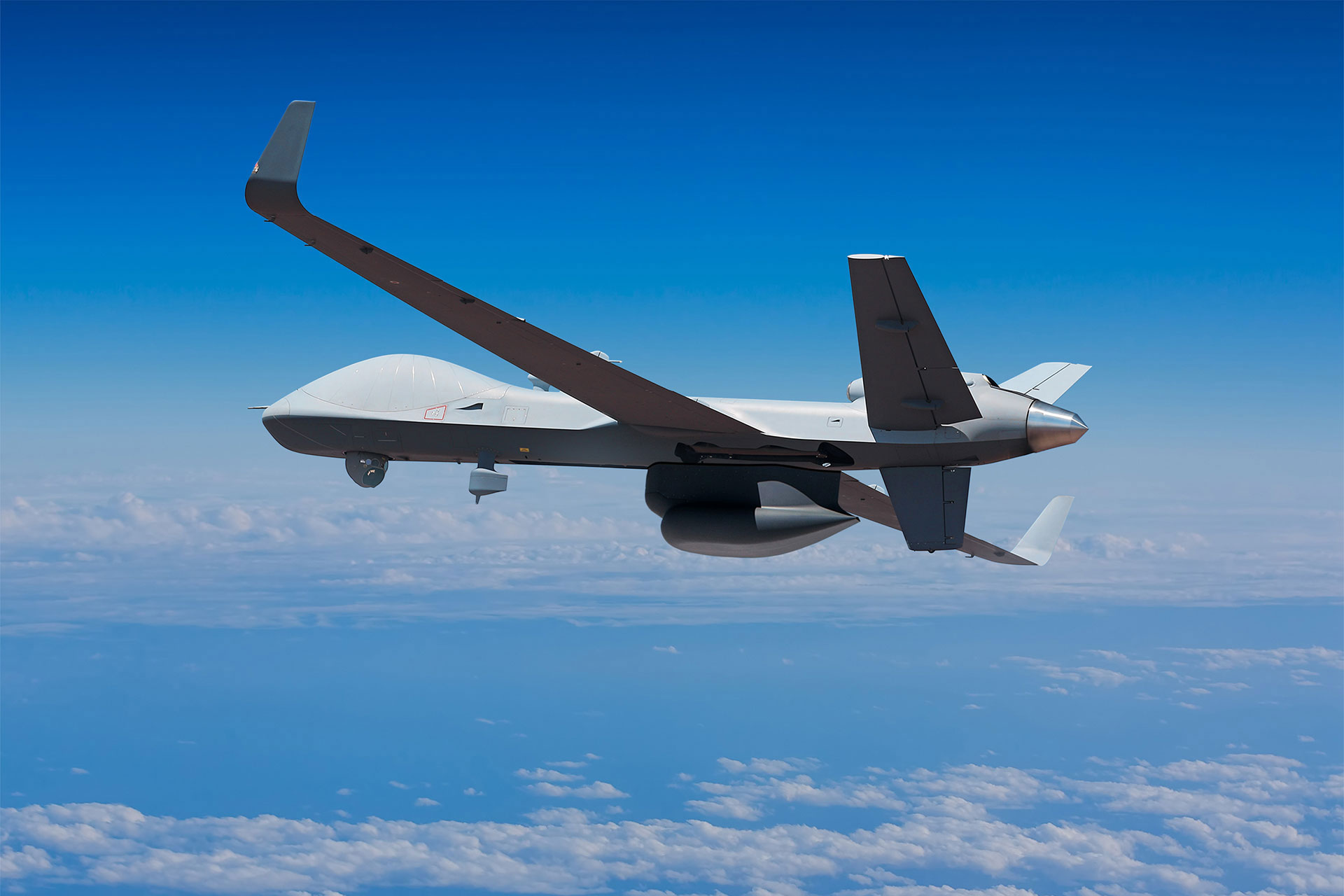
Military Sentinel, Washington – The U.S. Coast Guard has finalized a $247.8 million procurement contract with General Atomics Aeronautical Systems for four MQ-9B long-range unmanned aircraft systems. Placed through an existing U.S. Customs and Border Protection contract vehicle, the agreement covers the delivery of the multi-mission platforms alongside essential ground control stations and supporting equipment. The investment represents a major milestone in expanding the service’s over-the-horizon intelligence, surveillance, and reconnaissance (ISR) capabilities across vast maritime domains.
This initial acquisition marks a transition from operational testing using legacy assets to a dedicated, service-owned long-endurance drone capability. As maritime security threats expand across broader ocean areas, the Coast Guard’s new unmanned systems are designed to bridge critical gaps in wide-area monitoring, target tracking, and coordinated interdiction.
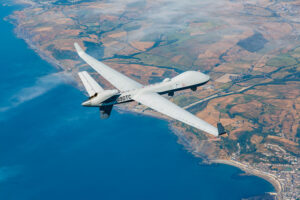
The MQ-9B platform brings significant endurance and reach to the Coast Guard’s operational toolkit. According to General Atomics specifications, the aircraft can remain aloft for more than 30 hours under optimal conditions, maintaining an operational mission radius of approximately 1,200 nautical miles. This extended persistence allows flight crews to monitor remote shipping lanes, fisheries, and border approaches far beyond the reach of traditional surface cutters and manned aircraft.
Service leadership noted that the procurement builds upon years of operational experience gained through a joint program office with U.S. Customs and Border Protection (CBP) in Texas. Operating out of this joint framework, Coast Guard flight crews previously utilized CBP-owned MQ-9A aircraft to support missions alongside Joint Interagency Task Force South. During fiscal year 2026 alone, those cooperative missions contributed to the interception of approximately 60,700 pounds of illicit narcotics and the apprehension of roughly 20 suspects.
The acquisition is supported by a combination of fiscal year 2025 budget reconciliation funds and fiscal year 2026 appropriations. The broader legislative reconciliation package delivered a historic capital injection of nearly $25 billion to the Coast Guard, enabling the service to accelerate long-delayed fleet modernization, infrastructure upgrades, and technological integration. Approximately $16.3 billion of that total has already been allocated toward concrete orders for new assets, positioning the service to address growing operational demands in both domestic waters and contested strategic approaches.
Integrating unmanned systems into the Coast Guard’s operational inventory aligns with a broader push across the U.S. armed services to leverage uncrewed assets for dull, dirty, and dangerous missions. While short-range uncrewed systems already support tactical operations across the service’s statutory missions, and medium-range assets operate alongside National Security Cutters, the addition of the long-range MQ-9B introduces a strategic information layer that directly connects wide-area detection with tactical surface units.
The MQ-9B configuration acquired by the Coast Guard is engineered to operate seamlessly in both civil and military airspace, featuring advanced satellite-enabled beyond-line-of-sight command and control architecture. The aircraft’s modular payload capacity allows it to host high-definition electro-optical and infrared sensors, maritime surface-search radars, and automatic identification system (AIS) receivers simultaneously.
These sensor suites enable operators to track dark targets vessels running with their transponders disabled across immense stretches of open ocean. Furthermore, the platform’s certification readiness allows it to operate alongside commercial air traffic without disrupting civil aviation lanes, a critical requirement for domestic homeland security missions.
The introduction of dedicated long-range unmanned assets is expected to reshape how the Coast Guard covers vast maritime boundaries, particularly in environments marked by shifting geopolitical competition and increased environmental activity. By providing continuous, unblinking surveillance over high-risk transit zones, the platforms reduce the physical strain on manned cutter crews while maximizing the efficiency of surface interdiction assets.
Future milestones for the program will include the delivery timeline of the four contracted aircraft, ground station integration, and the establishment of dedicated training pipelines for Coast Guard remote pilots and sensor operators. As these systems achieve operational status, they will provide federal authorities with an enhanced, persistent eyes-on-the-water capability designed to secure maritime borders against illicit trafficking and illegal maritime activities.

James Whitfield is a defense news writer at Military Sentinel, covering military technology, naval operations, military aviation, international security, and global defense developments. His work focuses on providing informative reporting, relevant context, and accessible explanations of modern military affairs and emerging defense technologies.
Contact: [email protected]