Physical Address
304 North Cardinal St.
Dorchester Center, MA 02124
Physical Address
304 North Cardinal St.
Dorchester Center, MA 02124

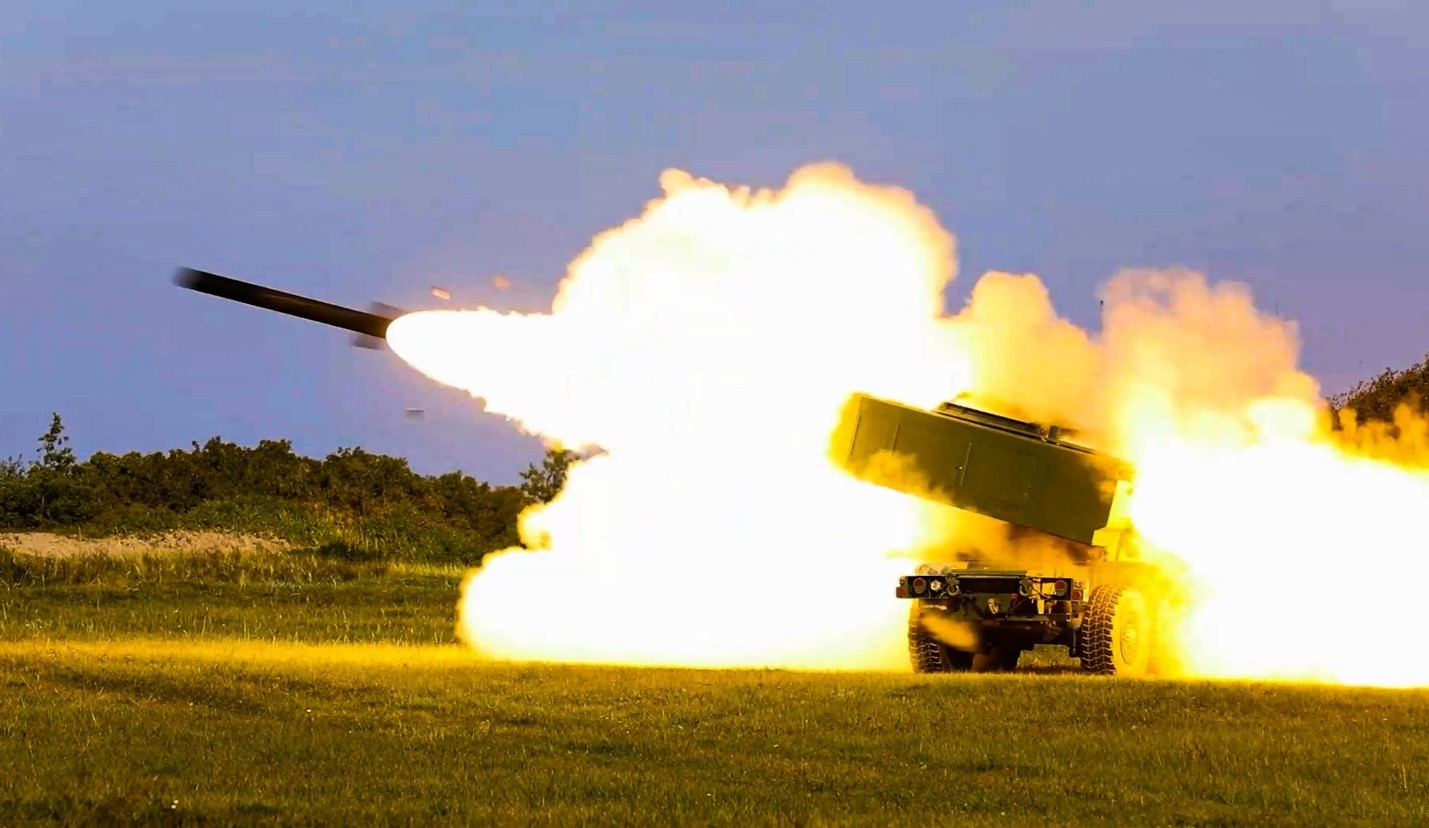
Military Sentinel, Washington – Lockheed Martin and General Dynamics have successfully conducted a key static firing test for a newly manufactured solid rocket motor intended for the Guided Multiple Launch Rocket System. The recent trial represents a crucial milestone in efforts to streamline supply chains and significantly expand ammunition manufacturing capacity for both the M142 High Mobility Artillery Rocket System (HIMARS) and the tracked M270 multiple launch rocket platforms.
The evaluation underscores a broader push by defense contractors and the U.S. Department of Defense to eliminate industrial bottlenecks that have constrained precision artillery output amid high international demand. By qualifying alternative or enhanced propulsion components, program managers aim to accelerate assembly lines and maintain a steady flow of munitions to armed forces units.

The static motor firing evaluated performance metrics, structural integrity, and propulsion consistency under simulated operational stresses. Engineers monitored internal pressures, thrust curves, and thermal tolerances to ensure the newly manufactured propulsion units meet the rigorous performance standards required for precision-guided artillery.
The Guided Multiple Launch Rocket System relies on solid-fuel rocket motors to deliver precision warheads over extended distances with high reliability. Introducing modernized manufacturing techniques and alternative component suppliers allows prime contractors to scale up production rates without compromising flight accuracy or explosive payload delivery.
Both the wheeled HIMARS, which carries a single six-round pod, and the tracked M270, which accommodates two pods totaling twelve rockets, depend on these standardized propulsion assemblies. Ensuring a diversified and robust supply chain for rocket motors directly translates to higher throughput at manufacturing facilities located across the United States.
The Guided Multiple Launch Rocket System has served as a critical asset for modern land warfare, offering all-weather, responsive, and precise fire support. Sustaining high inventory levels has remained a key priority for military planners as allied nations continue to rely on the artillery systems for tactical deterrence and defensive operations.
Production scaling initiatives have faced historical bottlenecks related to specialized chemical propellants, motor cases, and electronic components. By validating new motor designs and expanding industrial base participation, defense officials seek to build a more resilient manufacturing ecosystem capable of surging output during periods of heightened global demand.
Following the successful completion of this static test phase, project teams will review telemetry and performance data to authorize full-rate integration. Subsequent steps will involve incorporating the verified rocket motors into active production lots destined for inventory replenishment and field deployment.
As defense industrial facilities continue to modernize, these manufacturing enhancements will play a foundational role in sustaining long-range precision strike capabilities for U.S. and allied forces operating HIMARS and M270 platforms worldwide.

James Whitfield is a defense news writer at Military Sentinel, covering military technology, naval operations, military aviation, international security, and global defense developments. His work focuses on providing informative reporting, relevant context, and accessible explanations of modern military affairs and emerging defense technologies.
Contact: [email protected]