Physical Address
304 North Cardinal St.
Dorchester Center, MA 02124
Physical Address
304 North Cardinal St.
Dorchester Center, MA 02124


Military Sentinel, Whiteman Air Force Base – The United States Air Force has officially returned a notable B-2 Spirit strategic stealth bomber to active operational status following an extensive depot maintenance program executed by Northrop Grumman.
The completion of this deep-level overhaul restores a critical low-observable penetration asset to the 509th Bomb Wing, underscoring the ongoing challenges and technical complexities involved in maintaining the world’s most sophisticated low-observable flying-wing fleet as the Pentagon bridges the gap toward next-generation aviation systems.
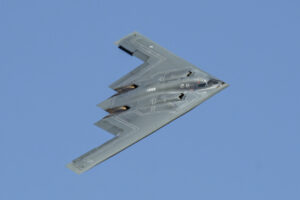
The recent maintenance cycle focused heavily on renewing the aircraft’s delicate radar-absorbent materials and composite structures, which are essential for maintaining its minimal radar cross-section. Depot technicians addressed extensive thermal and acoustic fatigue across high-stress components, including the replacement of the aircraft’s hot trailing edge assembly.
Because the B-2 relies on precise aerodynamic contours and specialized surface treatments to defeat enemy radar frequencies, even minor degradation in its skin panels can severely compromise its penetration survivability. The depot overhaul ensured that the bomber’s low-observable performance matches the rigorous tactical requirements demanded by modern integrated air defense environments.
With a total inventory of only 20 operational aircraft remaining from a small initial production run, every individual B-2 airframe represents an irreplaceable strategic asset for the U.S. military. The 509th Bomb Wing, stationed at Whiteman Air Force Base in Missouri, manages both the global strike deployment missions and the training pipeline for all active-duty and Air National Guard B-2 flight crews.
Because the fleet is so limited in size, extended depot periods inevitably create temporary capacity constraints for Global Strike Command. Maintaining these legacy platforms requires specialized climate-controlled infrastructure and meticulous hand-applied coating procedures that cannot be rushed without risking mission readiness.
Even as defense planners look ahead to the integration of the Northrop Grumman B-21 Raider, the B-2 fleet remains the backbone of America’s long-range conventional and nuclear deep-penetration capability. Capable of carrying up to 40,000 pounds of internal ordnance—ranging from massive bunker-busters to advanced precision-guided munitions—the flying wing can project power globally without relying on forward-deployed staging bases.
Successfully cycling these complex aircraft through deep depots ensures that the Air Force can sustain a credible, survivable nuclear deterrent and global strike posture while the defense industrial base slowly transitions toward newer stealth architectures over the next decade.