Physical Address
304 North Cardinal St.
Dorchester Center, MA 02124
Physical Address
304 North Cardinal St.
Dorchester Center, MA 02124

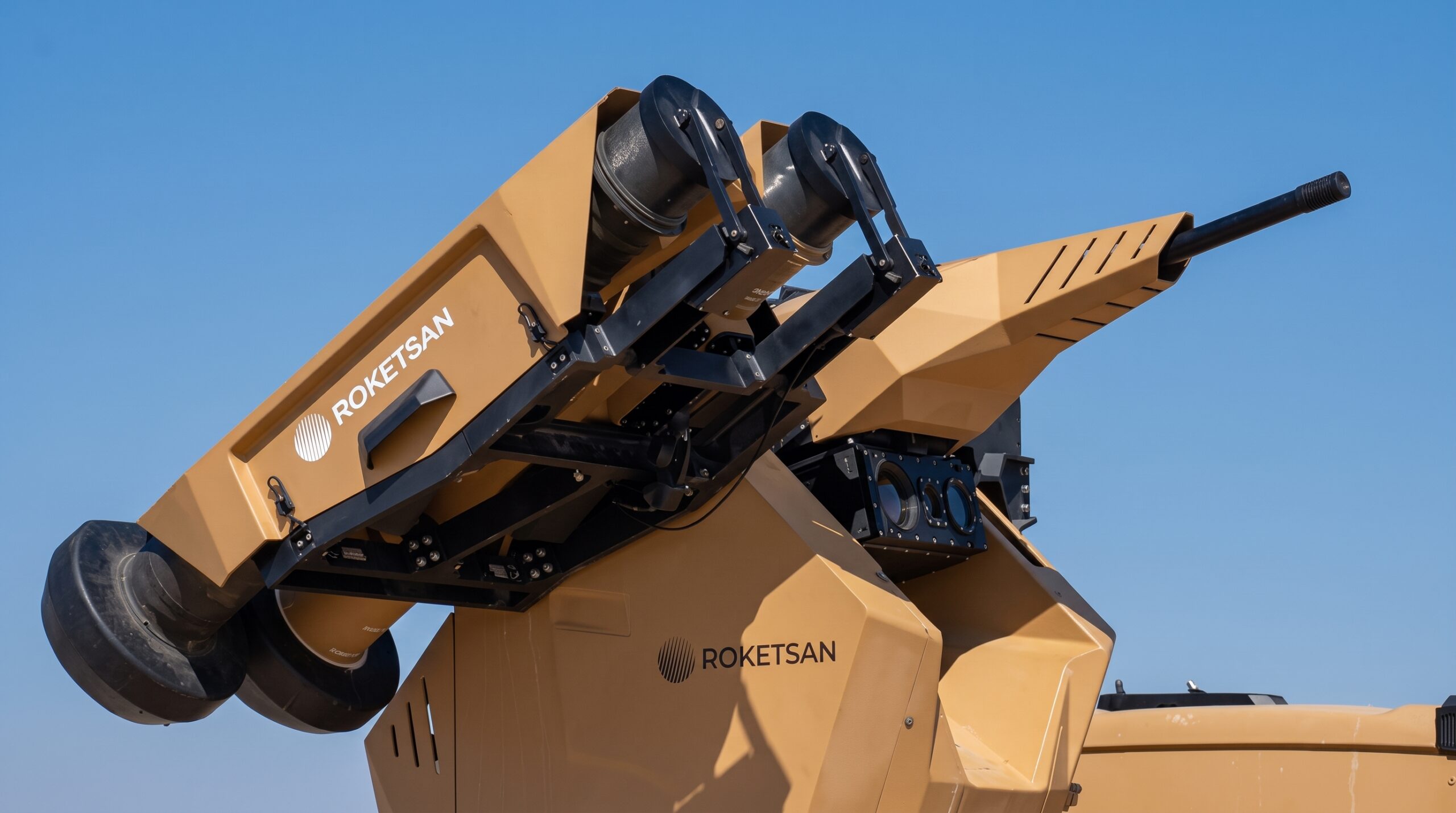
Military Sentinel, Ankara – Turkish defense contractor Roketsan has successfully used its shoulder-launched KARAOK anti-tank guided missile to intercept an aerial drone for the first time, signaling a growing trend of adapting infantry precision-strike weapons to counter low-flying loitering munitions.
The manufacturer announced the test via social media, releasing footage of the KARAOK firing from a mechanized turret mounted on a light tactical pickup truck. In the demonstration, the missile engaged and destroyed a target drone designed to replicate the flight characteristics of Iranian-designed Shahed-type one-way attack drones.
Originally developed as an infantry anti-armor weapon, the KARAOK entered active service with the Turkish Land Forces in 2022. Roketsan designed the weapon to offer man-portable, top-attack capability against heavily armored ground targets.
Guidance system: Imaging Infrared (IIR) fire-and-forget seeker
Diameter: 125 mm
Total weight: Under 16 kg (approx. 35 lbs), including the launch canister
Operational range: Greater than 2,500 meters
Platform: Man-portable shoulder launch or vehicle-integrated remote weapon station
The integration of an IIR seeker enables the missile to visually lock onto target thermal profiles during day or night operations. While originally tuned for ground vehicles, the seeker’s tracking algorithms possess sufficient tracking agility to engage low-speed, low-altitude aerodynamic targets without requiring manual wire guidance or radio links after launch.
The Ankara test directly mirrors operational tactics refined throughout the conflict in Ukraine, where defenders have systematically turned to anti-tank guided missiles (ATGMs) to plug critical gaps in air defense networks.
Ukrainian forces have repeatedly engaged Russian Shahed-136 drones and hovering reconnaissance platforms using domestically manufactured Stugna-P laser-guided ATGMs. In ad-hoc theater adaptations, Ukrainian units also deployed the improvised “STASH” system, pairing truck-mounted AGM-114 Hellfire missiles with compact RADA multi-mission radar units to counter jet-propelled aerial targets too fast for cheap interceptor drones to catch.
This tactical overlap exists because modern anti-armor missiles feature the high-resolution seekers, fast-acting control surfaces, and proximity or direct-impact blast fragmentation necessary to neutralize airborne threats at short ranges.
Mounting the KARAOK inside an automated vehicle turret frees ground operators from bearing the weapon’s weight and integrates the launcher with external fire-control feeds. This hybrid configuration transforms an infantry anti-tank weapon into an agile, cost-effective counter-unmanned aircraft system (C-UAS) point defense asset.
Roketsan has not yet indicated whether this vehicle-mounted anti-air profile will enter regular serial production as a dedicated C-UAS variant or remain a proof-of-concept configuration.
The missile has already achieved international market penetration: Malaysia became KARAOK’s first export customer under an agreement replacing legacy Russian-made Metis-M systems. As loitering munitions proliferate worldwide, multi-role anti-tank weapons capable of dual armor and counter-drone engagements are expected to draw heightened interest across allied militaries seeking layered base and convoy protection.