Physical Address
304 North Cardinal St.
Dorchester Center, MA 02124
Physical Address
304 North Cardinal St.
Dorchester Center, MA 02124

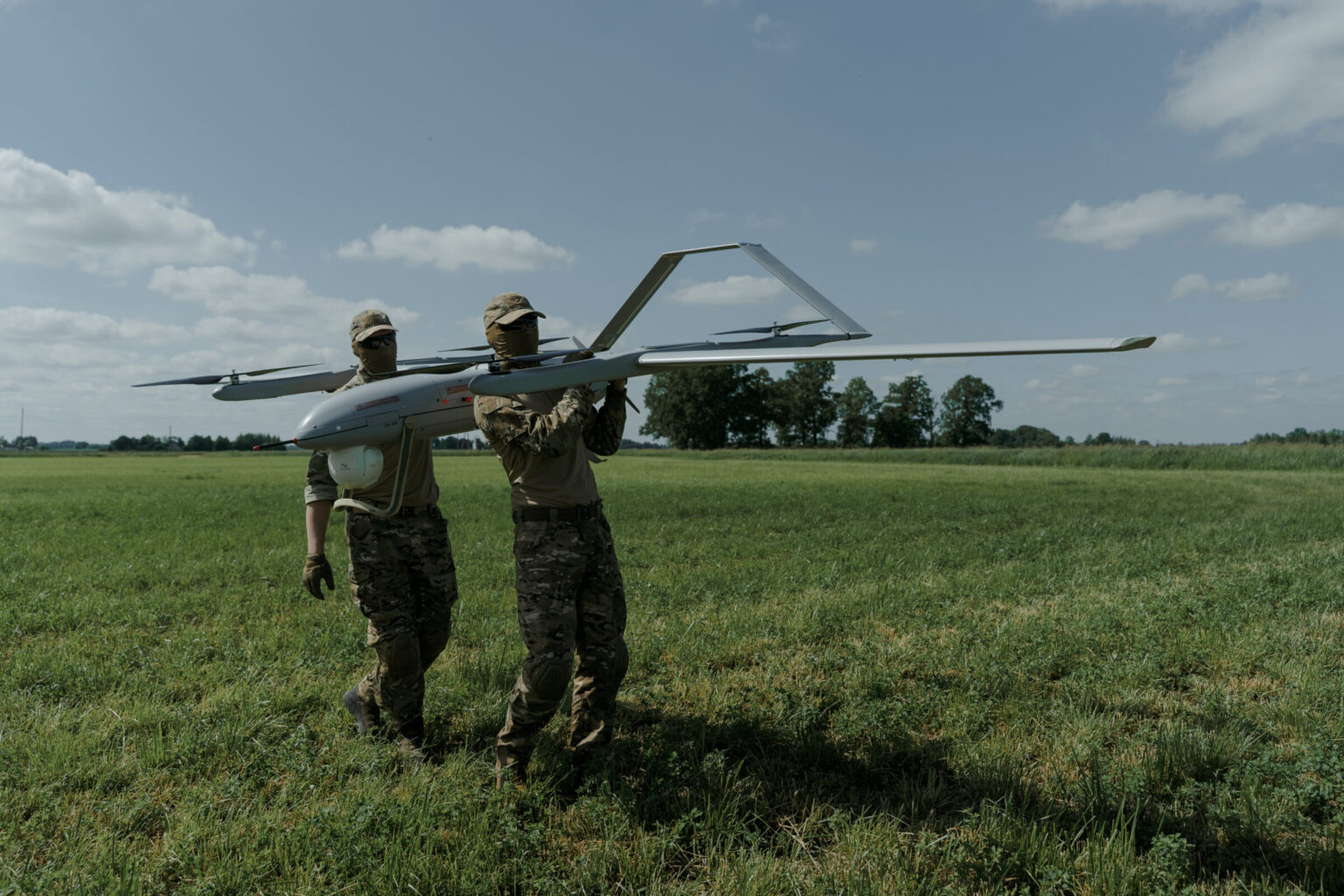
Military Sentinel, Riga – U.S. defense contractor Redwire Corporation has delivered more than 300 Penguin drones to Ukrainian front-line forces since 2022, deploying rapid design modifications to counter evolving Russian air-defense and interceptor tactics.
The company disclosed the milestone in a corporate operational update detailing four years of logistical and engineering support to Kyiv. The deliveries primarily encompass modern reconnaissance configurations designed to evade frontline threats while gathering long-range battlefield intelligence.
The primary variant currently operating in Ukraine is the upgraded Penguin Mk2X, a fixed-wing uncrewed aircraft system (UAS) optimized for intelligence, surveillance, and reconnaissance (ISR). While earlier iterations flew at lower operational ceilings, the Mk2X features aerodynamic and propulsion enhancements allowing it to operate at significantly higher altitudes.
According to Redwire, this increased ceiling specifically counters a growing tactic employed along the contact line: utilizing agile first-person-view (FPV) attack drones as low-cost aerial interceptors against slower reconnaissance platforms. Operating above the service ceiling of standard rotary-wing FPV loitering munitions provides the UAS an added layer of passive survivability.
Sensory capabilities center on the Octopus 180, a gyro-stabilized electro-optical/infrared (EO/IR) payload manufactured in Latvia. The sensor turret enables high-definition standoff tracking, allowing operators to monitor defensive installations, artillery positions, and troop movements outside immediate short-range air defense bubbles.
Redwire which entered the UAS sector through its acquisition of Edge Autonomy maintains direct procurement channels with the Ukrainian government alongside standard coalition aid packages. The company operates design and flight-testing infrastructure in Riga, Latvia, as well as an in-country engineering hub in Ukraine dedicated to repairs, field modifications, and operator training.
Field representatives stress that the platform’s survival relies entirely on rapid design cycles dictated by active Russian electronic warfare (EW) and counter-UAS maneuvers.
“Technology that was relevant here two months ago is now outdated,” said Redwire’s business development lead in Ukraine. “For each measure, our adversary comes up with a countermeasure, and then we must rapidly create a superior solution.”
Tuna Djemil, senior vice president of business development and strategy at Redwire Defense Tech, emphasized the role of modular architecture: “The Penguin deployed in Ukraine today is not the same aircraft procured four years ago. These improvements are a direct result of our modular system design… proving every day how UAS survivability depends on adaptability.”
The operational track record of Penguin drones in contested airspace has directly informed the development of Redwire’s next-generation platform, the Penguin Mk3.
Vertical Takeoff and Landing (VTOL): Autonomous launch and recovery without external catapults or runways.
Payload Capacity: Expanded multi-bay configuration designed for modular sensor integration and harsh-weather packages.
Crew Footprint: Streamlined field operation requiring only a two-person team.
An undisclosed NATO ally has already finalized a multi-year procurement contract for the Mk3 valued in the high eight figures. As GPS-denied environments and weaponized interceptor drones redefine reconnaissance doctrine across Eastern Europe, the Penguin family’s performance underscores how commercial-derived modular UAS platforms must evolve continuously to remain survivable in high-intensity peer conflicts.