Physical Address
304 North Cardinal St.
Dorchester Center, MA 02124
Physical Address
304 North Cardinal St.
Dorchester Center, MA 02124


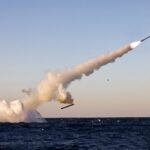
Military Sentinel, Tokyo – North Korea launched at least two ballistic missiles from its inland territories toward the Sea of Japan, with Japanese defense authorities confirming that the second projectile traveled a distance exceeding 910 kilometers.
The early morning launches triggered immediate tracking and intelligence-sharing protocols between Japan, the United States, and South Korea. Defense officials in Tokyo reported that the projectiles landed outside Japan’s territorial waters and exclusive economic zone, with no immediate reports of damage to maritime vessels or aircraft.

According to data released by Japan’s Ministry of Defense, the two ballistic missiles were fired consecutively from inland locations in North Korea. The first projectile was launched at approximately 9:19 a.m. local time, reaching a maximum altitude of roughly 20 kilometers and covering a flight distance of approximately 220 kilometers.
The second missile followed about 17 minutes later at 9:36 a.m., exhibiting a significantly extended flight profile. It reached a peak altitude of approximately 70 kilometers and traveled over 910 kilometers before splashing down in the Sea of Japan. Japanese Deputy Defense Minister Takashi Koyari noted that the trajectory and flight characteristics of the second weapon indicated potential irregular maneuvering, prompting joint technical evaluations among allied defense analysts.
Regional capitals responded swiftly to the test. South Korea’s presidential office condemned the launches, stating that Pyongyang’s continued missile activities represent clear violations of multiple United Nations Security Council resolutions. Seoul urged an immediate halt to actions that heighten regional security friction.
Defense analysts point out that recent testing trends by Pyongyang increasingly emphasize variable trajectories and low-altitude flight capabilities designed to complicate radar tracking and missile defense interception. By testing weapons capable of complex aerodynamic adjustments during flight, North Korea continues to refine its tactical and strategic delivery systems despite international sanctions.
Joint surveillance teams from Japan, the United States, and South Korea are continuing their technical analysis of telemetry data gathered during the flight. Intelligence agencies are examining whether the second missile incorporated advanced guidance features or warhead designs tested in prior developmental cycles. Authorities in Tokyo and Seoul maintain heightened readiness levels as regional defense partners assess potential responses to the ongoing series of missile tests.