Physical Address
304 North Cardinal St.
Dorchester Center, MA 02124
Physical Address
304 North Cardinal St.
Dorchester Center, MA 02124

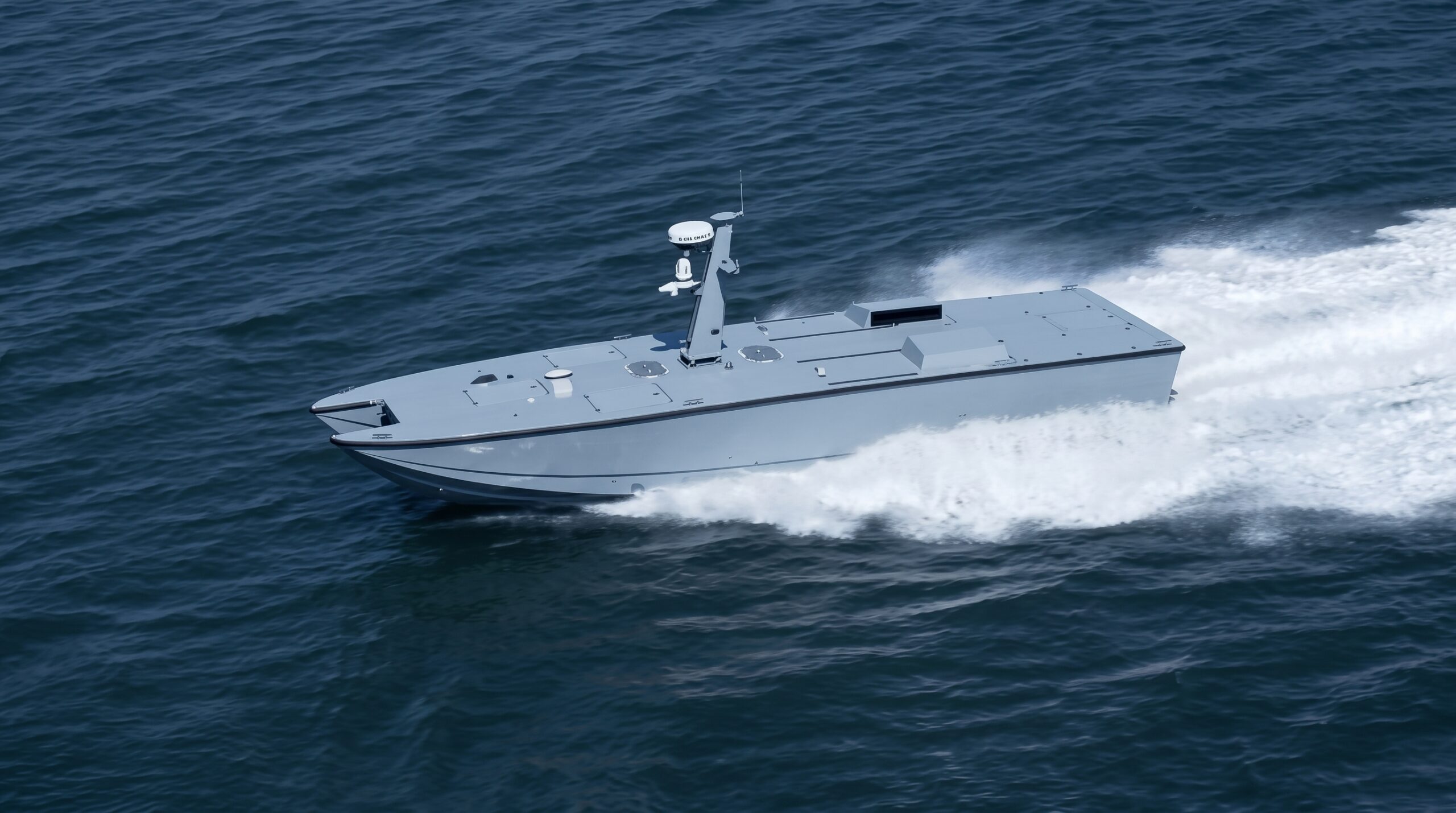
Military Sentinel, Melbourne, FL – Maritime Tactical Systems (MARTAC) has entered into a manufacturing partnership with Florida boatbuilder SŌLACE Boats to add annual production capacity for 100 Devil Ray USVs, expanding its industrial throughput as the U.S. Navy and allied forces push to field autonomous maritime mass.
The agreement leverages SŌLACE Boats’ 200,000-square-foot (18,600-square-meter) manufacturing complex in Edgewater, Florida. SŌLACE will contribute its commercial composite hull tooling and vacuum infusion expertise to churn out military-grade catamaran hulls at commercial shipyard speeds.
The pact marks MARTAC’s second major tie-up with commercial high-performance marine fabricators this year, following a June co-production deal with Mystic Powerboats. By utilizing external composite shipbuilders, MARTAC aims to avoid building redundant capital footprint while tapping seasoned boatbuilding workforces.
According to company figures, MARTAC’s distributed manufacturing model is calibrated to support a cumulative annual throughput of 200 to 300 Devil Ray vessels. The announced metric represents sheer industrial run-rate capability rather than an active Pentagon contract for 100 hulls.
“We’re proud to partner with SŌLACE, given their reputation, in-depth experience and prowess in producing high-strength, lightweight hulls that can traverse high sea-states,” said Tony Smeraglinolo, CEO of MARTAC.
Stephen Dougherty, CEO of SŌLACE Boats, noted that the company’s composite infrastructure will support platforms backed by “over a decade of operational excellence in government programs and exercises.”
The core vessel anchoring this expansion is the Devil Ray T38, a multi-role high-speed craft operating across U.S. 5th Fleet drills, NATO trials, and experimental Navy task forces.
Hull Length: 39.9 feet (12.2 meters)
Hull Architecture: Twin-hull composite carbon-fiber catamaran
Speed: In excess of 50 knots (inboard diesel or gasoline options)
Payload Capacity: Up to 4,000 lbs (1,814 kg)
Mission Suites: Modular bays for ISR, mine countermeasures (MCM), anti-submarine warfare (ASW) screening, electronic attack, and kinetic surface strike payloads
C4ISR Architecture: Line-of-sight data links, commercial and military SATCOM, and mesh-radio relays capable of autonomous COLREGS compliance
Last month off Virginia, a U.S. Navy and industry team completed a robotic underway replenishment demo with a T38, successfully pumping 400 gallons of fuel at sea to prove unmanned endurance can scale without constant harbor visits.
The push to convert high-speed civil tooling into defense lines addresses the chief bottleneck confronting Pentagon unmanned roadmaps: industrial surge. While the U.S. Navy runs tests across medium and large USV prototypes, the operational shift demands hundreds of attritable or low-cost interceptors to deploy Distributed Maritime Operations (DMO) at scale.
Dual-theater requirements are already visible. In the Baltic Sea, NATO task groups utilize small and medium USVs to guard critical underwater energy corridors and data cables. Concurrently, in the South China Sea, high-speed littoral drones allow U.S. and partner forces to maintain persistent, dispersed surveillance pickets across critical choke points and island passages without draining finite surface combatants.
For the defense sector, MARTAC’s supply-chain distribution proves that naval mass will rely heavily on non-traditional maritime fabricators capable of turning high-rate fiberglass and carbon tooling into ready-to-deploy flotillas.

James Whitfield is a defense news writer at Military Sentinel, covering military technology, naval operations, military aviation, international security, and global defense developments. His work focuses on providing informative reporting, relevant context, and accessible explanations of modern military affairs and emerging defense technologies.
Contact: [email protected]