Physical Address
304 North Cardinal St.
Dorchester Center, MA 02124
Physical Address
304 North Cardinal St.
Dorchester Center, MA 02124

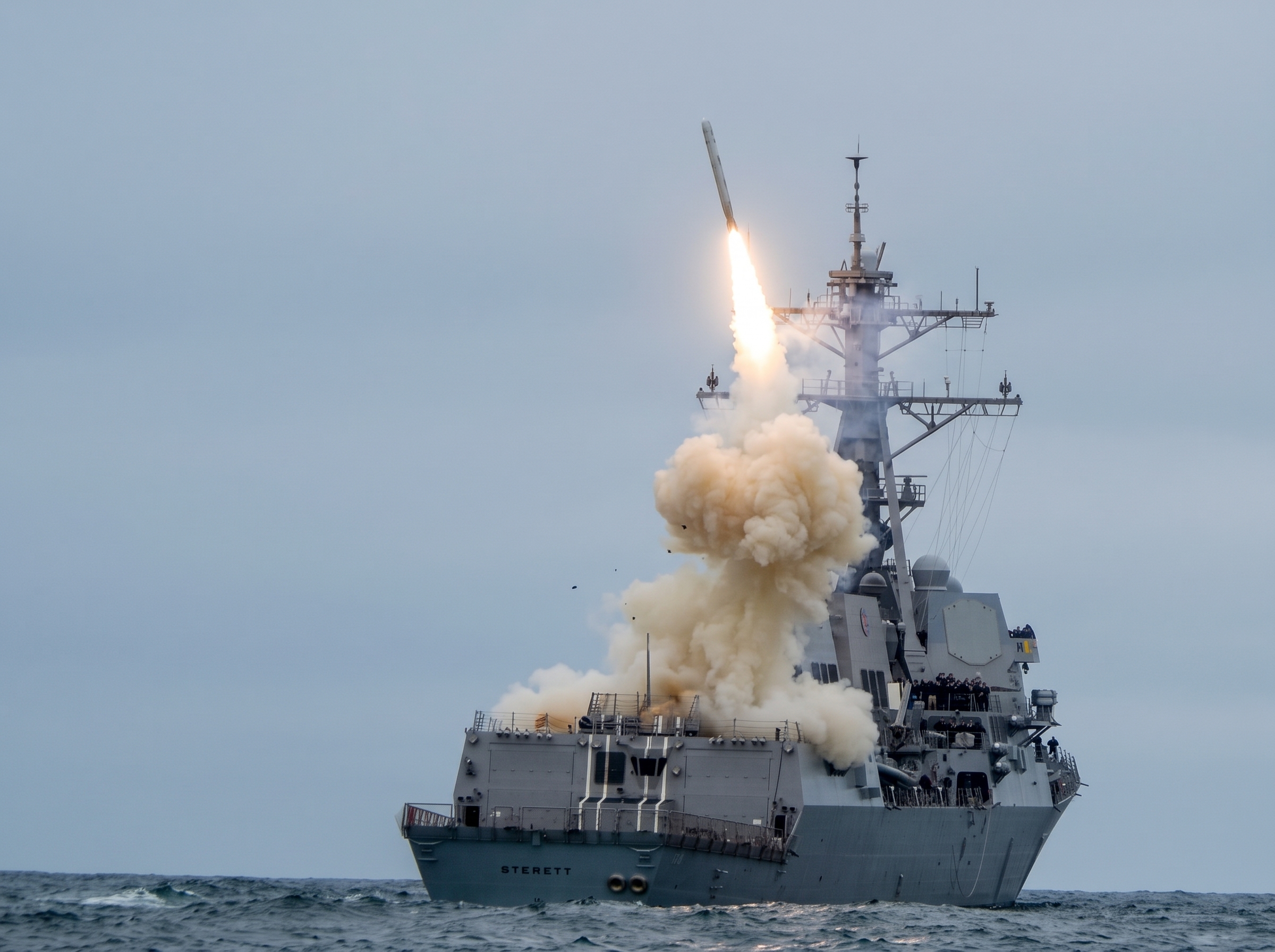
Military Sentinel, Washington – Defense contractor L3Harris Technologies has finalized a multi-year public-private partnership with the U.S. Navy to surge manufacturing of critical propulsion components and energetic materials, answering a broader Pentagon mandate to dramatically accelerate Tomahawk missile production.
Signed with the Naval Air Warfare Center Weapons Division (NAWCWD) at China Lake, California, the agreement builds on more than three decades of support by L3Harris for the BGM-109 Tomahawk program. The initiative directly addresses persistent domestic supply bottlenecks by coupling government-owned facilities with commercial manufacturing pipelines to ramp up strike weapon replenishment.
Under the expanded cooperation, L3Harris will increase output of vital components essential to the cruise missile’s initial flight phase, primarily focused on the Mk 135 solid rocket booster and high-explosive blast-fragmentation warhead assemblies.
“L3Harris is dedicated to sustaining high-quality propulsion manufacturing to support both ongoing combat operations and future warfighter demands,” stated Scott Alexander, president of Missile Solutions Propulsion Systems at L3Harris. Alexander emphasized that close integration with naval energetic facilities reinforces supply security while expanding industrial throughput.
NAWCWD Acting Energetics Director Ephraim Washburn echoed the operational necessity: “Working hand-in-hand with commercial partners yields the critical scale required to replenish tactical munition inventories across the fleet”.
The agreement mirrors an earlier partnership between L3Harris and the Naval Surface Warfare Center (NSWC) Indian Head aimed at expanding Mk 104 solid rocket motor production, illustrating a systemic push to eliminate single-point failures within domestic propulsion lines.
The propulsion expansion comes on the heels of a massive multi-year procurement framework awarded to primary contractor Raytheon (RTX). That effort targets a dramatic industrial ramp:
Production Target: Transitioning from baseline rates of roughly 60 missiles per year to over 1,000 units annually.
Active Configurations: Modern Block IV and Block V variants, encompassing both the Tomahawk Land Attack Missile (TLAM) and the anti-ship Maritime Strike Tomahawk (MST).
Deployment Platforms: Surface combatants via the Mk 41 Vertical Launch System (VLS) and submarine vertical payload tubes.
The acceleration of Tomahawk missile production reflects mounting pressure on U.S. standoff weapon inventories following protracted combat operations in the Middle East and the strategic demand for high-volume conventional deterrence in the Indo-Pacific.
Recent operational expenditures by Arleigh Burke-class destroyers and guided-missile submarines against regional threats highlighted acute burn rates of long-range precision-guided munitions. Sustaining deterrence against near-peer adversaries requires deep magazines that standard peacetime production lines cannot support. By mobilizing organic defense sites to manufacture rocket motors and energetic cores, the Navy is transitioning its standoff strike architecture from a low-rate, just-in-time procurement posture toward a wartime industrial footing.