Physical Address
304 North Cardinal St.
Dorchester Center, MA 02124
Physical Address
304 North Cardinal St.
Dorchester Center, MA 02124

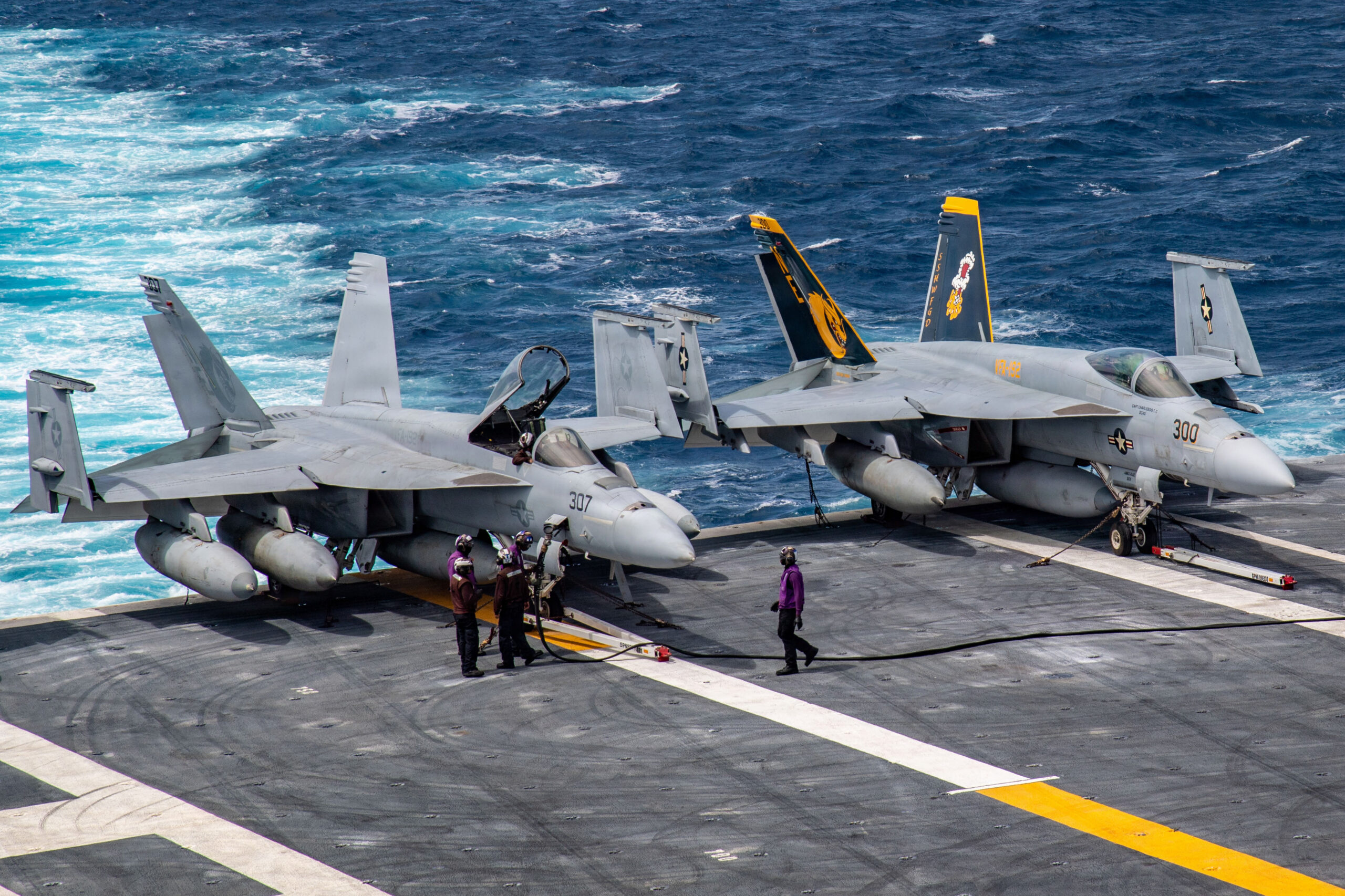
Military Sentinel, Washington – The U.S. Navy has awarded GE Aerospace a logistics contract worth up to $2.87 billion to sustain the F414-GE-400 engines that power the F/A-18E/F Super Hornet and EA-18G Growler fleets, according to a Department of Defense contract announcement posted September 1, 2026.

The five-year performance-based logistics (PBL) agreement, identified by contract number N00383-26-D-UA01, covers sustainment support for 17 components of the F414 engine. Unlike a traditional parts-purchase arrangement, the PBL structure ties GE’s compensation to fleet readiness and parts availability rather than individual component sales an approach the Navy has increasingly favored to keep aging aircraft flying without the overhead of managing spares inventory itself.
The contract runs through August 2031 and carries no option periods. An initial delivery order valued at $198.22 million accompanies the award, with additional task orders expected to follow over the life of the agreement. Naval Supply Systems Command Weapon Systems Support (NAVSUP WSS), headquartered in Philadelphia, made the sole-source award. Work will be split between GE facilities in Lynn, Massachusetts (90 percent) and Jacksonville, Florida (10 percent).
The F414 is a low-bypass, afterburning turbofan that has been in continuous production since 1993, with more than 1,600 units delivered to date and adoption by eight nations as a fighter propulsion option. Two engines power each F/A-18E/F Super Hornet and EA-18G Growler — the multirole strike fighter and its dedicated electronic-attack derivative that together form the backbone of Navy carrier air wings.
Boeing ended new-build Super Hornet production in 2023, meaning the Navy’s F414 fleet is now a fixed inventory that must be sustained through logistics contracts like this one rather than replenished through new aircraft orders. The Navy has said it intends to keep the F/A-18E/F flying into the middle of the century even as F-35C squadrons gradually take on a larger share of carrier air wing duty. The EA-18G Growler, meanwhile, remains the Navy’s sole carrier-based electronic-attack platform, with no announced successor program.

Engine component availability is a direct constraint on sortie generation how many aircraft a carrier air wing can actually launch on a given day. As the Super Hornet and Growler fleets age without a production pipeline behind them, sustainment contracts of this scale are becoming a larger share of how the Navy preserves carrier-based combat capacity.
The award also reflects a broader balancing act at GE Aerospace, which is simultaneously scaling up production of its older F404 engine to supply the U.S. Air Force’s new T-7A Red Hawk trainer while sustaining the more powerful F414 for an aging naval fleet a dual demand on the same industrial base that will shape how quickly the company can respond to future orders from either program.
With no new Super Hornet airframes on order, the durability of contracts like this $2.87 billion award will likely determine how long the Navy can keep its current strike-fighter and electronic-attack fleets combat-ready as the transition toward next-generation carrier aircraft continues.