Physical Address
304 North Cardinal St.
Dorchester Center, MA 02124
Physical Address
304 North Cardinal St.
Dorchester Center, MA 02124

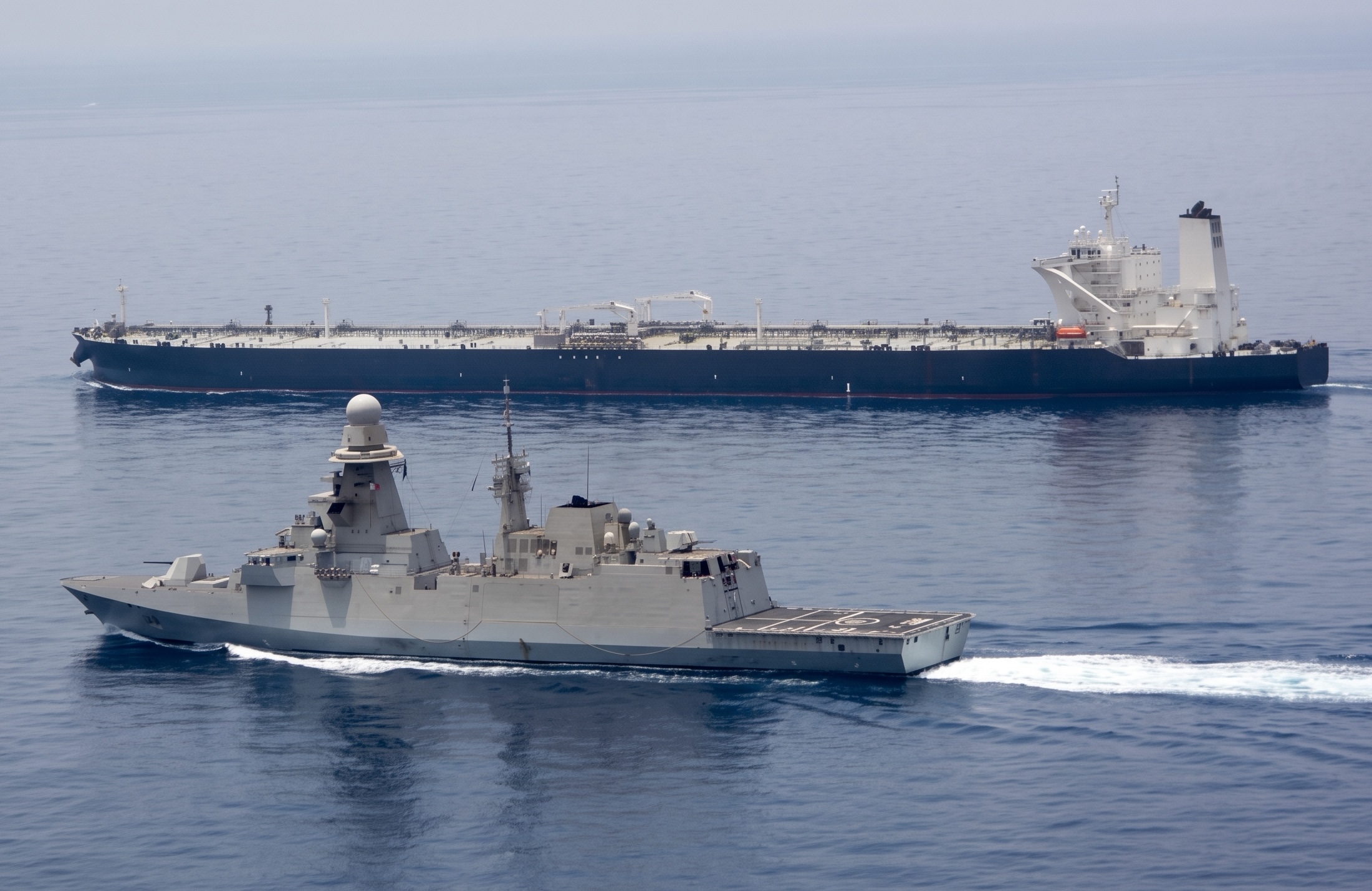
Military Sentinel, Brussels – The European Union is pressing member states to urgently deploy additional surface combatants to expand its Red Sea naval mission, as fleet shortages and competing security requirements in the Strait of Hormuz stretch European maritime power across the Middle East.
Speaking ahead of an EU defense ministers summit in Brussels on Monday, European Union foreign policy leadership issued an urgent appeal for member nations to commit frigates, destroyers, and airborne surveillance assets to Operation Aspides. The defensive mission, established to shield commercial shipping corridors from anti-ship ballistic missiles and drone barrages in the southern Red Sea and Gulf of Aden, continues to operate well below its operational requirements.
EU naval planners originally calculated that Operation Aspides requires a sustained force of at least 10 warships to maintain persistent escort corridors and adequate air defense coverage along the vital sea line of communication (SLOC). European diplomats indicate the mission has frequently had to make do with only three to six surface combatants in theater at any given point.
The ongoing shortfall has forced the operational commander to ration escort details for vulnerable merchant hulls transiting the Bab el-Mandeb strait. While commercial shipping demand for military convoys remains high, individual vessels must either wait days for scheduled convoy slots or risk unescorted voyages.
The strain on European naval inventories is further compounded by overlapping maritime tasks further east. Multiple European navies are actively reallocating platforms between the Red Sea and the Strait of Hormuz, where maritime surveillance and deterrence initiatives like EMASOH (European Maritime Awareness in the Strait of Hormuz) demand specialized patrol and escort assets.
Maintaining high-end air-defense frigates such as French Horizon-class destroyers, Italian FREMMs, and German Type 124 frigates in two distinct, high-threat maritime choke points has pushed European fleet rotation schedules to the brink. Ships participating in high-intensity counter-UAV and missile-interception duties face accelerated wear on propulsion, radar subsystems, and combat systems, as well as rapid expenditure of costly surface-to-air interceptors like the Aster 30.
The call for more hulls highlights a structural vulnerability confronting European defense establishments: the lack of surface fleet depth. While European allied vessels have demonstrated effective intercept capabilities against low-flying loitering munitions and cruise missiles, continuous blue-water deployment rotations require a three-to-one or four-to-one hull ratio to sustain a single forward-deployed ship.
Without immediate commitments from EU capitals to backfill rotations, the Red Sea naval mission risks operating under persistent operational overextension. If additional European warships fail to materialize, naval planners may be forced to scale back escort coverage, leaving commercial shipping reliant on rerouted Cape of Good Hope transits or increased operational reliance on U.S.-led coalition task forces.

James Whitfield is a defense news writer at Military Sentinel, covering military technology, naval operations, military aviation, international security, and global defense developments. His work focuses on providing informative reporting, relevant context, and accessible explanations of modern military affairs and emerging defense technologies.
Contact: [email protected]