Physical Address
304 North Cardinal St.
Dorchester Center, MA 02124
Physical Address
304 North Cardinal St.
Dorchester Center, MA 02124

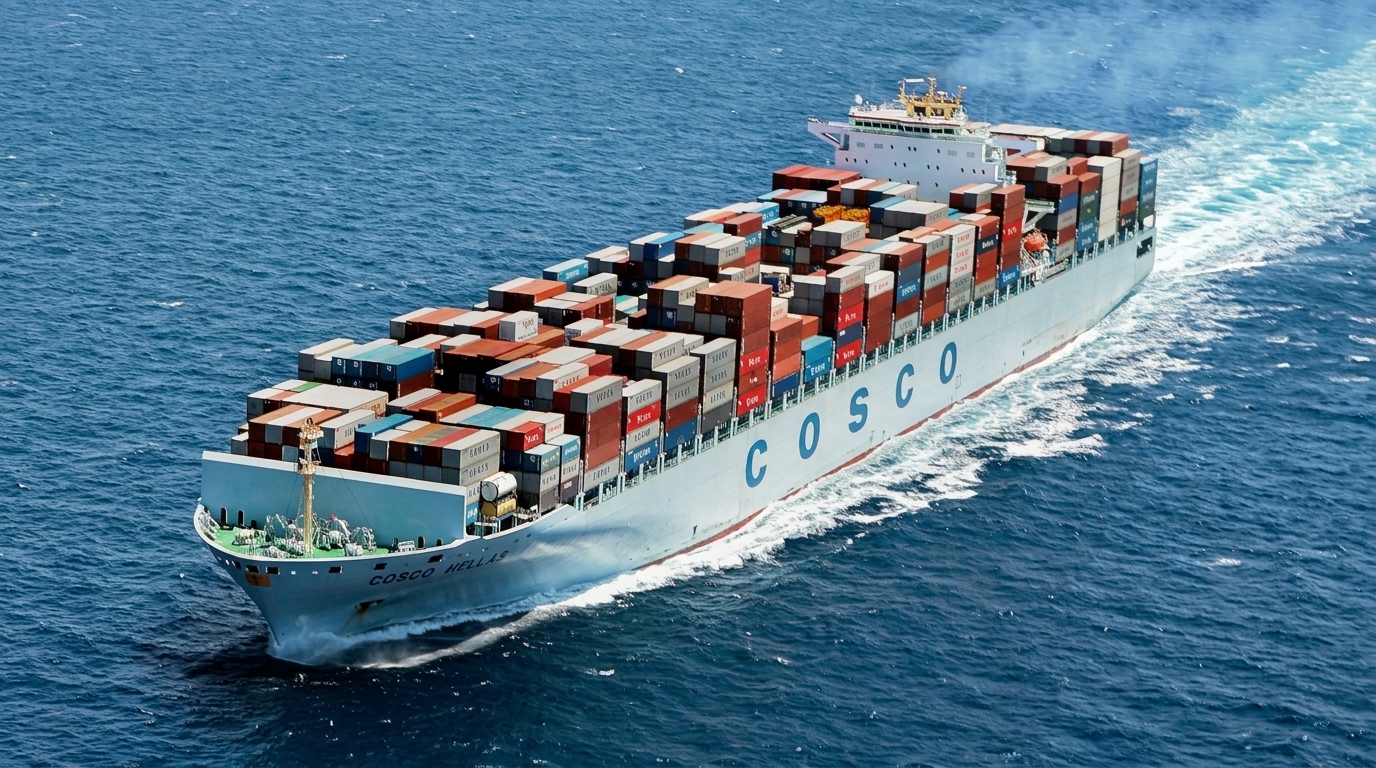
Military Sentinel, Washington – Chinese state shipping giant COSCO has for decades reportedly operated a clandestine signals intelligence program aboard its commercial vessels, according to two unnamed U.S. officials cited in a Reuters report published September 1, 2026, that outlines a Trump administration assessment of the alleged arrangement.
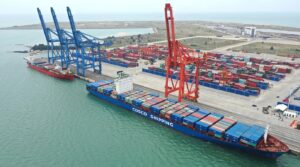
According to the officials, who spoke to Reuters on condition of anonymity, COSCO maintains a decades-long intelligence-collection partnership with the Chinese government. The arrangement is said to let Beijing intercept communications signals from vessels and aircraft operating across Europe, North America, and Asia.
One official told Reuters the onboard equipment is designed to collect information on “military communications technologies and encryption developments.” Officials described the gear as “sophisticated signals intelligence collection” hardware rather than standard shipboard communications equipment, though they did not detail its specific configuration.
The Chinese Embassy in Washington denied the allegations, Reuters reported.
China’s 2017 National Intelligence Law requires all domestic organizations and citizens to support state intelligence work when called upon, while also obligating the state to protect those that comply. Analysts have long pointed to this statute as blurring the line between China’s civilian commercial sector and its military and intelligence apparatus.
The Pentagon added COSCO to its list of companies linked to the Chinese military in January 2025 — a designation that imposes reputational costs and U.S. government procurement bans, though it does not carry formal sanctions.
Signals intelligence suites vary widely in size and sophistication, and could plausibly be disguised among the extensive antenna arrays already standard on modern commercial vessels. Collected data could be:
Such intelligence is typically used to help build “electronic orders of battle” — detailed pictures of an adversary’s force disposition, air defenses, and command-and-control networks.
This is not the first time such claims have surfaced. Reuters’ sources pointed to a 2025 China Maritime Studies Institute report from the U.S. Naval War College examining China’s maritime militia — nominally civilian fishing fleets with direct ties to the People’s Liberation Army and China Coast Guard. That report described “information personnel” embedded within militia and shipping units who may handle intelligence-collection duties alongside their ordinary jobs, and noted that Guangxi province’s Beihai city has specifically recruited such specialists from the marine shipping industry.
A separate 2021 report from the National Geospatial-Intelligence Agency’s Tearline Project flagged COSCO’s facility at Belgium’s Port of Zeebrugge, noting its proximity to a Belgian naval base could enable additional militarized functions.
The alleged COSCO program also echoes reporting on Russia’s “shadow fleet” of sanctioned oil tankers, which multiple outlets have reported serve a secondary intelligence-gathering role alongside their primary purpose of evading sanctions.
Given the scale of China’s commercial shipping fleet — the largest in the world — and the fact that major ports and coastal military installations are frequently in close proximity to commercial shipping lanes, analysts note that leveraging civilian vessels for intelligence collection would offer Beijing a low-cost, low-risk way to expand maritime surveillance capacity while hiding in plain sight.
Reuters’ report does not specify what countermeasures, if any, U.S. authorities are planning against Chinese-flagged vessels suspected of intelligence-gathering activity. Nation-states, including the United States, have long used ostensibly civilian ships and aircraft for intelligence collection in international waters and airspace — a practice with roots stretching back to the Cold War.