Physical Address
304 North Cardinal St.
Dorchester Center, MA 02124
Physical Address
304 North Cardinal St.
Dorchester Center, MA 02124
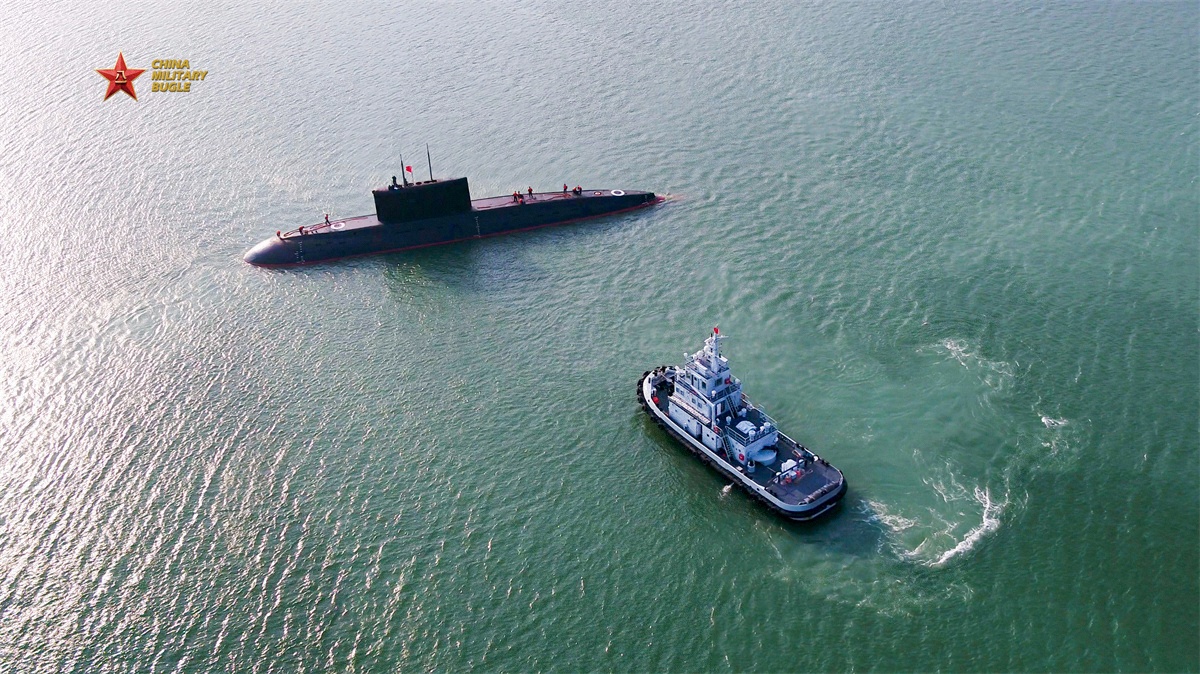
Military Sentinel, Beijing – China’s Ministry of National Defense disclosed on September 6, 2026, that the People’s Liberation Army Navy (PLAN) has built an operational database of warship acoustic signatures, a tool officials say helps submarine sonar crews distinguish and reacquire surface targets in noisy sea conditions a capability with direct implications for how PLAN submarines might track U.S. Navy ships operating near Taiwan and along the First Island Chain.
According to the Ministry’s account, the database catalogs frequency patterns and other acoustic characteristics by vessel type, giving sonar operators a reference library to compare against live contacts. Chinese officials said the system was validated in a simulated submarine-versus-surface-ship exercise in which an opposing warship repeatedly changed course and speed but was reacquired after operators cross-checked frequency and speed data against stored profiles.
The Ministry also described a second scenario a blockade and counter-blockade drill in which a submarine reportedly used the database to track vessel movements before penetrating a simulated air-sea “three-dimensional blockade network” and carrying out a mock precision strike.
Two points matter for accuracy. First, the Ministry’s statement does not claim the database contains verified acoustic signatures of specific U.S. Navy vessels no individual carrier, destroyer, or logistics ship is named as cataloged. Second, there is no official indication that classification is automated, that artificial intelligence or machine learning is involved, or that the database can be shared across submarines in real time.
What the Ministry did confirm is a process: PLAN units are said to systematically collect acoustic data during deployments, exercises, and routine encounters, then retain it for future reference meaning the operational value, if real, would accumulate over time rather than exist today as a finished product.
If the database performs as described, the main effect would not be extending sonar detection range but reducing how easily a detected ship can break contact a submarine that reacquires targets faster after evasive maneuvering imposes a heavier burden on U.S. anti-submarine warfare (ASW) assets, including P-8A Poseidon aircraft, MH-60R Seahawk helicopters, and escort sonars.
Logistics vessels oilers, ammunition ships, and transports that are less defended than front-line combatants represent a plausible priority target set, since disrupting them could constrain carrier strike group endurance without requiring PLAN submarines to penetrate a carrier’s strongest defenses. Japanese and Australian ASW assets would also face added demand under this scenario, given their roles in regional sea-lane protection.

James Whitfield is a defense news writer at Military Sentinel, covering military technology, naval operations, military aviation, international security, and global defense developments. His work focuses on providing informative reporting, relevant context, and accessible explanations of modern military affairs and emerging defense technologies.
Contact: [email protected]