Physical Address
304 North Cardinal St.
Dorchester Center, MA 02124
Physical Address
304 North Cardinal St.
Dorchester Center, MA 02124

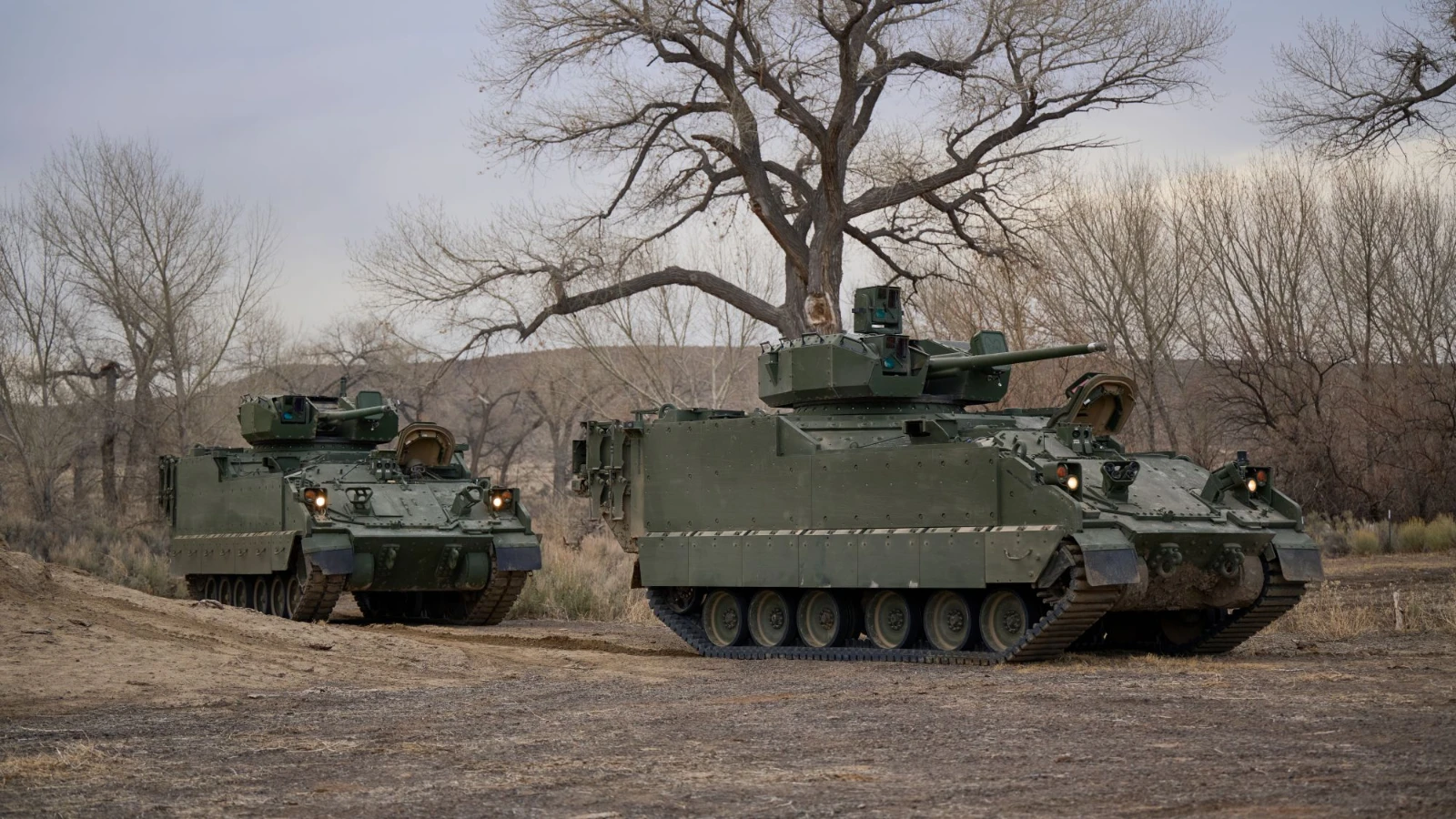
Military Sentinel, Washington – Defense contractor BAE Systems has delivered two internally funded AMPV 30 combat vehicle prototypes equipped with Kongsberg 30mm remote turrets to the U.S. Army for operational evaluations, validating new lethality concepts under realistic field conditions.
The company financed the rapid six-month development effort using $17 million in internal research and development capital. Although formally disclosed in late September, the tracked prototypes were dispatched in April to the 1st Cavalry Division at Fort Cavazos (formerly Fort Hood), Texas, supporting the service’s high-priority Transformation in Contact 2.0 initiative.
Since receiving the vehicles, troops from the 2nd Battalion, 5th Cavalry Regiment have subjected the AMPV 30 prototypes to extensive operational evaluations, including live-fire target runs. The field exercises assess how adding direct medium-caliber firepower to an Armored Multi-Purpose Vehicle hull impacts mechanized unit survivability and tactical tempo.
“Our mission was speed and innovation, and we delivered beyond expectations,” stated Bill Sheehy, vice president of BAE Systems’ Ground Maneuver futures. “With today’s battlefield evolving faster than ever, it’s paramount that Soldiers have the capabilities they need to win the fight. Throughout this effort, our team demonstrated how we can integrate new design solutions in a time-effective and more cost-efficient manner for the Army.”
The U.S. Army confirmed that the trials represent company-backed experimentation rather than an active program of record. However, two additional AMPV 30 prototypes are scheduled for delivery in early 2027 to participate in a brigade rotation at the National Training Center in Fort Irwin, California.
The platform combines the Army’s production-standard AMPV chassis with Kongsberg’s unmanned Medium Caliber Turret (MCT-30), a system already in high-rate production for the U.S. Marine Corps’ Amphibious Combat Vehicle (ACV-30).
Key features demonstrated on the prototype batch include:
Primary Armament: 30mm Northrop Grumman Mk 44 Bushmaster II chain gun capable of engaging light armor, fortified positions, and personnel.
Sensor Suite: 360-degree situational awareness camera networks that allow closed-hatch operations without blinding the crew.
Networking: Cross-platform target handoff architecture to pass digital fire-control coordinates across platoon networks.
Drone Defense: Integrated counter-unmanned aircraft system (C-UAS) detection sensors designed to track low-altitude aerial threats.
Modular Architecture: A common top-plate interface engineered to support more than 30 distinct mission turrets and remote weapon stations.
The deployment of the AMPV 30 highlights defense contractors taking greater financial initiative to influence requirements ahead of formal procurement cycles. By pairing an in-service hull with an off-the-shelf turret, BAE Systems is demonstrating an evolutionary upgrade path with significantly compressed acquisition timelines.
Independent defense analysts have noted that a 30mm-armed AMPV variant provides high-volume lethality at a fraction of the development risk associated with clean-sheet combat vehicles like the developmental XM30 Mechanized Infantry Combat Vehicle. As the Army accelerates its Transformation in Contact framework to counter loitering munitions and mechanized peer threats, successful operational feedback from 2027 desert rotations could compel service leadership to formalize an armed support vehicle requirement.