Physical Address
304 North Cardinal St.
Dorchester Center, MA 02124
Physical Address
304 North Cardinal St.
Dorchester Center, MA 02124

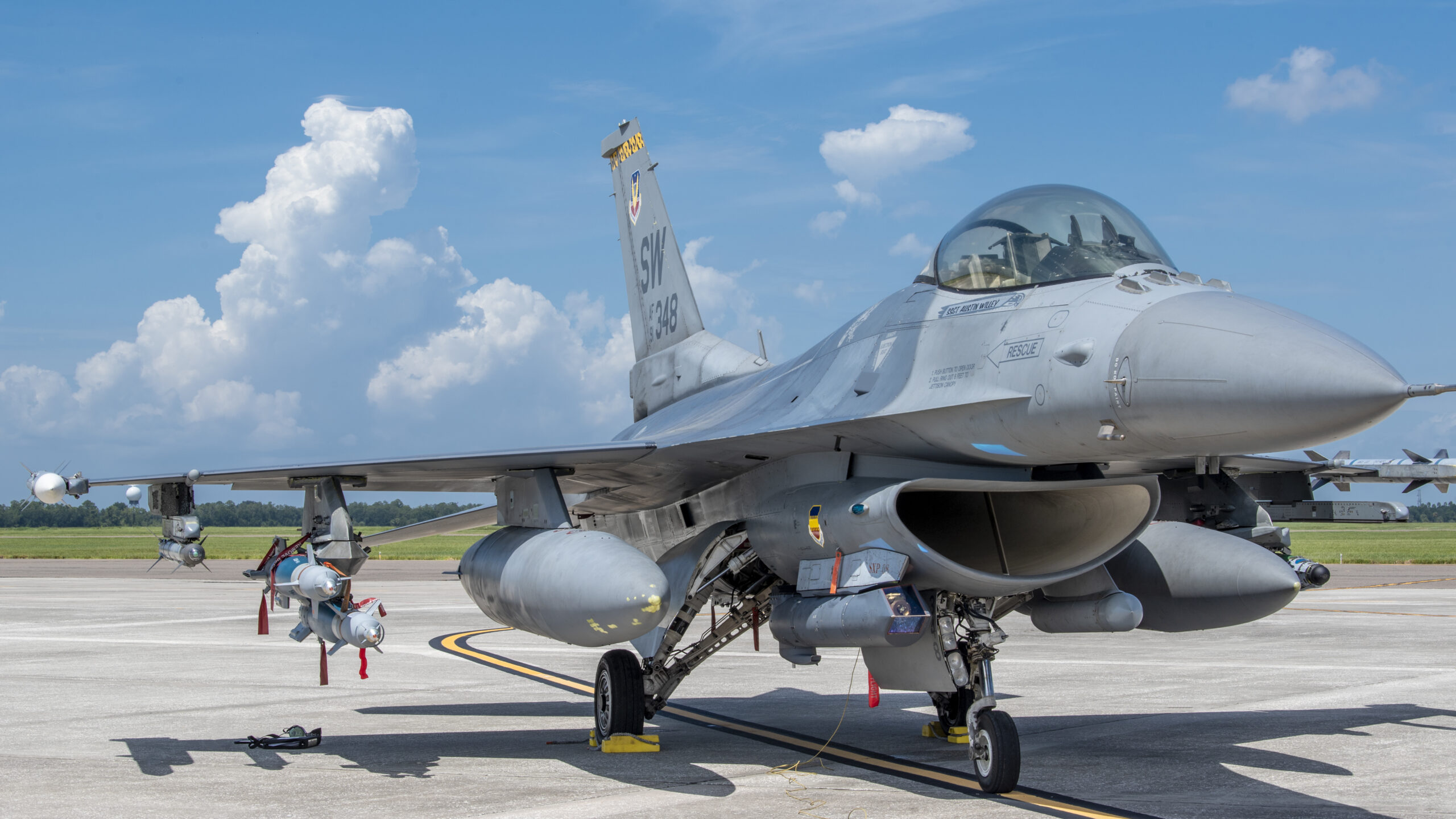
Military Sentinel, SPANGDAHLEM, Germany – The United States Air Force has launched an official safety investigation after an F-16 Fighting Falcon crashed during approach at Spangdahlem Air Base on Tuesday afternoon, marking the service’s second non-fatal loss of the multirole fighter in less than a week.
The incident occurred at approximately 2:30 p.m. local time on September 22 as a flight of four F-16s assigned to the 52nd Fighter Wing returned from a routine training sortie. According to wing officials, the jet went down on base grounds, prompting an immediate response from military emergency crews and regional German emergency services. The pilot successfully ejected, sustained non-life-threatening injuries, and is receiving medical care. The remaining three aircraft in the formation diverted safely to Ramstein Air Base.
The crash in western Germany follows closely on the heels of another Class A mishap in North America. On September 17, an F-16 operated by the Texas Air National Guard’s 149th Fighter Wing went down near Blair Township in Grand Traverse County, Michigan. That aircraft was operating out of the Alpena Combat Readiness Training Center when the pilot was forced to eject following a suspected engine failure, reportedly linked to an in-flight bird strike.
While both pilots survived without fatal injuries, the back-to-back incidents within a single week have intensified scrutiny on the operational tempo and sustainment pipelines supporting legacy fourth-generation fighters across active-duty and Guard units.
The F-16 Fighting Falcon remains one of the most prolific multirole combat platforms in Western inventories, known for its high agility and cost-effective flight-hour profile. However, its single-engine configuration leaves pilots with narrow margin for error when propulsion or critical avionics fail:
Powerplant: Single General Electric F110-GE-129 or Pratt & Whitney F100-PW-229 turbofan delivering up to 29,000 lbs of thrust.
Maximum Speed: Mach 2.05 at altitude.
Service Ceiling: Above 50,000 feet.
Safety Thresholds: Class A mishaps defined as accidents involving fatalities, permanent total disability, or aircraft destruction exceeding $2.5 million trigger mandatory Air Force Safety Investigation Boards (SIBs).
In both the German and Michigan incidents, the ACES II ejection seat systems operated within designed envelope parameters, preventing loss of life during low-altitude and approach phases where ejection mechanics face the tightest temporal margins.
The 52nd Fighter Wing plays an indispensable role in NATO’s forward defense posture across Europe, frequently executing deterrence air policing missions and participating in integrated air exercises across the continent. Ground safety stand-downs or localized fleet inspections, if deemed necessary by accident investigators, could temporarily alter sortie generation rates at a time of sustained regional readiness demands.
As the USAF continues balancing the acquisition of fifth-generation F-35A Lightning IIs with the service life extension programs (SLEP) for Block 40 and 50 F-16s, fleet sustainment officers will face mounting pressure to verify whether these consecutive incidents share systemic mechanical roots or represent an unfortunate statistical coincidence.

James Whitfield is a defense news writer at Military Sentinel, covering military technology, naval operations, military aviation, international security, and global defense developments. His work focuses on providing informative reporting, relevant context, and accessible explanations of modern military affairs and emerging defense technologies.
Contact: [email protected]