Physical Address
304 North Cardinal St.
Dorchester Center, MA 02124
Physical Address
304 North Cardinal St.
Dorchester Center, MA 02124

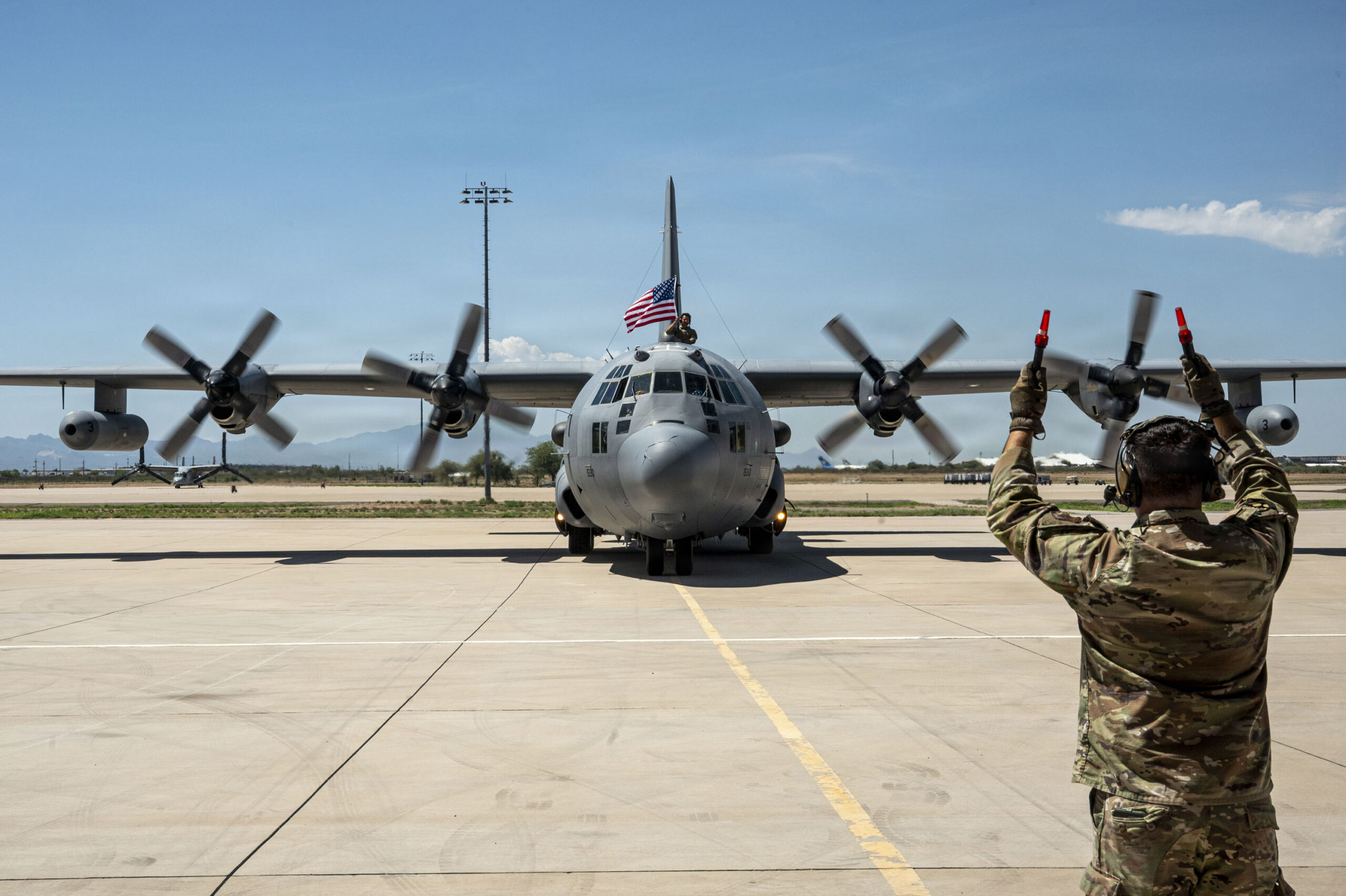
Military Sentinel, Davis-Monthan AFB, Arizona – The U.S. Air Force flew the final operational sortie of its EC-130H Compass Call electronic attack aircraft on September 2, 2026, closing out 45 years of Hercules-based jamming operations and formally handing the mission to the jet-powered EA-37B.
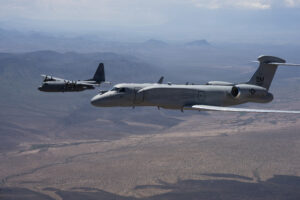
Aircraft 73-1590, callsign VOLT01, departed Davis-Monthan Air Force Base at roughly 07:00 local time and returned about six hours later, flying alongside an EA-37B and an F-16D from the 152nd Fighter Squadron the first formation to pair the outgoing and incoming Compass Call platforms in the air.
The EC-130H first flew in 1981, was delivered in March 1982, reached initial operational capability in 1983, and saw its first combat use during Operation Just Cause in December 1989. Only 14 aircraft ever made up the operational fleet, a number that had dwindled to two to four airframes by the time of retirement.
The C-130H-based platform’s 300 mph speed and 25,000-foot ceiling had become limiting factors for standoff electronic attack against modern integrated air defenses. Retaining a single EC-130H for two additional years was estimated to cost roughly $14 million a figure that, alongside the aircraft’s dated flight envelope, appears to have driven the retirement timeline.
Despite the retirement, both the EC-130H and EA-37B reportedly flew missions in Operation Epic Fury against Iran earlier in 2026, meaning the transition occurred while the mission was under active combat demand.
Built on the Gulfstream G550 airframe and selected for the role in 2017, the EA-37B carries an estimated 70% of the EC-130H’s electronic warfare equipment onto a much faster, higher-flying carrier. Reported performance gains include:
The first EA-37B arrived at Davis-Monthan in August 2024, with the 43rd Electronic Combat Squadron flying an initial training sortie in May 2025 and aircraft subsequently deploying to Kadena and Ramstein air bases.
Notably, the transition may expand rather than simply replace the Compass Call inventory. Congress reportedly increased the EA-37B program from 10 to 12 aircraft for FY2026, with the FY2027 budget request adding funding for three more. Air Force planning through 2031 could eventually grow the fleet to 22 aircraft eight more than the historical EC-130H peak.
If realized, a larger, faster, longer-ranged Compass Call fleet would let the Air Force distribute electronic attack detachments more widely while operating outside the engagement envelope of increasingly capable air defense systems a shift that matters directly to how the U.S. plans to suppress enemy air defenses in a contested environment against near-peer adversaries.