Physical Address
304 North Cardinal St.
Dorchester Center, MA 02124
Physical Address
304 North Cardinal St.
Dorchester Center, MA 02124

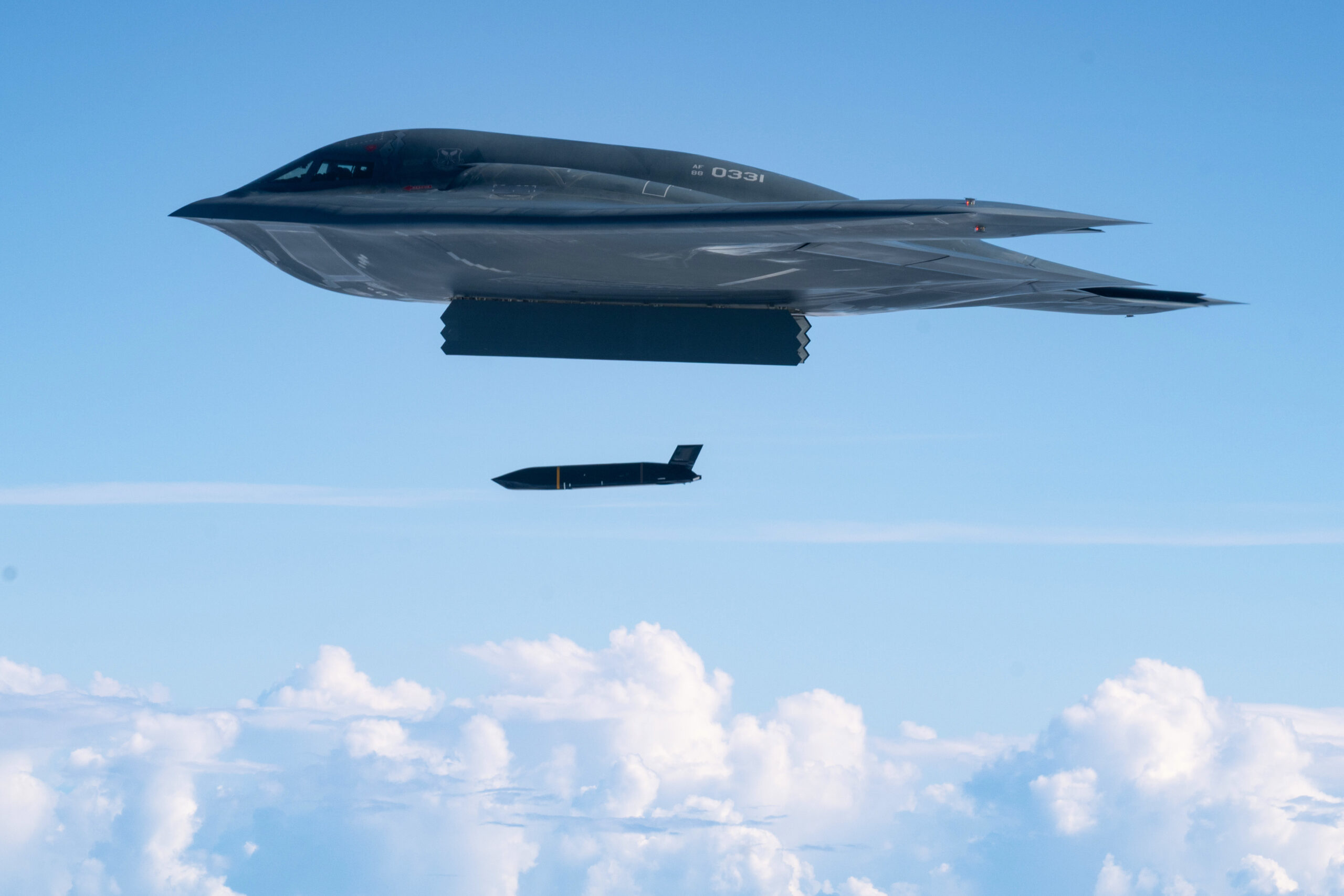
Military Sentinel, Eglin Air Force Base, Florida – The U.S. Air Force has pushed the cumulative value of its long-running cruise missile production contract with Lockheed Martin past $10 billion for the first time, after tacking on an $826 million modification to keep the missile line running through 2030.
The Air Force Life Cycle Management Center at Eglin Air Force Base issued the modification to fund continued production of the Joint Air-to-Surface Standoff Missile (JASSM) and the Long Range Anti-Ship Missile (LRASM), according to Defence Blog, which first reported the award. The addition brings the contract’s total cumulative value to $10.48 billion, up from $9.65 billion. Work will run at Lockheed’s Orlando, Florida facility, with completion targeted for July 31, 2030.
This is not the first major jump on this contract. Defence Blog reported that the deal crossed $9.485 billion in August 2025, when the Air Force added roughly $4.3 billion covering JASSM lots 22–26 and LRASM lots 9–12, with allied deliveries flowing to Poland, the Netherlands, Japan, and Finland under Foreign Military Sales agreements. The latest $826 million tranche extends that same production line rather than opening a new one, and is funded across fiscal 2024–2026 missile procurement accounts, Navy weapons procurement funds, R&D money, O&M funds, and FMS contributions — a mix that reflects how tightly U.S. and allied orders are now bundled together on this program.
Beyond the four FMS partners already on this contract, Washington has kept clearing new JASSM-ER sales. The State Department approved a potential $842 million sale to Denmark for its F-35 fleet in June 2026 and cleared a separate sale to Italy in December 2025, per Defence Blog’s reporting. Australia and Finland have flown JASSM on F/A-18s for years, and Poland remains the only non-U.S. customer fielding the longer-range JASSM-ER, integrated onto its F-16C/D fleet since a 2016 order. Israel has reportedly been in talks with Washington over a potential purchase as well.
The contract runs under the Pentagon’s Large Lot Procurement model multi-year bulk buys instead of smaller annual orders which the Air Force and Lockheed say lowers per-unit cost, stabilizes the supply chain, and allows faster production ramp-up. Lockheed backed that model with infrastructure: a dedicated JASSM/LRASM factory opened in Troy, Alabama, in 2021, followed by a 225,000-square-foot automated facility in 2022 featuring robotic paint lines and automated forecasting tools.
With the production line now funded into mid-2030 and allied buyers still queuing up Denmark, Italy, and potentially Israel among them this contract is likely to keep climbing well past $10 billion rather than plateau. The bigger question is whether Troy, Alabama’s expanded capacity can keep pace as F-35 and F-16 integration widens the pool of aircraft able to carry LRASM, potentially triggering a fresh wave of anti-ship missile orders on top of the standoff-strike demand already booked.