Physical Address
304 North Cardinal St.
Dorchester Center, MA 02124
Physical Address
304 North Cardinal St.
Dorchester Center, MA 02124

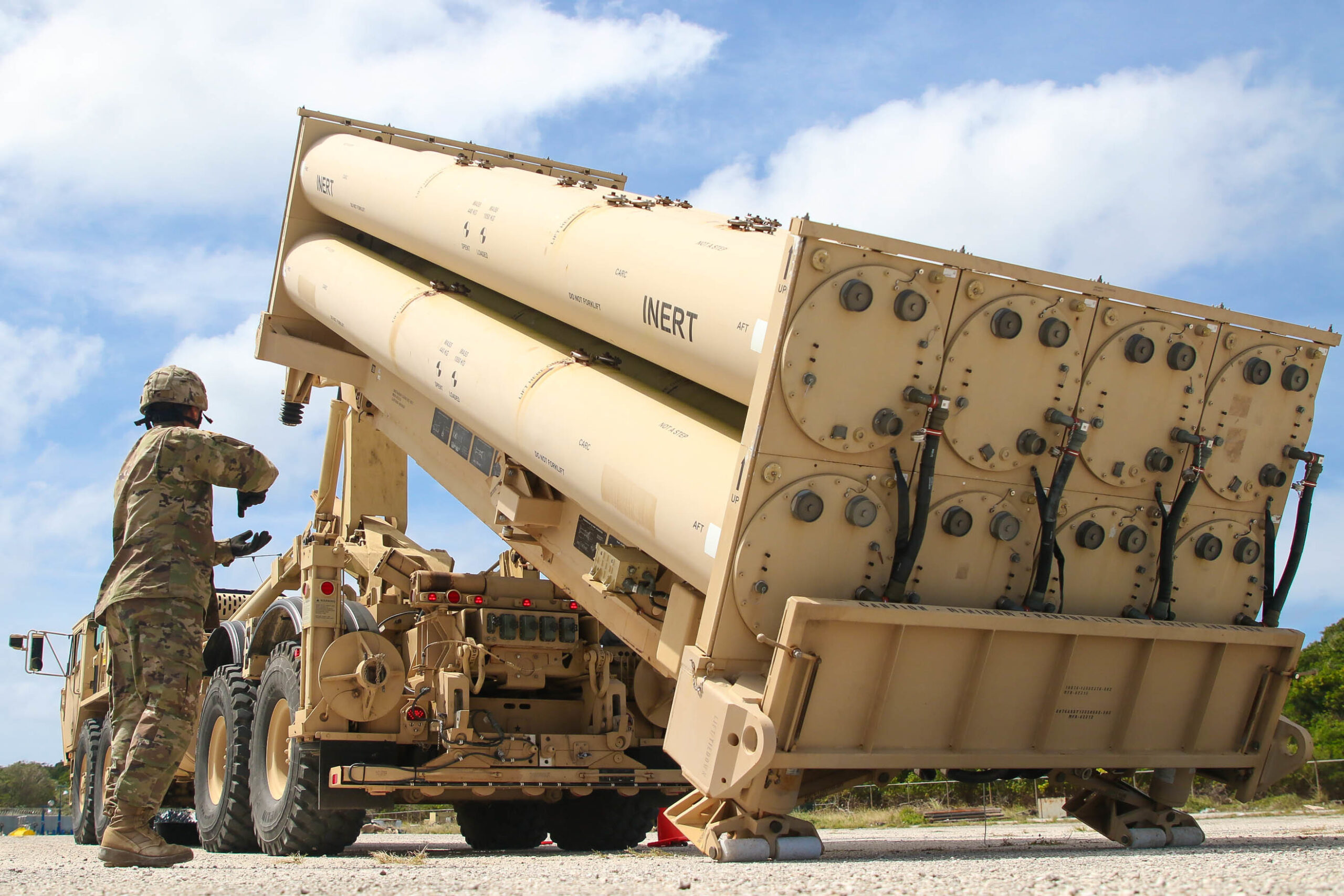
Military Sentinel, Andersen Air Force Base, Guam – The U.S. Army has formally activated a dedicated air defense battalion on Guam, marking a structural milestone in the Pentagon’s multi-billion-dollar effort to harden the Western Pacific hub against expanding regional missile arsenals. The newly formed unit, organized under the 38th Air Defense Artillery Brigade, will oversee on-island interceptor batteries and integration nodes designed to safeguard critical airfields, naval facilities, and logistical installations across the Marianas.
The activation establishes a permanent command hierarchy for tactical interceptors on the island, shifting local air defense from rotational detachments to an enduring battalion structure. Officials from Indo-Pacific Command have identified the defense of Guam as a core priority, pointing to the concentration of strategic infrastructure that would serve as the operational linchpin for U.S. and allied forces during any major regional contingency.
The activation ceremony on Guam formalizes operational control over active defensive batteries deployed across the territory. The battalion headquarters provides dedicated tactical direction, maintenance oversight, and operational planning for interceptor units positioned to counter ballistic, cruise, and hypersonic flight profiles.
The deployment structure operates under Task Force Talon, which has managed the rotational Terminal High Altitude Area Defense (THAAD) battery on Guam since its initial deployment in 2013. The newly activated battalion establishes an organic command architecture intended to absorb additional interceptor platforms, sensor networks, and operational detachments as expanded defense infrastructure arrives over the next several fiscal years.
The unit works alongside U.S. Navy and U.S. Air Force components stationed across the island, including personnel at Naval Base Guam and Andersen Air Force Base. By standardizing command and control under an Army battalion framework, service planners intend to streamline response protocols and improve continuous tracking capability across disparate radar architectures.
The defense architecture being integrated into Guam represents a distributed, multi-tier umbrella combining land- and sea-based capabilities. The core mission centers on defeating simultaneous, multi-axis salvos, which defense analysts assess as the primary operational concept an adversary would employ to neutralize forward operating bases.
Tactical defense elements under the architecture incorporate multiple proven interceptors alongside evolving command systems:
Terminal High Altitude Area Defense (THAAD): Designed to intercept short-, medium-, and intermediate-range ballistic targets in their terminal phase, THAAD utilizes hit-to-kill kinetic energy interceptors paired with the AN/TPY-2 transportable radar.
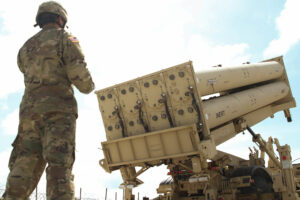
Patriot PAC-3 MSE: The Patriot Advanced Capability-3 Missile Segment Enhancement system provides terminal interception against maneuvering air-breathing threats, cruise missiles, and tactical ballistic missiles at lower altitudes than THAAD.
Integrated Air and Missile Defense Battle Command System (IBCS): The Army’s software and hardware network integrates diverse sensor data and launcher assets, allowing operators to fire interceptors using remote radar feeds rather than relying on dedicated single-system sensor pairings.
Aegis Ashore and Naval Sensors: Land-adapted radar and vertical launching capabilities provide early tracking and engagement against exo-atmospheric ballistic threats, integrating AN/SPY-6 family radar variants with Standard Missile-3 and Standard Missile-6 interceptors.
The operational integration of these platforms is structured to remove single points of failure. Under the IBCS network architecture, data collected by naval radars or elevated army sensor masts can cue Patriot or THAAD interceptor units, optimizing engagement windows against low-altitude terrain-masking cruise missiles and high-velocity descent vehicles.
The U.S. Department of Defense has accelerated plans for Guam’s integrated missile defense following sustained modernization by the People’s Liberation Army (PLA) Rocket Force, Navy, and Air Force. Chinese conventional inventory additions—such as the DF-26 intermediate-range ballistic missile, frequently dubbed the “Guam Express”—alongside long-range, bomber-launched CJ-20 cruise missiles and shipborne YJ-21 anti-ship ballistic weapons, placed the Marianas archipelago within standard striking range.
Simultaneously, North Korea’s iterative testing of road-mobile intermediate-range and solid-fuel ballistic missiles demonstrated an evolving capacity to reach targets across Micronesia. In response, U.S. Indo-Pacific Command established the Enhanced Integrated Air and Missile Defense (EIAMD) initiative, allocating dedicated funding across successive National Defense Authorization Acts to construct permanent sites, sensor towers, and hardened storage infrastructure.
Environmental reviews, land-use surveys, and community consultations conducted across Guam over recent years evaluated up to twenty prospective operational sites. While land acquisition and construction logistics created scheduling challenges, military planners prioritized early unit activation to ensure trained crews and maintenance echelons were positioned prior to full hardware deployment.
The fortification of Guam directly affects operational logistics across the Second Island Chain. As Chinese anti-access/area-denial (A2/AD) envelopes push operational strike capabilities beyond the First Island Chain, Guam serves as the vital transit point, bomber dispersal node, and submarine replenishment station supporting operations in the Philippine Sea and Taiwan Strait.
A robust defense architecture raises the threshold required for an adversary to disable base facilities, altering military calculation during crisis scenarios. Rather than guaranteeing complete immunity from dense saturation attacks, the system is designed to preserve core runway operations, port logistics, and command connectivity during initial salvos.
Looking ahead, the newly formed battalion will conduct joint interoperability exercises to validate IBCS connectivity with maritime Aegis platforms and Air Force radar pickets. The Army and Missile Defense Agency are scheduled to complete site preparations for permanent distributed launcher sites, with comprehensive live-fire operational flight tests slated to validate the integrated network’s performance against complex target presentations.

James Whitfield is a defense news writer at Military Sentinel, covering military technology, naval operations, military aviation, international security, and global defense developments. His work focuses on providing informative reporting, relevant context, and accessible explanations of modern military affairs and emerging defense technologies.
Contact: [email protected]