Physical Address
304 North Cardinal St.
Dorchester Center, MA 02124
Physical Address
304 North Cardinal St.
Dorchester Center, MA 02124

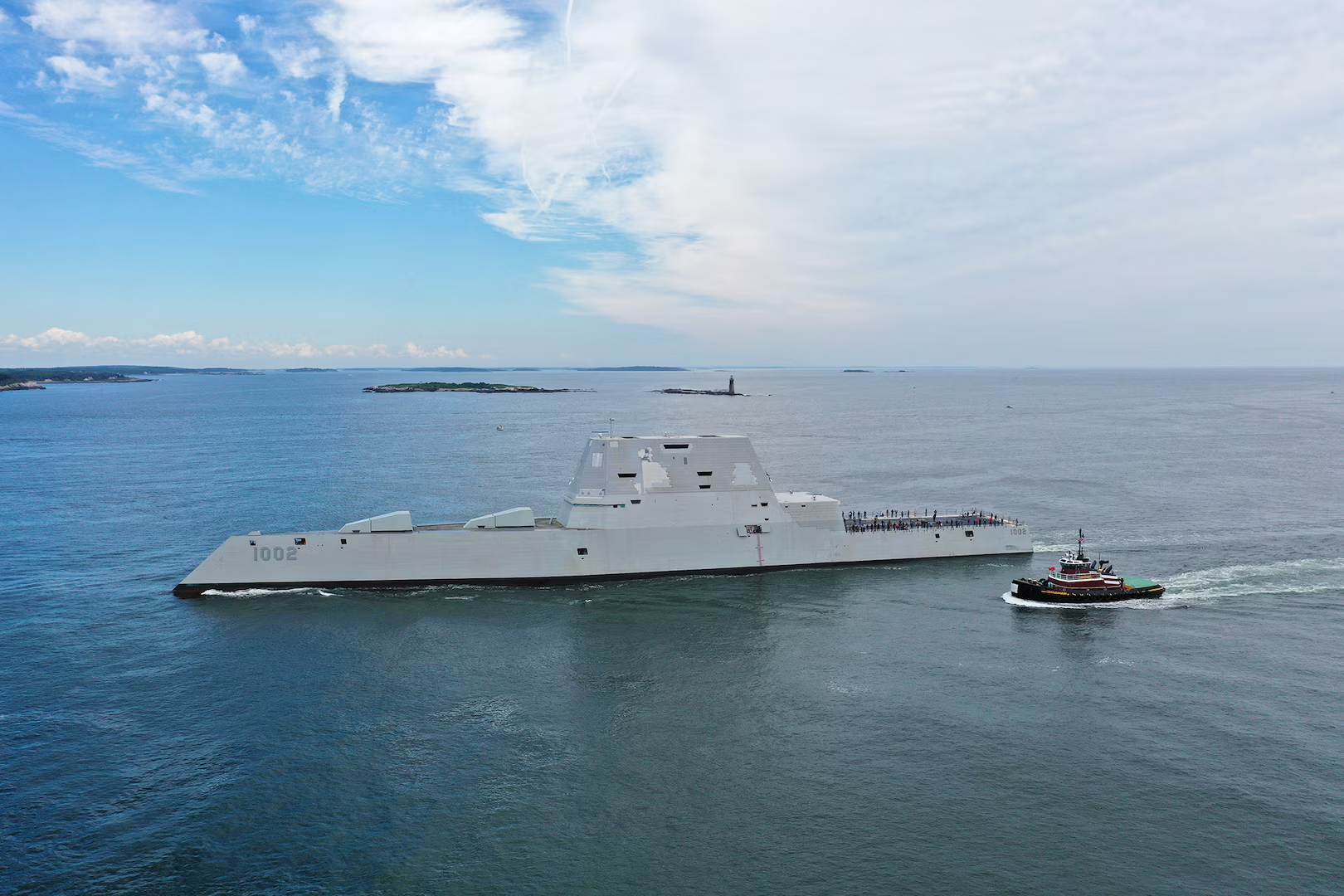
Military Sentinel, Washington – The U.S. Navy has awarded Huntington Ingalls Industries a $99.1 million contract modification to prepare the stealth destroyer USS Lyndon B. Johnson (DDG 1002) for sea trials. This milestone marks the final phase in integrating the service’s Conventional Prompt Strike (CPS) hypersonic missile system onto the angular hull.
The injection of funds supports vital testing and shipyard coordination required as the third and final ship of the Zumwalt-class transitions from structural completion to operational evaluation.
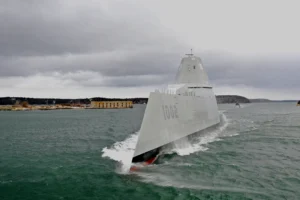
The recent funding addition modifies an existing contract managed by Naval Sea Systems Command, directing resources toward integrated system activation and trial operations. Huntington Ingalls Industries oversees the complex combat-system availability work at its Pascagoula facility, where technicians are stripping the vessel’s original experimental armament to make room for heavy strategic strike hardware.
The integration process requires extensive structural modifications, specifically replacing the ship’s dual 155mm Advanced Gun Systems with larger, multi-pack vertical launch tubes capable of accommodating the Navy’s hypersonic boost-glide weapons.
The core of the modernization involves fielding the Conventional Prompt Strike missile, a joint U.S. Navy and Army development designed to penetrate advanced air-defense networks at extreme speeds. Each converted Zumwalt-class destroyer is configured to house large-diameter launch tubes in place of its legacy artillery.
Because the CPS weapon requires significantly more physical volume than standard Mk 41 vertical launch system cells, the ship’s internal layout and weight distribution have undergone rigorous engineering adjustments. The platform’s integrated power system, capable of generating up to 78 megawatts of electrical power, provides the necessary margins for advanced sensors, cooling loops, and weapon control systems.
Authorized in the early 2000s as a futuristic land-attack platform, the Zumwalt class saw its procurement target drastically reduced from 32 hulls down to just three due to escalating costs and shifting naval priorities. With the cancellation of the Long Range Land-Attack Projectile ammunition, the Navy spent years evaluating alternative missions for the multi-billion-dollar hulls.
The decision to convert the class into hypersonic missile platforms repurposed hulls originally built with unique tumblehome hull forms and radar-cross-section-reducing architecture. Lead ship USS Zumwalt underwent similar modernization milestones, setting the technical baseline that USS Lyndon B. Johnson is now following.
Arming stealth destroyers with high-speed conventional deterrents shifts the surface fleet’s tactical posture from close-in shore bombardment to long-range strategic strike. Operating undetected within contested littorals, these platforms provide regional combatant commanders with rapid-response options against heavily defended high-value targets.
However, analysts note that successful integration hinges on managing high program costs and ensuring missile inventory matches hull availability. The Navy plans to utilize data gathered during upcoming sea trials to validate power management, thermal thresholds, and launcher-missile synchronization under open-ocean conditions.
Future work will focus on completing combat system activation milestones ahead of final delivery to the fleet, setting the stage for operational testing of sea-based hypersonic strike capabilities.

James Whitfield is a defense news writer at Military Sentinel, covering military technology, naval operations, military aviation, international security, and global defense developments. His work focuses on providing informative reporting, relevant context, and accessible explanations of modern military affairs and emerging defense technologies.
Contact: [email protected]