Physical Address
304 North Cardinal St.
Dorchester Center, MA 02124
Physical Address
304 North Cardinal St.
Dorchester Center, MA 02124

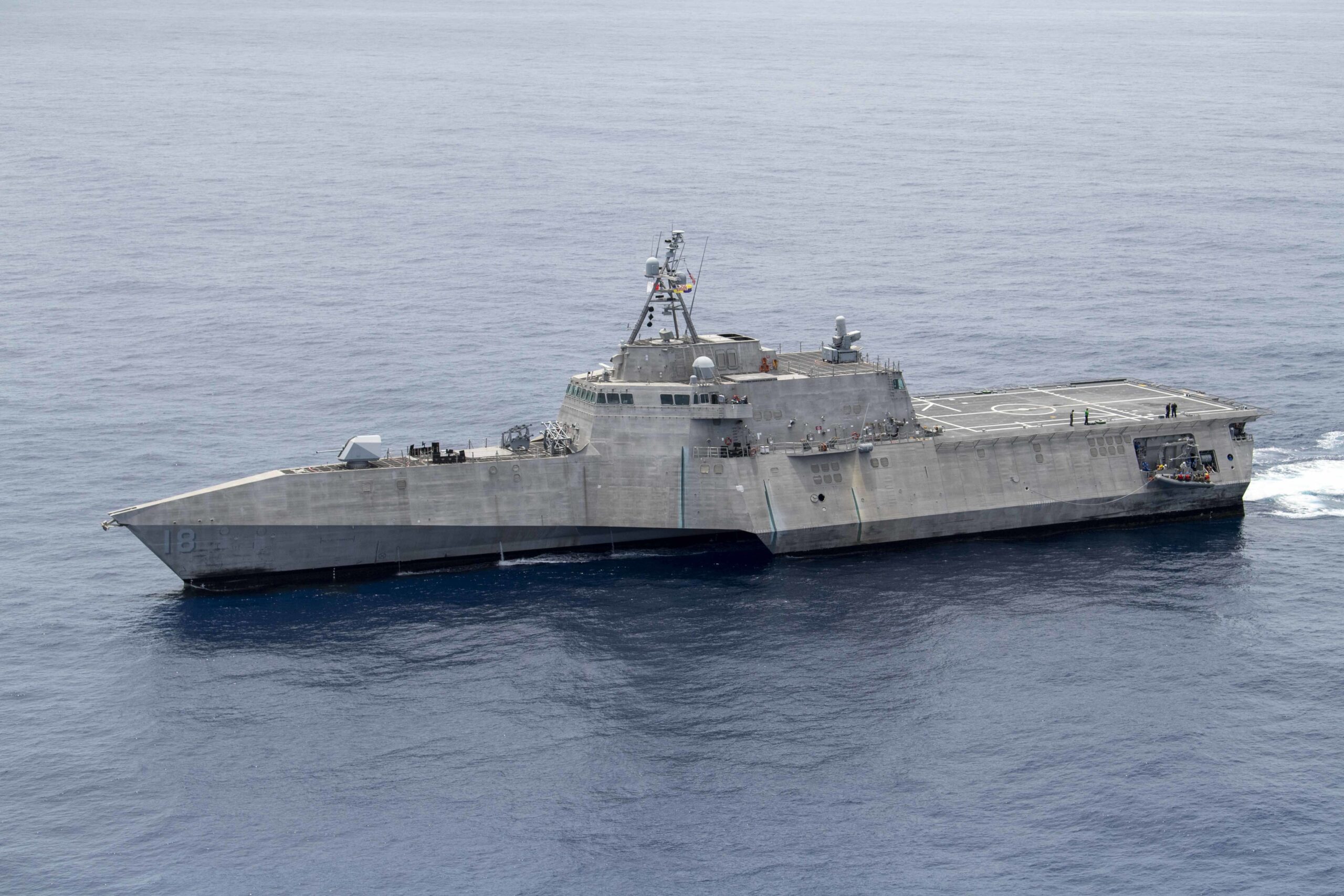
Military Sentinel, Beijing – The Chinese People’s Liberation Army (PLA) Southern Theater Command stated on Tuesday that its naval forces tracked and monitored the U.S. Navy Independence-class littoral combat ship USS Charleston (LCS 18) following operations near Sabina Shoal in the disputed Spratly Islands.
Beijing’s military asserted that the U.S. warship had entered surrounding waters without prior approval, terming the transit an infringement on Chinese sovereign rights. The encounter underscores ongoing friction in the South China Sea, where routine U.S. freedom of navigation operations frequently intersect with expansive maritime claims asserted by Beijing.
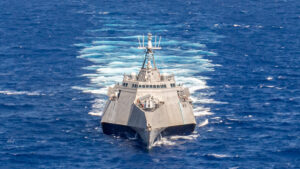
According to statements released by the PLA Southern Theater Command, Chinese naval assets were immediately dispatched to shadow the American littoral combat ship as it operated near the strategic maritime feature. Beijing accused Washington of undermining regional stability and violating domestic regulations governing the area, which lies inside the exclusive economic zone of the Philippines.
The U.S. Navy and the U.S. Seventh Fleet maintained standard operational posture, while regional defense officials noted that multilateral patrols and routine transit missions continue despite heightened posturing from Chinese maritime forces. Philippine authorities reiterated that international maritime law guarantees freedom of navigation and that no single nation holds the authority to mandate prior authorization for vessels transiting international waters.
Sabina Shoal, known in China as Xianbin Jiao, has emerged as a critical flashpoint in the South China Sea. Located roughly 74 nautical miles off the coast of Palawan, the feature falls squarely within Manila’s exclusive economic zone.
The region has experienced a sharp uptick in close encounters and confrontations over recent months, involving both coast guard vessels and naval assets. For Washington, deploying surface combatants such as the USS Charleston reinforces defense commitments to regional allies and exercises freedom of movement rights under the United Nations Convention on the Law of the Sea (UNCLOS).
The USS Charleston (LCS 18) is an Independence-class littoral combat ship designed for high-speed operations in shallow littoral environments. Displacing approximately 3,100 metric tons, the trimaran-hulled vessel can achieve speeds exceeding 40 knots, driven by waterjet propulsion systems powered by gas turbines and diesel engines.
The platform features a modular design capable of supporting surface warfare, anti-submarine warfare, and mine countermeasures missions. Armed with a 57mm naval gun, rolling airframe missile launchers, and aviation facilities capable of accommodating MH-60R/S Seahawks and MQ-8 Fire Scout unmanned helicopters, the ship provides flexible surveillance and response capabilities for forward-deployed commanders.
The latest shadow incident highlights the delicate security equilibrium persisting across Southeast Asian waters. As regional flashpoints remain heavily contested, the regular presence of U.S. surface combatants serves as a physical affirmation of international transit rights.
Defense analysts anticipate that mutual posturing between Beijing and Washington, alongside allied participation from nations such as the Philippines, Australia, and Japan, will continue to characterize operational dynamics in the Spratly Islands chain. Both sides maintain active naval postures in the area, ensuring that routine freedom of navigation transits remain closely monitored by opposing forces.

James Whitfield is a defense news writer at Military Sentinel, covering military technology, naval operations, military aviation, international security, and global defense developments. His work focuses on providing informative reporting, relevant context, and accessible explanations of modern military affairs and emerging defense technologies.
Contact: [email protected]