Physical Address
304 North Cardinal St.
Dorchester Center, MA 02124
Physical Address
304 North Cardinal St.
Dorchester Center, MA 02124

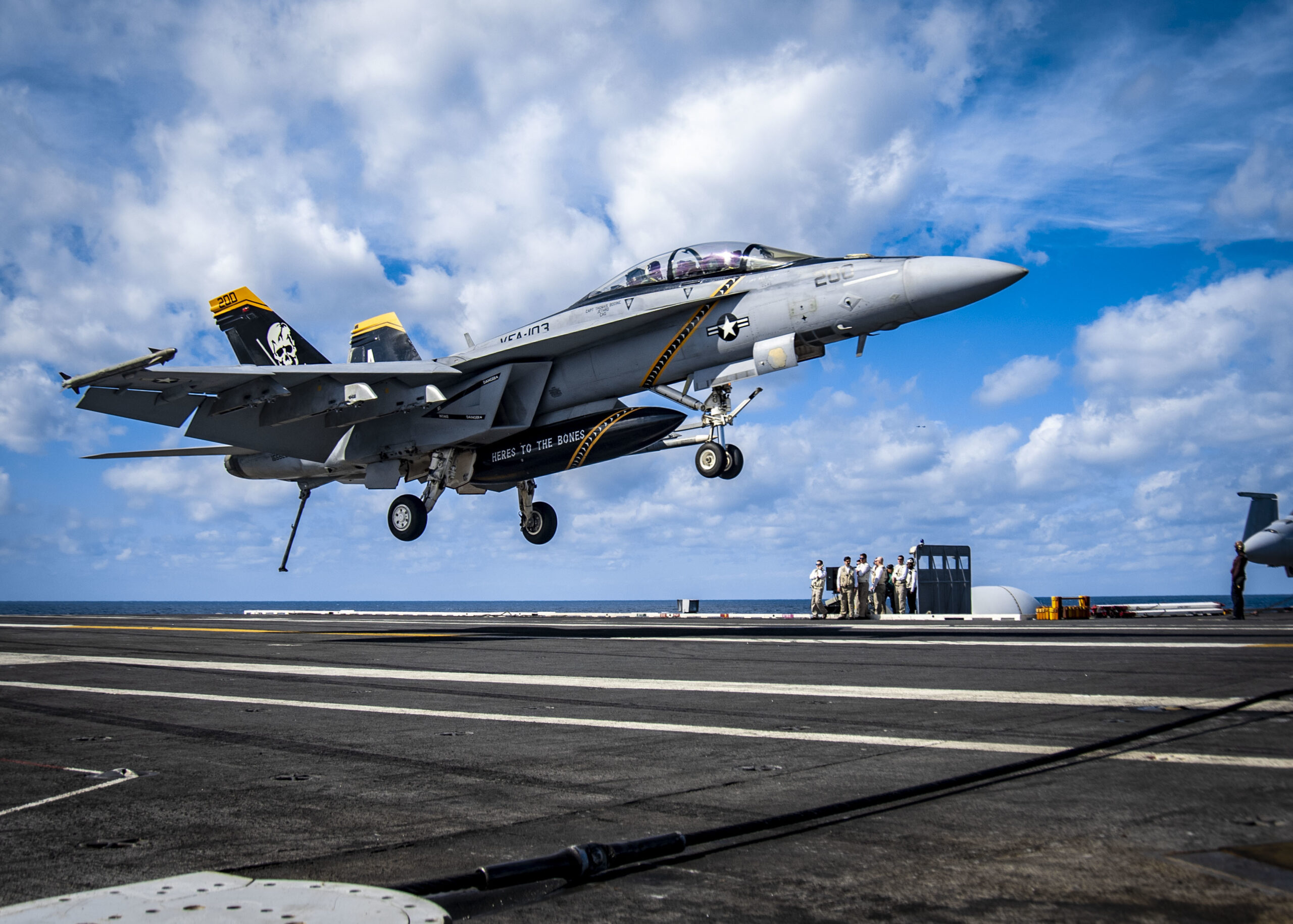
Military Sentinel, Washington – The U.S. Navy has initiated plans to overhaul the central computer system governing munitions and external payloads across its active F/A-18E/F Super Hornet and EA-18G Growler fleets. Following determinations that the legacy architecture can no longer be sustained logistically, naval aviation authorities are moving to address long-standing component obsolescence before the platforms reach the end of their extended service lives.
The intervention centers on the AN/AYK-22 stores management processor, the specialized computing unit responsible for managing, sequencing, and releasing external stores, smart munitions, and fuel tanks. As parts availability dwindles, the service is engaging defense prime Boeing to engineer replacement modules and qualification procedures to keep the carrier-borne tactical aviation wing operational.
The requirement to redesign parts of the stores management processor highlights the growing logistical strain of maintaining legacy avionics architecture in high-performance tactical aircraft. NAVAIR has opened market research and solicitation windows for industrial partners to demonstrate industrial capability, establishing an October deadline for prospective contractors before formal contracting milestones proceed.
While specific contract figures and deployment schedules have not been publicly detailed, the effort underscores the intricate challenges of keeping frontline carrier strike wings combat-effective. The stores management system acts as the digital nerve center between the cockpit and the aircraft’s hardpoints, ensuring precise weapon selection, targeting data transfer, and safe separation sequences during high-g maneuvers.
The processor redesign is part of a broader, multi-layered effort to sustain the Super Hornet and Growler enterprise as production lines wind down. Boeing’s St. Louis manufacturing facility is scheduled to complete final assembly of remaining new-build Super Hornets, following the U.S. Navy’s final procurement order of 17 aircraft.
Concurrently, existing carrier-capable airframes are moving through the Service Life Modification (SLM) program. These deep depot-level overhauls are engineered to push individual airframe service life from 6,000 up to 10,000 flight hours, incorporating Block III structural upgrades, advanced cockpit displays, and networked communication suites designed to keep the jets relevant into the mid-2030s.
The timing of the avionics overhaul coincides with a critical strategic pivot for U.S. naval aviation. The Navy is simultaneously managing production shutdown logistics for older lines while investing heavily in next-generation platforms, including the collaborative combat aircraft initiatives, unmanned refuelers, and the development of the crewed F/A-XX future carrier fighter.
Until future systems achieve operational status, the F/A-18E/F and EA-18G remain the backbone of U.S. carrier air wing power projection. Resolving underlying hardware obsolescence ensures that these legacy workhorses can safely deploy modern precision-guided inventories without facing mission-limiting maintenance bottlenecks.

James Whitfield is a defense news writer at Military Sentinel, covering military technology, naval operations, military aviation, international security, and global defense developments. His work focuses on providing informative reporting, relevant context, and accessible explanations of modern military affairs and emerging defense technologies.
Contact: [email protected]