Physical Address
304 North Cardinal St.
Dorchester Center, MA 02124
Physical Address
304 North Cardinal St.
Dorchester Center, MA 02124

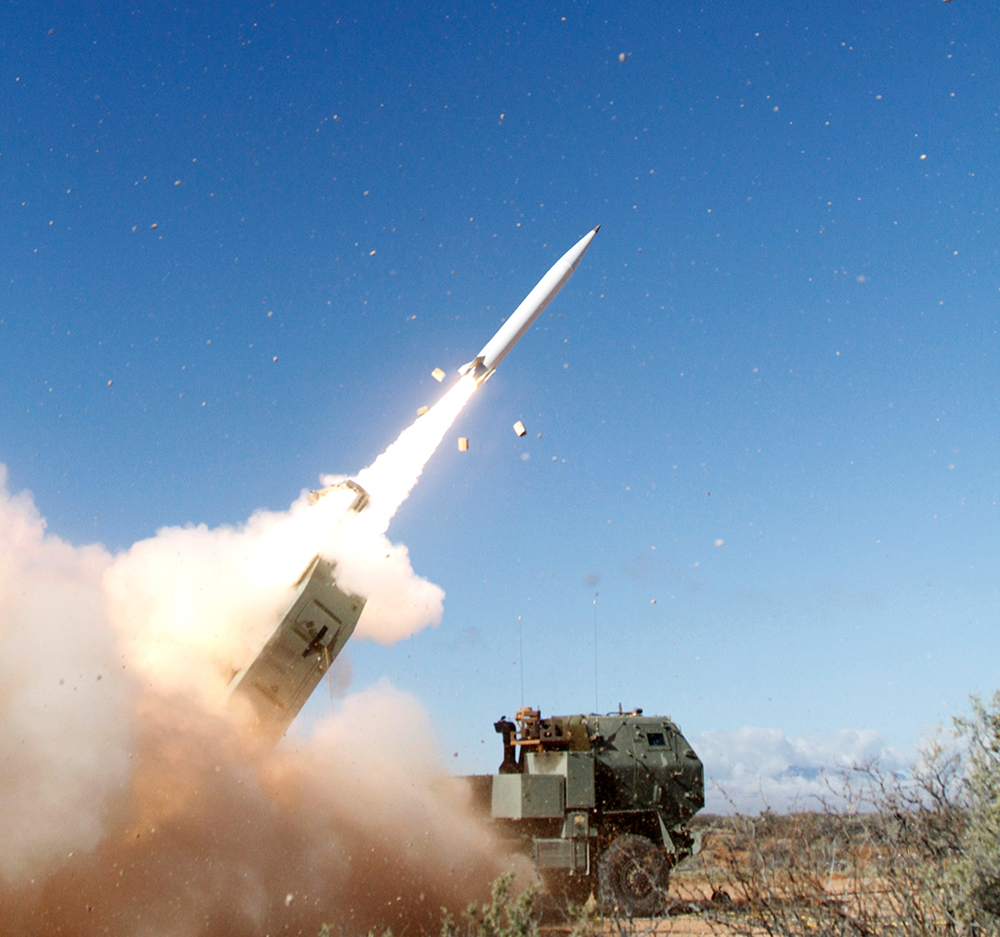
Military Sentinel, Washington – The U.S. Army has awarded prototype development contracts to five defense contractors as part of its ongoing effort to field an advanced long-range maritime strike missile capability for land-based forces operating in contested littoral environments. The initiative aims to provide ground commanders with mobile surface-to-surface weapons capable of holding moving adversary warships at risk at extended ranges, reflecting the military’s broader pivot toward peer-to-peer competition and anti-access/area-denial (A2/AD) challenges.
According to Pentagon contracting disclosures and service announcements, the selected industrial teams will advance their concepts through initial design and testing phases. The program represents a key modernization priority as the ground service looks to expand its multi-domain task force capabilities, ensuring that land-based units can project kinetic effects far into contested maritime domains.
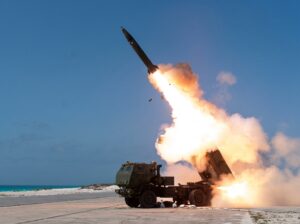
The U.S. Army Contracting Command selected the five participants following a competitive solicitation process designed to leverage commercial and defense-industrial expertise. The initiative is intended to accelerate technology maturation without committing immediately to a single prime contractor or rigid design baseline.
The competing companies have been tasked with demonstrating propulsion, guidance, and seeker technologies capable of operating in heavily jammed electronic warfare environments. Because modern naval adversaries rely heavily on sophisticated radar, electronic countermeasures, and integrated air defense systems, the new weapon must demonstrate high resistance to disruption while maintaining the ability to autonomously acquire and track maritime targets in complex clutter.
Service officials have emphasized that the long-range maritime strike missile must integrate smoothly with existing and planned launcher platforms, including wheeled and tracked mobile systems currently fielded by multi-domain task forces. This commonality is expected to reduce logistical footprints and streamline crew training across operational theaters.
The push for a dedicated land-based maritime strike munition stems from the changing security dynamics in the Indo-Pacific and European theaters. Traditional artillery and short-range missile systems lack the reach needed to influence naval maneuvers across vast ocean expanses or narrow straits. By stationing mobile anti-ship missile batteries on strategic islands or allied coastlines, the U.S. military intends to complicate adversary fleet planning and establish persistent sea-denial zones.
This program complements other long-range precision fires initiatives pursued by the Army, such as the Precision Strike Missile (PrSM) and the Long-Range Hypersonic Weapon (LRHW). However, unlike ballistic or hypersonic systems optimized primarily for fixed land targets, the maritime strike requirement places a premium on moving-target acquisition, terminal guidance flexibility, and extended endurance over water.
Defense analysts note that providing ground forces with organic anti-ship capabilities shifts operational burdens away from naval surface combatants and tactical aviation alone, creating a more resilient, distributed defense posture.
Following the contract awards, the participating firms will proceed through preliminary design reviews and subsystem testing. Initial subsystem demonstrations and risk-reduction trials are expected over the coming months, leading toward competitive flight tests.
While the Army has not yet released a definitive fielding date for the production variant, successful prototyping phases will inform downstream Milestone decisions and potential low-rate initial production contracts. Program managers will evaluate contractor performance on cost, schedule, and technical maturity before down-selecting suppliers for subsequent development stages.