Physical Address
304 North Cardinal St.
Dorchester Center, MA 02124
Physical Address
304 North Cardinal St.
Dorchester Center, MA 02124

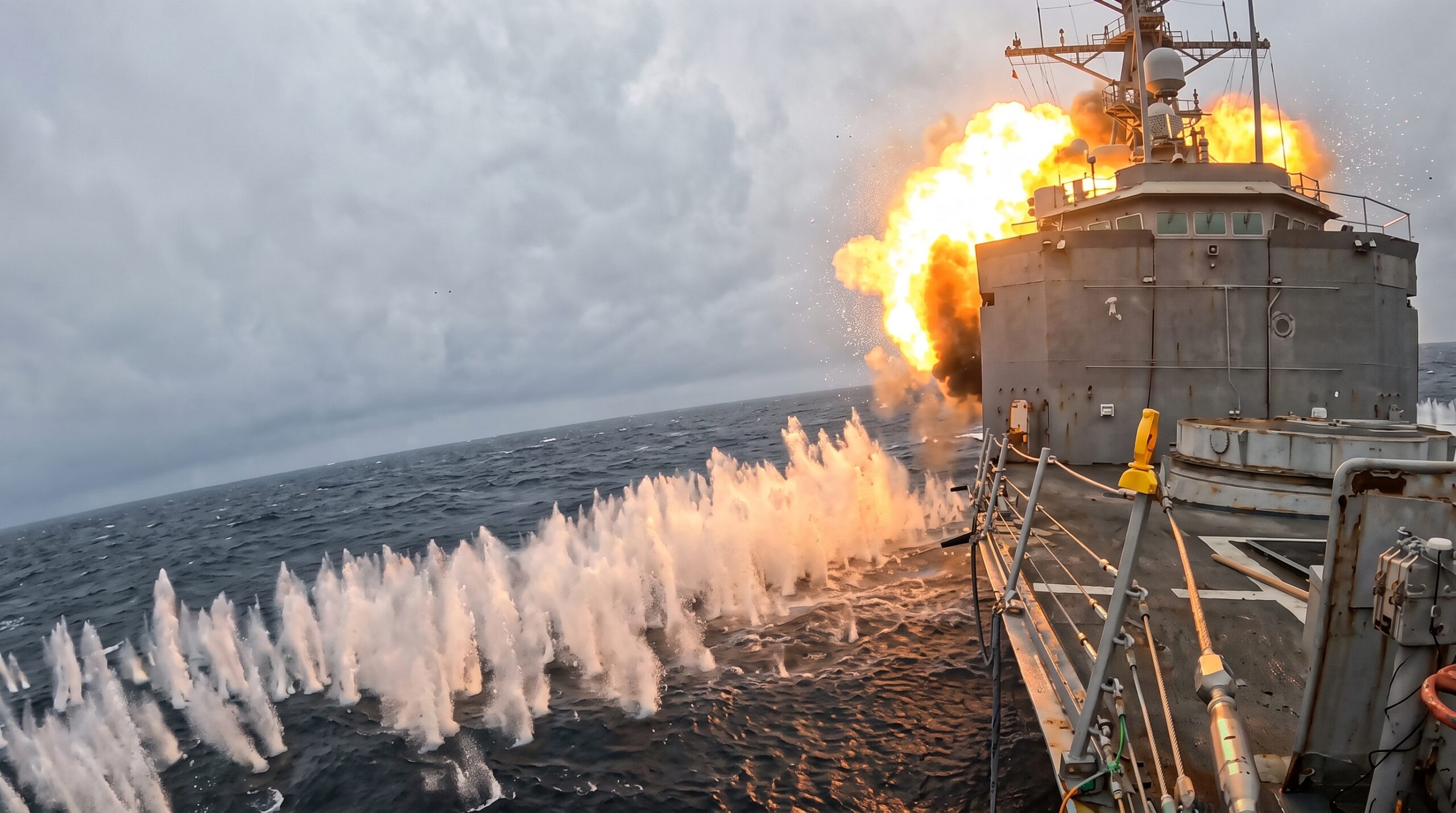
Military Sentinel, London – American and British naval forces carried out a high-end multi-domain live-fire sinking exercise (SINKEX) during Exercise Atlantic Thunder, sinking a decommissioned guided-missile frigate off the coast of the United Kingdom to validate joint maritime strike capabilities.
The drill, spearheaded by U.S. Naval Forces Europe-Africa and U.S. Sixth Fleet alongside the Royal Navy, targeted the former Oliver Hazard Perry-class frigate USS Klakring (FFG-42) in deep waters off the Outer Hebrides, Scotland. The event demonstrated layered standoff strikes against a warship-sized surface combatant, highlighting allied interoperability against peer maritime threats.
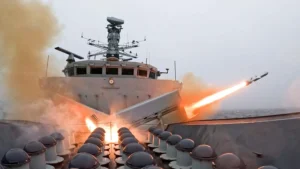
Exercise Atlantic Thunder integrated air, surface, and sub-surface platforms executing synchronized kinetic engagements. Participating units systematically tested both long-range anti-surface munitions and terminal weapons systems against the hardened hull of the target ship.
The coordinated assault unfolded in phases across several operational domains:
Standoff Surface Strike: The Arleigh Burke-class guided-missile destroyer USS Paul Ignatius (DDG-117) launched an anti-surface warfare (ASuW) variant of the Raytheon RIM-174 Standard Missile 6 (SM-6). The shot tested the weapon’s outer operational envelopes against maritime surface targets.
Allied Anti-Ship Missiles: The Royal Navy Type 23 frigate HMS Portland fired a Kongsberg Naval Strike Missile (NSM), marking an operational validation of the UK’s newly integrated interim anti-ship missile capability.
Aviation Standoff Fires: A Royal Navy Wildcat helicopter deployed a Sea Venom light anti-ship missile, confirming rotary-wing precision-strike integration.
Sub-Surface Coup de Grâce: The Virginia-class fast-attack submarine USS Massachusetts (SSN-798) delivered the final catastrophic blow, firing a heavy Mk 48 Advanced Capability (ADCAP) torpedo beneath the keel to fracture the ship’s structure and sink it.
Naval planners emphasize that live-fire sinking exercises are among the few methods capable of producing empirical telemetry on modern weapons effects, warhead lethality, and battle damage assessments against real warship hulls.
“This sinking exercise not only validated the power behind U.S.-UK offensive weapons but delivers a clear message to adversaries that the U.S. Navy and Royal Navy remain a ready allied force,” said Capt. Kelechi Ndukwe, commander of Task Force 65, in an official statement.
Testing the SM-6 in its surface-to-surface role provides critical data for the U.S. Navy’s distributed maritime operations concept. With an estimated operational range exceeding 200 nautical miles and semi-ballistic terminal trajectories, the multi-mission missile provides surface combatants with an agile counter to hostile surface action groups.
The conclusion of Atlantic Thunder comes amid sustained NATO focus on defending the Greenland-Iceland-UK (GIUK) gap and securing transatlantic sea lines of communication. The drill demonstrates that allied fleets can pool sensor and shooter networks across disparate national architectures.
Going forward, the telemetry gathered during the exercise will feed directly into joint tactics development, doctrine for offensive anti-surface warfare (ASuW), and ongoing weapon modernization efforts across the NATO alliance.