Physical Address
304 North Cardinal St.
Dorchester Center, MA 02124
Physical Address
304 North Cardinal St.
Dorchester Center, MA 02124

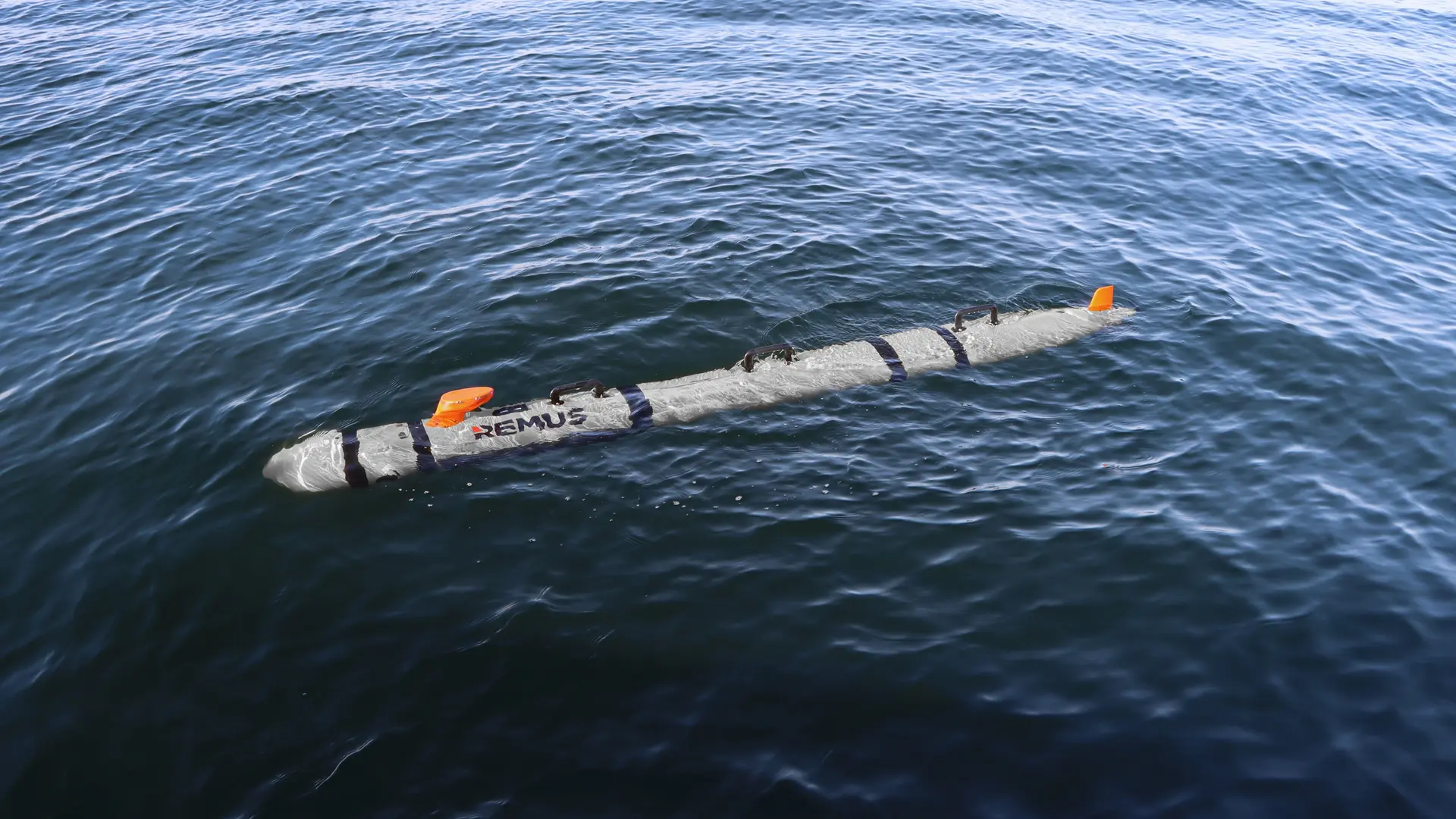
Military Sentinel, WASHINGTON – The U.S. Navy has awarded a contract modification valued at up to approximately $123 million to procure additional Lionfish underwater drones, expanding the fleet’s expeditionary seabed reconnaissance and autonomous mine-clearing footprint amid rising undersea contested environments.
The award exercises production options for the Small Unmanned Undersea Vehicle (SUUV) program, formalizing the Navy’s push to field portable, high-endurance autonomous subsea assets across fleet strike groups and expeditionary units.
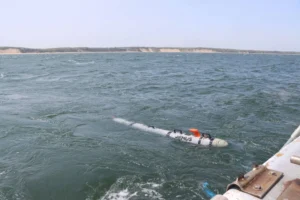
The Lionfish system derived from the commercial-off-the-shelf REMUS 300 architecture developed by HII’s Mission Technologies division serves as the U.S. Navy’s primary program of record for small-class unmanned undersea vehicles.
Initially selected following rigorous testing by the Naval Undersea Warfare Center (NUWC), the platform provides rapid-deployment sensing directly from craft-of-opportunity, rigid-hull inflatable boats (RHIBs), or amphibious hulls without requiring dedicated crane launch-and-recovery equipment.
“Autonomous platforms like Lionfish deliver critical acoustic and optical telemetry in shallow, littoral waterways where risking crewed vessels is tactically non-viable,” a naval defense procurement official noted in previous program briefings.
Designed for modularity and rapid turnaround between sorties, the Lionfish integrates high-resolution side-scan sonars and optical sensors to map seabeds, locate submerged obstructions, and detect underwater ordnance.
Length: Approximately 6.5 to 8.5 feet (depending on module configuration)
Weight: 100 to 130 lbs (two-person portable)
Operating Depth: Rated to depths of 305 meters (1,000 feet)
Endurance: Up to 30 hours depending on payload integration and battery configuration
Core Missions: Mine Countermeasures (MCM), Intelligence, Surveillance, and Reconnaissance (ISR), and oceanographic survey
The system’s open-architecture core allows operators to hot-swap payloads in the field, swapping acoustic mapping suites for marine environmental monitoring kits in minutes.
The additional $123 million investment signals the Department of Defense’s broader pivot toward seabed warfare and distributed maritime operations, particularly in shallow bottlenecks across the Western Pacific and the Persian Gulf.
As adversaries deploy more sophisticated, low-signature sea mines and acoustic listening arrays, fielding expendable and portable autonomous drones shifts the operational math. The Lionfish reduces tactical risk to human divers and crewed mine countermeasure ships, allowing strike task forces to clear critical transit lanes at higher operational tempo.
Deliveries under this latest contract phase are anticipated to support fleet introduction across both active-duty mine warfare units and naval special operations commands over the next three fiscal years.