Physical Address
304 North Cardinal St.
Dorchester Center, MA 02124
Physical Address
304 North Cardinal St.
Dorchester Center, MA 02124

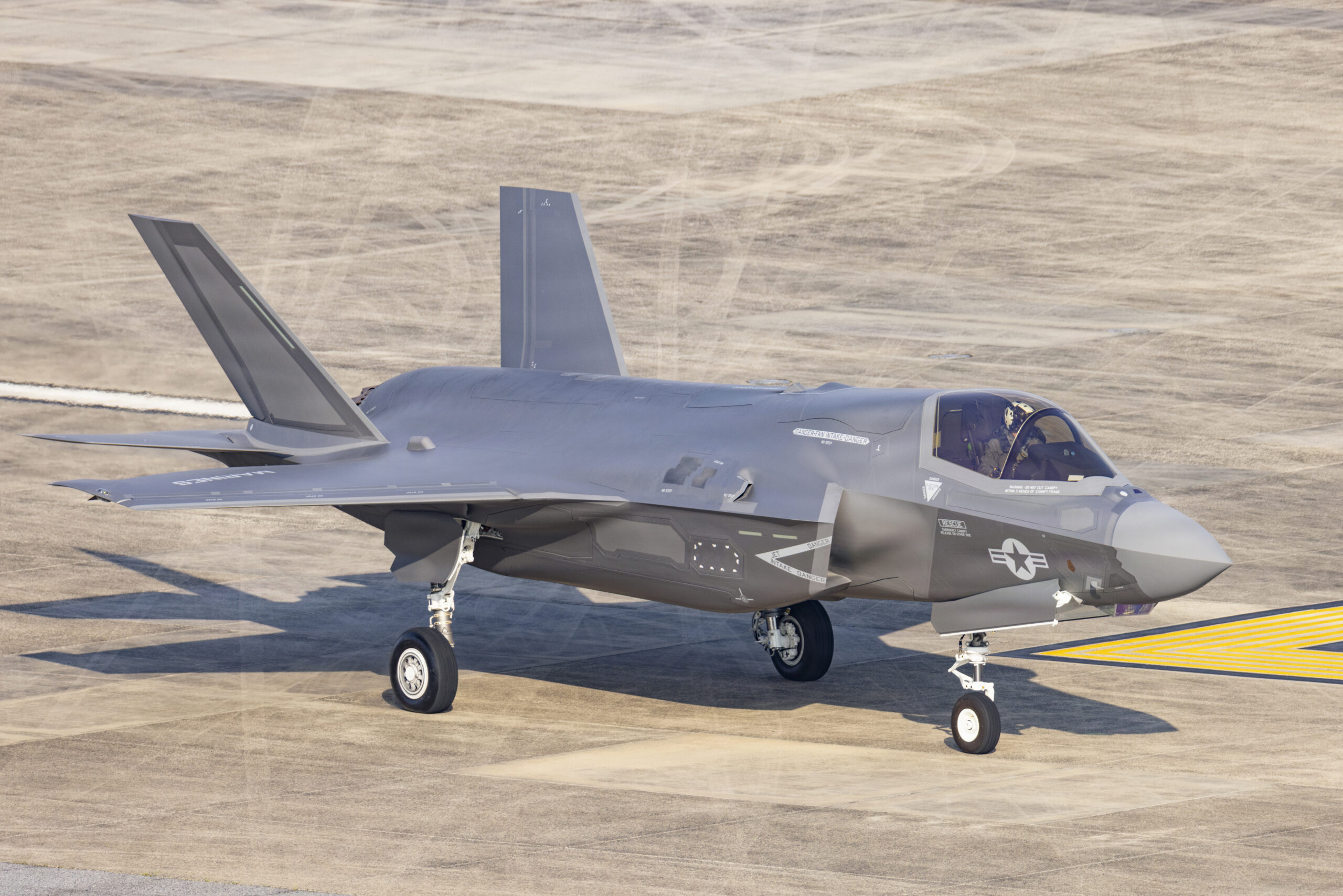
Military Sentinel, Tokyo – The U.S. Marine Corps has deployed a frontline F-35B Lightning II squadron to Marine Corps Air Station Iwakuni, Japan, reinforcing forward-postured strike power and joint readiness across the Indo-Pacific theater.
Marine Fighter Attack Squadron 533 (VMFA-533), known as the “Hawks,” arrived at MCAS Iwakuni under the Pentagon’s Unit Deployment Program (UDP). Operating under Marine Aircraft Group 12 (MAG-12), 1st Marine Aircraft Wing, the squadron replaces VMFA-232, sustaining a continuous rotation of expeditionary fifth-generation airframes along the critical First Island Chain.
The deployment originated from MCAS Beaufort, South Carolina, with aircraft transiting Joint Base Pearl Harbor-Hickam, Hawaii, en route to Japan.
The arrival of VMFA-533 underscores Marine Corps modernization priorities under the Force Design framework, which emphasizes distributed lethality:
Short Takeoff and Vertical Landing (STOVL): Enabled by a shaft-driven lift-fan propulsion system, the F-35B can stage from austere airstrips, damaged concrete, or amphibious assault ships (LHD/LHA).
Multi-Domain Sensor Fusion: Integrates the AN/APG-81 active electronically scanned array (AESA) radar and Distributed Aperture System (DAS) into allied command architectures.
Weapons Payload Flexibility: Houses internal bays configured for AIM-120 AMRAAM air-to-air missiles and precision-guided munitions like the GBU-32/GBU-53/B StormBreaker, preserving very low observable (VLO) stealth profiles.
According to Marine Corps leadership, the rotational posture reinforces long-standing commitments under the U.S.-Japan Treaty of Mutual Cooperation and Security.
MCAS Iwakuni serves as a linchpin for allied contingency operations. Stationing STOVL-capable F-35Bs there allows MAG-12 commanders to avoid over-reliance on centralized, fixed infrastructure. In the event of runway cratering or standoff missile salvos targeting major hubs, F-35B elements can disperse rapidly to remote island positions under Expeditionary Advanced Base Operations (EABO) concepts.
Furthermore, Japan’s Maritime Self-Defense Force (JMSDF) is finalizing modifications on its Izumo-class helicopter destroyers (JS Izumo and JS Kaga) to operate STOVL fighters. Routine integration between VMFA-533 and Japan Air Self-Defense Force (JASDF) units deepens operational familiarity and bilateral interoperability.

James Whitfield is a defense news writer at Military Sentinel, covering military technology, naval operations, military aviation, international security, and global defense developments. His work focuses on providing informative reporting, relevant context, and accessible explanations of modern military affairs and emerging defense technologies.
Contact: [email protected]