Physical Address
304 North Cardinal St.
Dorchester Center, MA 02124
Physical Address
304 North Cardinal St.
Dorchester Center, MA 02124

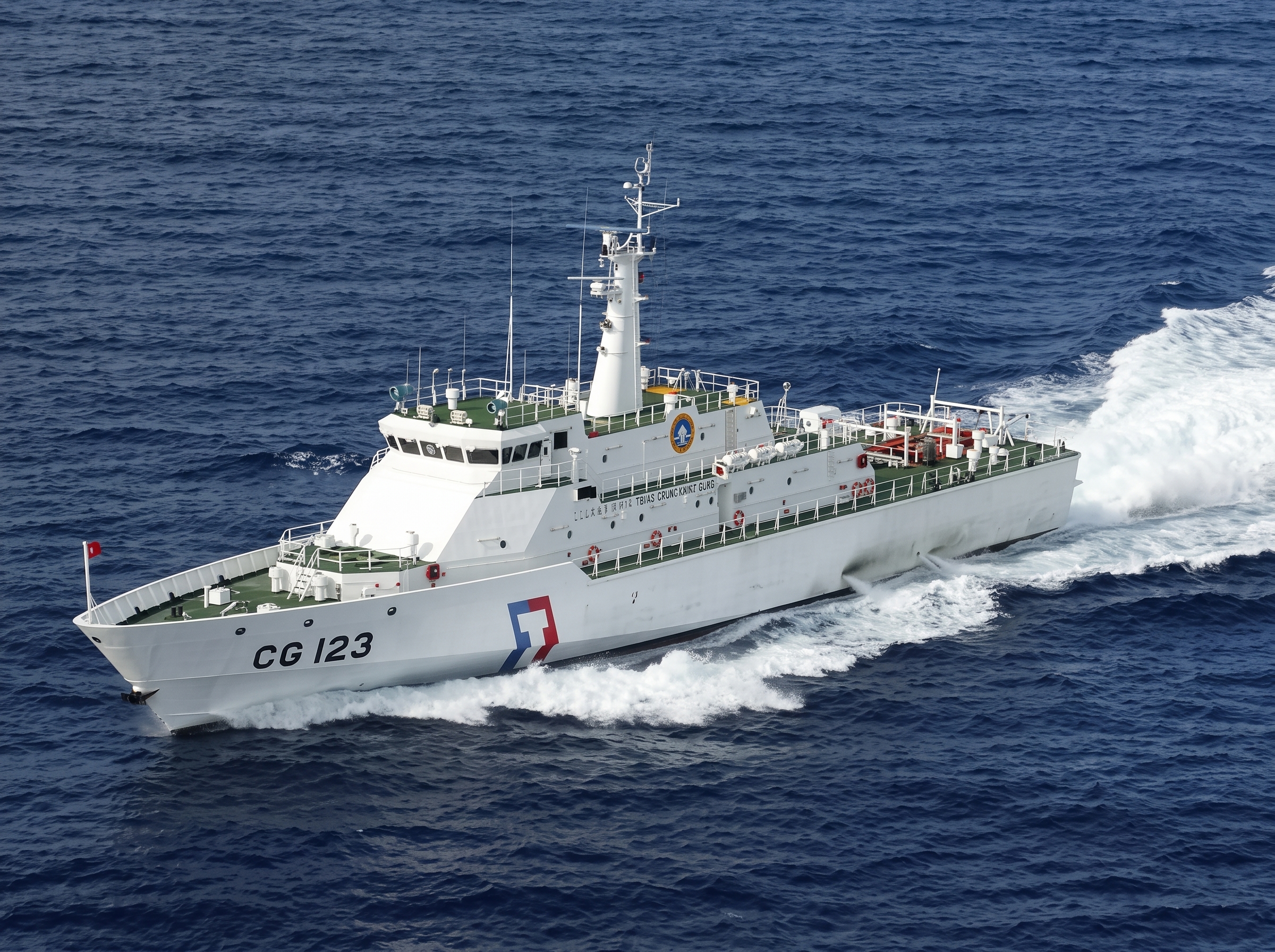
Military Sentinel, TAIPEI – Taiwan has transferred a decommissioned 500-ton Kinmen-class patrol vessel to the Philippine Coast Guard (PCG), marking a discreet but strategically notable expansion of maritime cooperation between Taipei and Manila.
The handover took place following sea trials out of Kaohsiung Port. Delivered under the interim civilian registry name “BLING NO. 1,” the vessel was formally received during a transfer ceremony facilitated by the Philippine non-governmental organization WPS Foundation.
Taiwan’s Coast Guard Administration (CGA) confirmed the donation after local media reports highlighted vessel tracking data showing the craft underway for pre-delivery evaluations. According to regional maritime monitoring groups and defense outlets, the hull is identified as the Lienchiang, a retired unit of the CGA’s steel-hulled Kinmen class.
The decision to route the transfer through the non-governmental WPS Foundation serves as a calculated diplomatic buffer. Manila adheres to a One-China policy, and direct government-to-government transfers of security hardware typically invite severe protests from Beijing.
Regional defense analysts note that channeling the platform through a civilian non-profit allows both sides to lower political friction while addressing Manila’s acute patrol craft shortages. The WPS Foundation stated that the vessel will focus strictly on search and rescue (SAR), humanitarian assistance and disaster relief (HADR), and marine conservation.
Operational tasking is slated for the waters off Mindanao in the southern Philippines, positioning the ship well outside contentious South China Sea hotspots such as Second Thomas Shoal or Sabina Shoal.
The Philippine Coast Guard faces an ongoing fleet-density challenge, tasked with policing an archipelagic coastline spanning over 36,000 kilometers while simultaneously countering gray-zone incursions in its Exclusive Economic Zone.
Fleet Expansion: Although stripped of active heavy armament prior to transfer, the 500-ton platform provides endurance and seakeeping that surpass smaller littoral patrol craft.
Crew Pipeline: The platform offers immediate utility as a navigational training vessel to support the PCG’s rapidly expanding enlistment rolls.
Constabulary Relief: Deploying the ship to southern patrol zones frees up larger multi-role response vessels (MRRVs) such as Japanese-built Teresa Magbanua-class ships for northern and western theaters.
The delivery establishes a structural precedent for non-traditional maritime aid in the Indo-Pacific. If the WPS Foundation framework proves durable against external diplomatic pushback, Taipei could leverage additional retiring coast guard hulls to assist other Southeast Asian partners facing littoral capacity shortfalls.

James Whitfield is a defense news writer at Military Sentinel, covering military technology, naval operations, military aviation, international security, and global defense developments. His work focuses on providing informative reporting, relevant context, and accessible explanations of modern military affairs and emerging defense technologies.
Contact: [email protected]