Physical Address
304 North Cardinal St.
Dorchester Center, MA 02124
Physical Address
304 North Cardinal St.
Dorchester Center, MA 02124

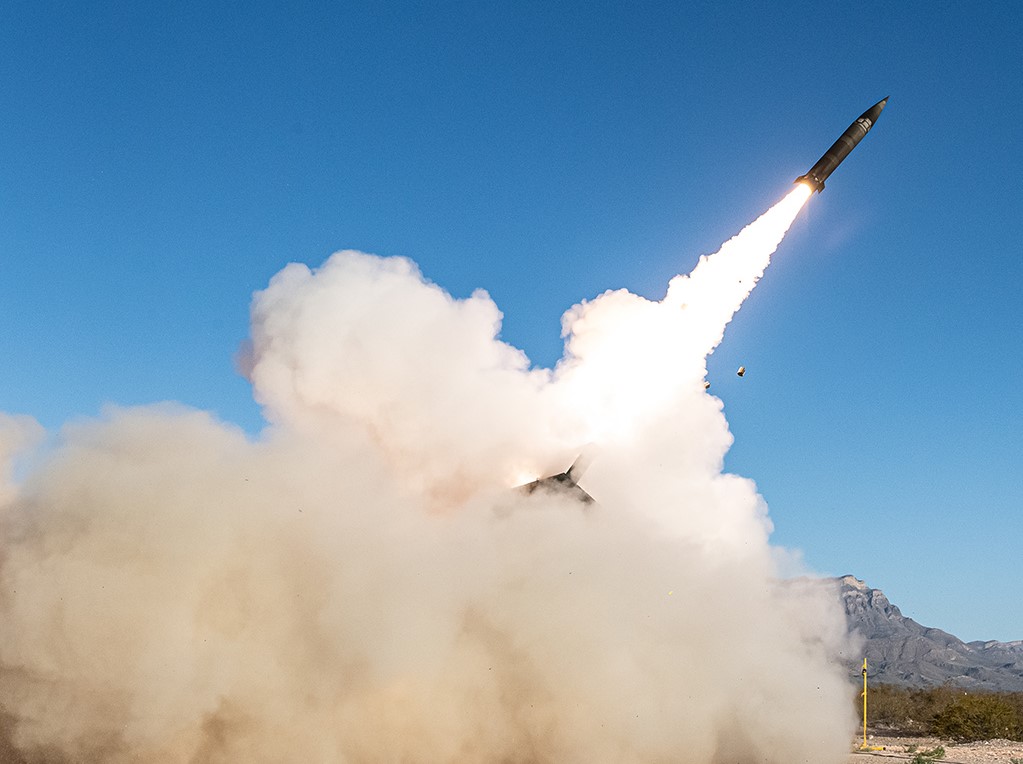
Military Sentinel, WASHINGTON – The U.S. Army has awarded Lockheed Martin an indefinite-delivery, indefinite-quantity (IDIQ) contract valued at up to $1.2 billion for the initial production and continued development of the maritime-capable Precision Strike Missile (PrSM) Increment 2. The award transitions the service’s premier surface-to-surface ballistic missile into an active ship-hunting asset, providing combatant commanders with land-based anti-ship capabilities tailored for contested maritime theaters.
The procurement follows a developmental flight campaign conducted throughout 2026, which included two successful live tests in March and August. During the August test, an Increment 2 round fired from an M142 HIMARS launcher deployed protective aerodynamic covers, acquired telemetry, and engaged a moving maritime target in a realistic operational environment.
While baseline PrSM Increment 1 rounds entered operational inventories to replace the legacy MGM-140 ATACMS for fixed land targets, Increment 2 introduces an advanced multi-mode seeker. The seeker blends passive radio-frequency (RF) sensors with imaging infrared (IIR) guidance, enabling terminal homing against both moving maritime surface vessels and relocatable land targets even in heavily jammed electronic warfare conditions.
According to Army program documentation and manufacturer disclosures, the platform delivers several distinct operational advantages:
Magazine Depth: Standard launch pods accommodate two PrSM rounds in the same physical footprint previously occupied by a single ATACMS missile.
Platform Compatibility: Operates seamlessly from existing tracked M270A2 MLRS and wheeled M142 HIMARS launchers.
Engagement Envelope: Officially rated for ranges exceeding 400 kilometers (248 miles), effectively out-ranging current operational tactical rocket batteries.
Production Footprint: Supports a broader industrial expansion aimed at quadrupling overall PrSM annual output to meet global demand.
“This award marks an important step in delivering PrSM Increment 2 to the warfighter,” said Dave Griser, vice president of Precision Fires Launchers and Missiles at Lockheed Martin, in an official statement. “We’re ready to move from flight testing into production and provide the Army with an expanded long-range precision fires capability.”
Procuring a land-based maritime strike munition directly addresses operational requirements within the Indo-Pacific. Under modern Multi-Domain Task Force (MDTF) doctrine, Army rocket artillery will no longer serve strictly as counter-battery or ground-support assets. Instead, mobile HIMARS teams deployed across the First Island Chain can establish lethal chokepoint barriers across crucial straits.
Allied integration is also moving forward. The Australian Army signed an early partnership memorandum for Increment 2 development and formally selected the missile to equip its own mobile artillery formations, ensuring cross-theater interoperability.
Parallel flight testing for Increment 2 will continue through 2027 to mature targeting software alongside initial assembly lines. Concurrently, the Army and industry partners are advancing Increment 3 submunition payloads and Increment 4 propulsion prototypes, laying the groundwork for a broader precision-fires architecture that permanently transforms ground forces from static defenders into expeditionary maritime hunters.

James Whitfield is a defense news writer at Military Sentinel, covering military technology, naval operations, military aviation, international security, and global defense developments. His work focuses on providing informative reporting, relevant context, and accessible explanations of modern military affairs and emerging defense technologies.
Contact: [email protected]