Physical Address
304 North Cardinal St.
Dorchester Center, MA 02124
Physical Address
304 North Cardinal St.
Dorchester Center, MA 02124

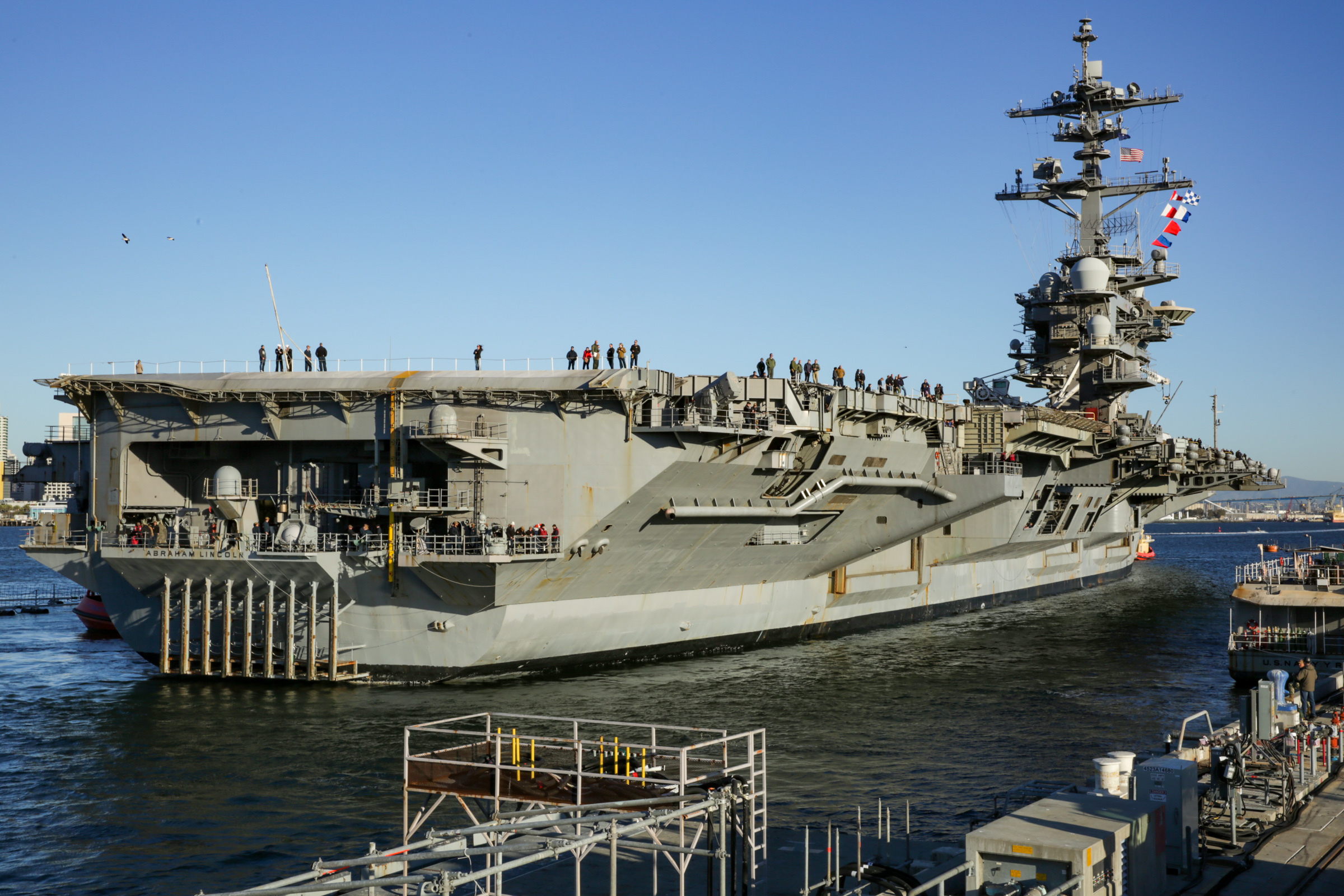
Military Sentinel, Apra Harbor – The Nimitz-class aircraft carrier USS Abraham Lincoln (CVN-72) arrived at Naval Base Guam on September 19 for a logistics stop, extending the carrier strike group’s operational tour to 302 days as the Pentagon balances acute naval commitments in the Indo-Pacific and Middle East.
The port call marks the first time Carrier Strike Group 3 personnel have touched American soil in nine months, highlighting the operational strain placed on the U.S. Navy’s surface fleet amid continuous regional crises.
The Abraham Lincoln originally slipped its moorings at Naval Air Station North Island in San Diego in late November 2025, deploying on what was planned as a standard Indo-Pacific patrol. By early 2026, the carrier was conducting live-fire drills in the South China Sea alongside escorting guided-missile destroyers.
However, escalating hostilities in the Middle East prompted U.S. Central Command to request carrier strike capability. The strike group consisting of CVN-72, Carrier Air Wing 9 (CVW-9), and the Arleigh Burke-class destroyer USS Frank E. Petersen Jr. (DDG-121)—transited the Strait of Malacca into the Indian Ocean, where it spent five consecutive months conducting high-tempo flight operations.
Navy spokespersons confirmed that CVW-9 executed more than 10,000 flight sorties during the deployment before the carrier was formally relieved in theater by the USS George Washington (CVN-73). Prior to reaching Guam, the strike group completed a short logistics call at Laem Chabang, Thailand, earlier in September.
The extended cruise places the Abraham Lincoln among the longest single-carrier deployments of the post–Cold War era, closely trailing the record 341-day deployment of the same vessel during Operation Iraqi Freedom in 2002–2003.
Flagship: USS Abraham Lincoln (CVN-72), Nimitz-class nuclear aircraft carrier
Displacement: Approximately 104,000 tons full load
Embarked Air Wing: Carrier Air Wing 9 (F/A-18E/F Super Hornets, F-35C Lightning II, EA-18G Growlers, E-2D Advanced Hawkeyes)
Total Sorties Flown: Exceeding 10,000 combat and support operations
Escort Elements: USS Frank E. Petersen Jr. (DDG-121) and Destroyer Squadron 21 staffs
Total Duration to Date: 302 days
While U.S. 7th Fleet stated that the carrier group remains mission-capable and well-supplied, prolonged sea tours impose severe logistical frictions. Extended deployments accelerate wear on steam catapults, arresting gear, and propulsion systems, while creating major maintenance backlogs at domestic shipyards already struggling with workforce capacity.
Beyond technical wear, the human cost of repeated nine-to-ten-month deployments remains a point of friction for naval leadership. The Navy has repeatedly stated a preference for standard six-to-seven-month deployment cycles under the Optimized Fleet Response Plan (OFRP). However, unexpected operational surges continue to override planned schedules.
Following its brief turnaround in Guam, Carrier Strike Group 3 is slated to transit east across the Pacific to complete its transit to San Diego, where the carrier will enter an extensive maintenance and refit phase.