Physical Address
304 North Cardinal St.
Dorchester Center, MA 02124
Physical Address
304 North Cardinal St.
Dorchester Center, MA 02124
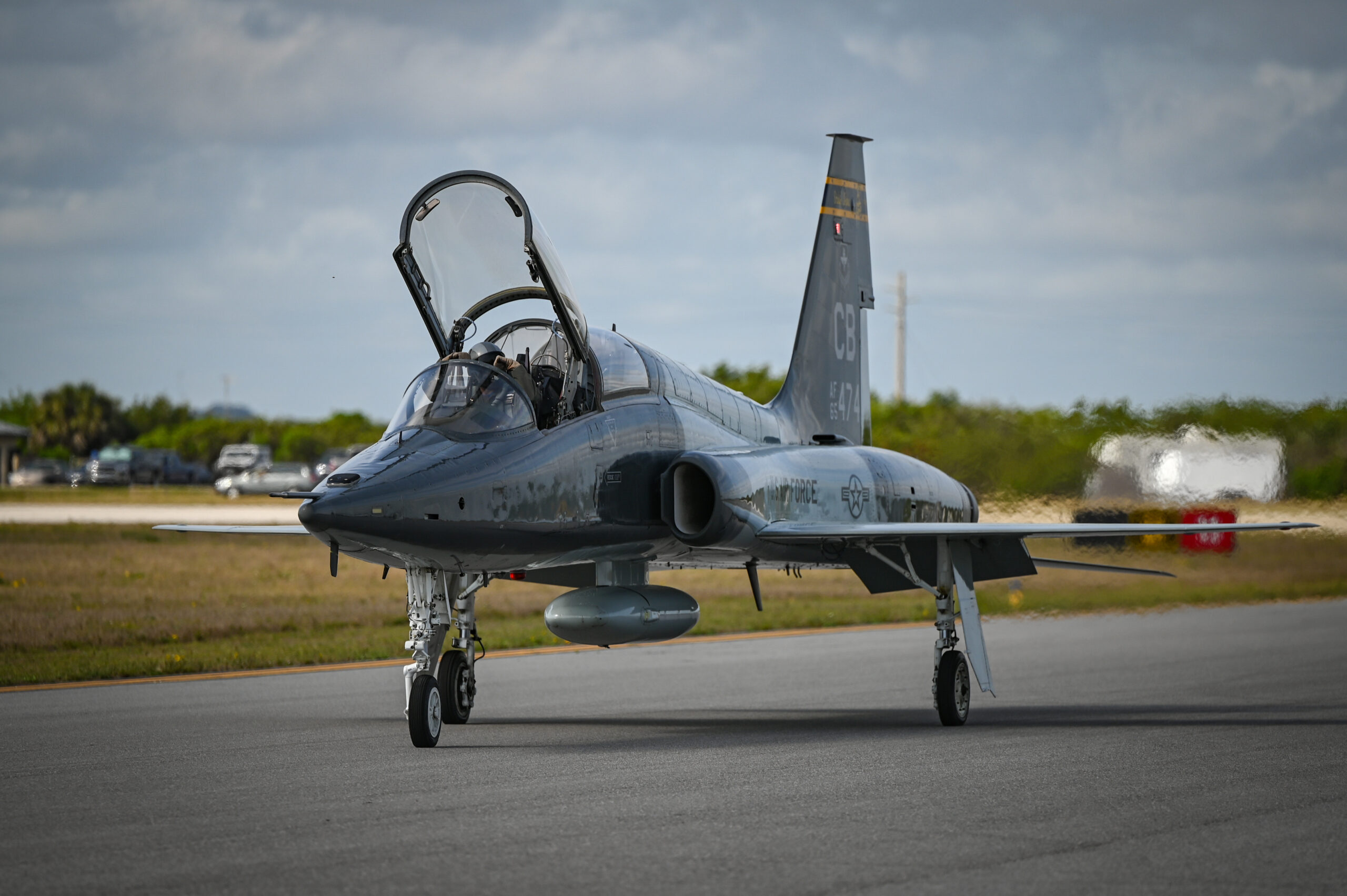
Military Sentinel, WASHINGTON – The U.S. Air Force is committing up to $148.3 million across two contracts to sustain the General Electric J85 jet engine, the vintage propulsion system that has powered its frontline supersonic trainer fleet since the early 1960s.
The Defense Logistics Agency (DLA) awarded the sole-source agreements to Collins Engine Nozzles of West Des Moines, Iowa. The procurement focuses directly on mission-critical combustion components: fuel injection nozzles and spray bars, both subject to extreme thermal wear and mechanical fatigue in high-tempo flight training operations.
The sustainment initiative is split into two targeted defense logistics contracts:
Fuel Injection Nozzles ($77.97M): A direct procurement valued at $77,967,014 covering new fuel nozzles, with delivery schedules and support running through January 31, 2032.
Main Fuel Spray Bars ($70.29M): An indefinite-delivery/indefinite-quantity (IDIQ) contract valued at up to $70,290,396 spanning an ordering period through September 14, 2029. Under the IDIQ mechanism, the service will draw down batches of spray bars on demand rather than stockpiling surplus components upfront.
The DLA cited 10 U.S.C. 3204 to justify the sole-source award. Federal acquisition law permits sole-source selections when only one verified vendor possesses the specialized tooling, technical data, and qualification pedigree required to deliver certified airworthiness components.
Originally conceived by General Electric in the 1950s as a compact turbojet for decoy missiles, the J85 jet engine evolved into one of the most prolific lightweight powerplants in American military aviation history.
In the twin-engine Northrop T-38 Talon, the afterburning J85 enabled the world’s first purpose-built supersonic trainer, delivering high-altitude performance and Mach 1+ handling characteristics to prepare student pilots for century-series fighters and beyond.
The six-year contracting timeline through 2032 reflects broader industrial realities within the service’s pilot training pipeline. While the Air Force selected the Boeing-Saab T-7A Red Hawk powered by a single modern GE F404 afterburning turbofan to retire the T-38, the replacement program has grappled with supply chain hurdles, escape system qualification issues, and software integration delays.
As the operational introduction of the Red Hawk shifts to the right, Air Education and Training Command (AETC) must preserve the airworthiness and safety of its legacy T-38 fleet. Without steady, sole-source component pipelines for critical engine assemblies, the Air Force would face fleet groundings and immediate bottlenecks in advanced fighter and bomber pilot production.

James Whitfield is a defense news writer at Military Sentinel, covering military technology, naval operations, military aviation, international security, and global defense developments. His work focuses on providing informative reporting, relevant context, and accessible explanations of modern military affairs and emerging defense technologies.
Contact: [email protected]