Physical Address
304 North Cardinal St.
Dorchester Center, MA 02124
Physical Address
304 North Cardinal St.
Dorchester Center, MA 02124

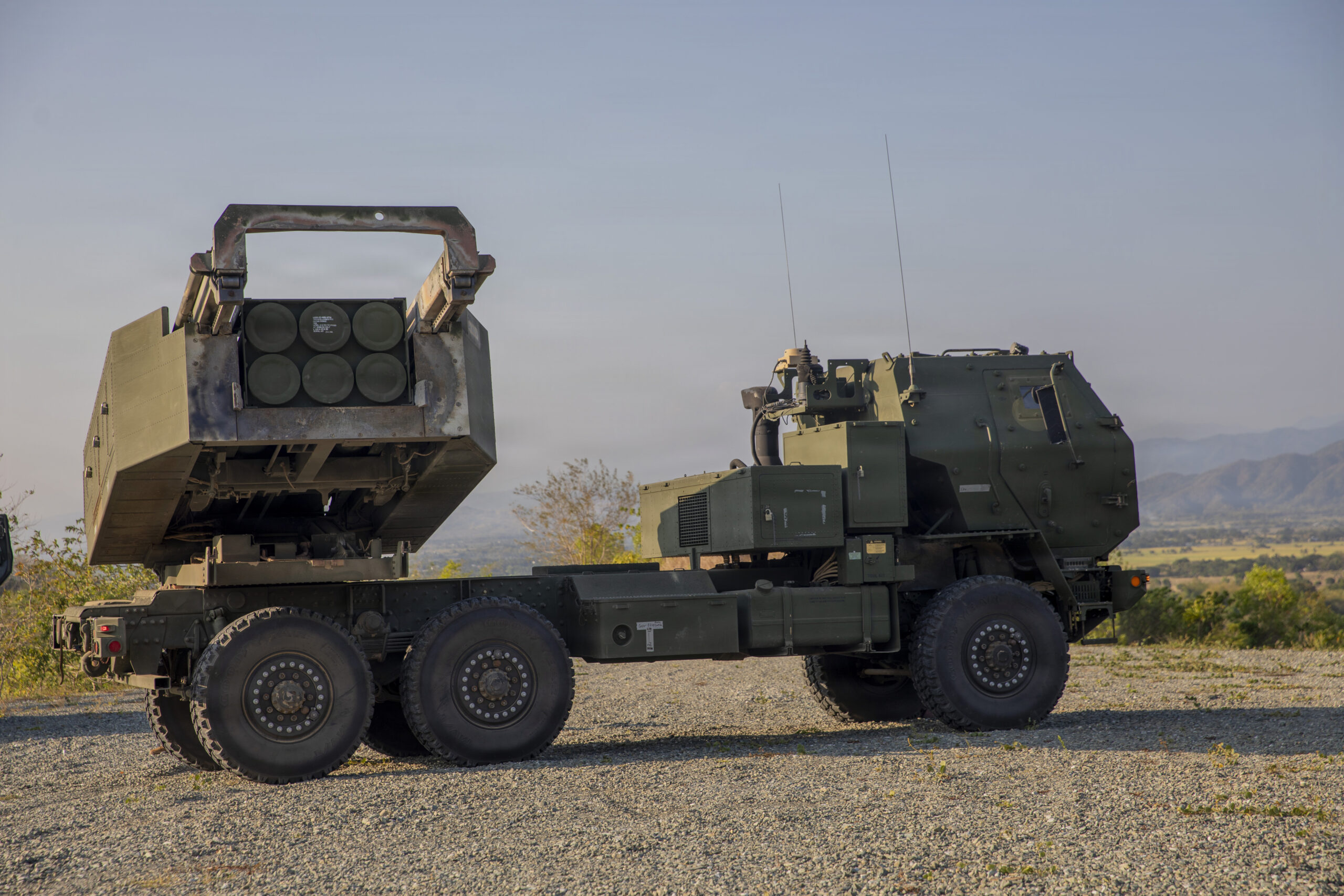
Military Sentinel, Washington – The U.S. Army has awarded Lockheed Martin a $1.21 billion contract to accelerate the development of the Precision Strike Missile (PrSM) Increment 2, funding early operational capability for an upgraded weapon designed to strike moving maritime and land targets following severe stockpile drawdowns in recent regional combat operations.
Managed by Army Contracting Command at Redstone Arsenal under contract W31P4Q-26-D-A001, the indefinite-delivery/indefinite-quantity (IDIQ) award establishes a procurement ceiling running through September 2031. The development deal comes as the Pentagon seeks both to modernize and backfill deep-strike arsenals heavily depleted during Operation Epic Fury, where U.S. Central Command confirmed the missile’s combat debut against hardened radar and air-defense nodes.
The Precision Strike Missile serves as the service’s primary replacement for the Cold War-era MGM-140 Army Tactical Missile System (ATACMS). Built to launch from both the wheeled M142 HIMARS and tracked M270A2 MLRS, PrSM doubles the magazine depth of legacy batteries by packing two rounds into a single launch canister compared to one ATACMS round.
While the baseline Increment 1 variant entered service in December 2023 to hit stationary coordinates via GPS and inertial guidance out to 500 kilometers (310 miles), Increment 2 introduces moving-target tracking:
Target Acquisition: Integrates a multi-mode radio frequency and imaging seeker originating from the Army’s Land-Based Anti-Ship Missile initiative.
Dual Roles: Retains baseline fixed-target strike performance while adding terminal tracking against maneuvering warships and mobile surface-to-air missile batteries.
Testing Milestones: Achieved a 350-kilometer flight test from a HIMARS launcher in March 2026, validating seeker cover ejection and aerodynamic stability during high-speed descent.
Unit Economics: Baseline missiles carry an estimated flyaway cost of approximately $3.5 million per unit, according to Army budget documents.
“With Increment 2, PrSM delivers the long-range capability the Army asked for to defeat moving land and maritime threats,” said Carolyn Orzechowski, vice president of precision fires launchers and missiles at Lockheed Martin.
The procurement urgency follows steep battlefield consumption rates during the U.S. campaign against Iranian coastal defenses earlier this year. Independent assessments by the Center for Strategic and International Studies (CSIS) reported that roughly 45 percent of the initial PrSM stockpile was expended within the first seven weeks of operations, corroborating reports that allied forces heavily drained operational munitions reserves.
The Army has historically withheld precise inventory figures for operational security reasons. However, defense analysts project a full reconstitution of baseline munitions reserves will require three to five years, even with accelerated multi-year production agreements.
While the $1.21 billion IDIQ framework funds developmental refinement rather than immediate mass delivery, the architecture allows the Army to issue rapid task orders as manufacturing bottlenecks ease. Furthermore, the capability addresses vital cross-theater doctrines:
Indo-Pacific Deterrence: Australia has joined the program as an official co-development partner, committing to PrSM Increment 2 to satisfy its own sovereign land-based maritime strike requirements.
Distributed Fires: Equipping mobile HIMARS batteries with anti-ship seekers allows ground forces to enforce anti-access/area-denial (A2/AD) envelopes across key archipelagic straits without requiring continuous naval air cover.
Moving forward, the program faces preliminary design reviews and secondary live-fire validation scheduled for late 2026, where the Army will evaluate the multi-mode seeker’s electronic counter-countermeasure resilience in contested electromagnetic environments.