Physical Address
304 North Cardinal St.
Dorchester Center, MA 02124
Physical Address
304 North Cardinal St.
Dorchester Center, MA 02124

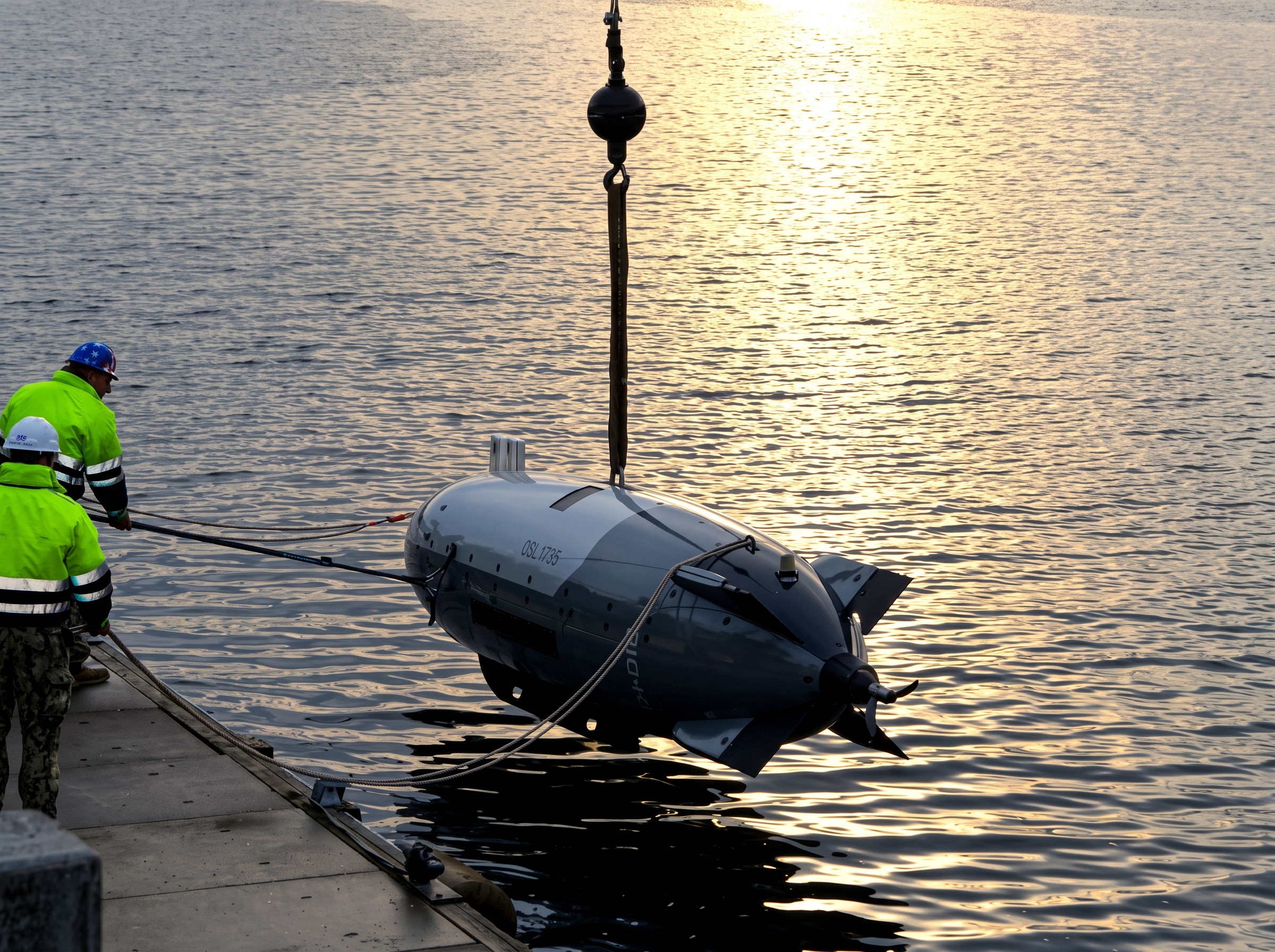
Military Sentinel, Washington – Iranian defense engineers intend to study and reverse-engineer a captured U.S. Dive-LD autonomous underwater vehicle seized in the Persian Gulf, raising concerns over Tehran expanding its domestic unmanned undersea fleet.
The unmanned underwater vehicle (UUV), developed by defense technology firm Anduril Industries, was reportedly captured by Iranian maritime units operating near the strategic Strait of Hormuz. The incident marks the latest episode in Tehran’s decades-long history of exploiting recovered Western military hardware to accelerate its domestic defense industrial base.
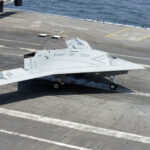
Iranian defense personnel have frequently turned seized foreign platforms into indigenous weapon systems. The most prominent precedent occurred in December 2011, when an American RQ-170 Sentinel stealth drone was brought down intact over eastern Iran via electronic warfare and GPS spoofing.
That captured airframe served as the direct design foundation for Iran’s Shahed-171 Simorgh and Saegheh flying-wing unmanned aerial vehicles. While Western analysts regularly debate the flight performance and sensor fidelity of these domestic clones, they demonstrate Tehran’s institutional capability to extract aerodynamic data, composite fabrication techniques, and structural layouts from captured assets.
The Dive-LD is an autonomous, commercial-off-the-shelf-derived underwater platform engineered for extended littoral and deep-sea missions:
Primary Roles: Bathymetric survey, subsea infrastructure inspection, intelligence, surveillance, and reconnaissance (ISR), and mine countermeasures.
Operating Depth: Capable of diving to 6,000 meters (nearly 20,000 feet).
Endurance: Multi-day mission capability powered by high-capacity lithium-ion battery architecture.
Navigation: Acoustic positioning coupled with inertial navigation systems (INS) for GPS-denied undersea transit.
In response to reports of the capture, representatives from Anduril Industries downplayed the intelligence windfall, noting that commercialized architectures and standard data zeroization safeguards limit the sensitive operational software an adversary can recover.
Even without access to proprietary American mission software, physical possession of the hull allows the Islamic Revolutionary Guard Corps Navy (IRGCN) to evaluate structural pressure hull fabrication, modular payload integration, and hydrodynamics.
The Persian Gulf and the Strait of Hormuz present shallow, acoustically complex waters ideal for small, uncrewed platforms. If Iran successfully replicates the form factor and low-observable acoustic properties of the Dive-LD, it could deploy long-endurance, subsea loitering reconnaissance drones or clandestine mine-laying platforms. Such an advancement would pose direct operational challenges to commercial shipping corridors and Western naval patrols across the region.