Physical Address
304 North Cardinal St.
Dorchester Center, MA 02124
Physical Address
304 North Cardinal St.
Dorchester Center, MA 02124

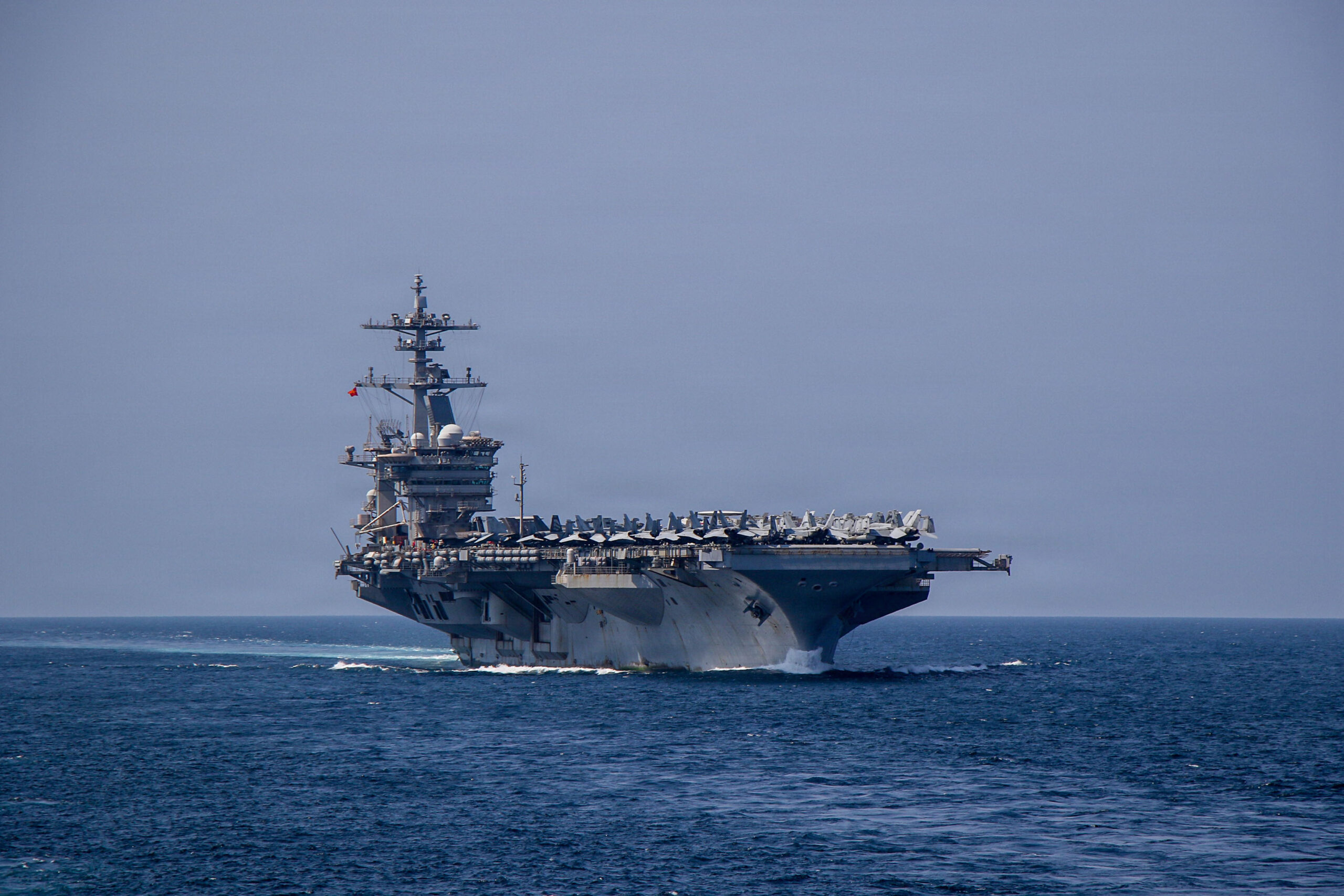
Military Sentinel, Washington – The U.S. Navy has extended the deployment of the aircraft carrier USS Abraham Lincoln (CVN-72) in the Indo-Pacific, postponing its long-awaited return to its homeport in San Diego following a grueling, nine-month combat tour in the Middle East.
The Nimitz-class supercarrier pulled into Laem Chabang, Thailand, for a scheduled port call and crew rest period after spending over 250 consecutive days at sea without an operational port visit. While families and industry observers anticipated the strike group’s immediate transit home across the Pacific, operational leadership has directed the carrier to complete deferred requirements in the U.S. 7th Fleet theater.
The service has not provided an official public timetable for the vessel’s arrival back in Southern California.
High-Tempo Combat in the Middle East
The USS Abraham Lincoln deployment began in November when Carrier Strike Group 3 departed Naval Air Station North Island. Following escalating hostilities in the Middle East, the carrier was diverted from 7th Fleet to U.S. Central Command (CENTCOM), where it sustained continuous flight operations and maritime strike sorties.
The extended deployment pushed the carrier past conventional six-to-seven-month deployment schedules. During its uninterrupted time on station, Carrier Air Wing 9 launched thousands of flight hours supporting combat strikes and defensive counter-air missions.
Relief only came late last month when the forward-deployed carrier USS George Washington (CVN-73) arrived in the region to relieve Lincoln on station. CENTCOM commander Gen. Brad Cooper praised the crew during a visit aboard, stating that “history will record this deployment as one of the most operationally intense and consequential of the modern era.”
Technical Strain and Operational Readiness
The decision to retain CVN-72 in the Indo-Pacific before returning home highlights the immense pressure facing the U.S. Navy’s carrier fleet:
Hull and Machinery Wear: Operating in high-salinity waters under continuous catapult cycle usage causes severe thermal, mechanical, and hull wear.
Depleted Depot Windows: Extending sea time compresses the ship’s dry dock repair cycles, directly shifting drydock schedules for downstream vessels.
Crew Endurance: Long sea deployments without Liberty visits challenge morale, retention, and maintenance support aboard.
Commissioned in 1989, the 100,000-ton nuclear-powered carrier underwent its Mid-Life Refueling and Complex Overhaul (RCOH) between 2013 and 2017. Maintaining these aging capital ships under protracted real-world tasking requires continuous depot-level support that cannot be performed while underway.
Strategic Implications
The lingering presence of the Lincoln in the Pacific demonstrates the Pentagon’s delicate balancing act. By attempting to satisfy deterrence commitments in Asia while satisfying emergency requirements in the Middle East, the Navy is running its primary surface combat power at maximum threshold.
Pentagon officials maintain that force posture in the Pacific remains non-negotiable. However, pushing the USS Abraham Lincoln deployment past standard limits raises the likelihood of extended depot backlogs once the carrier eventually docks in San Diego, a factor that will constrain carrier availability well into the next training cycle.

James Whitfield is a defense news writer at Military Sentinel, covering military technology, naval operations, military aviation, international security, and global defense developments. His work focuses on providing informative reporting, relevant context, and accessible explanations of modern military affairs and emerging defense technologies.
Contact: [email protected]