Physical Address
304 North Cardinal St.
Dorchester Center, MA 02124
Physical Address
304 North Cardinal St.
Dorchester Center, MA 02124

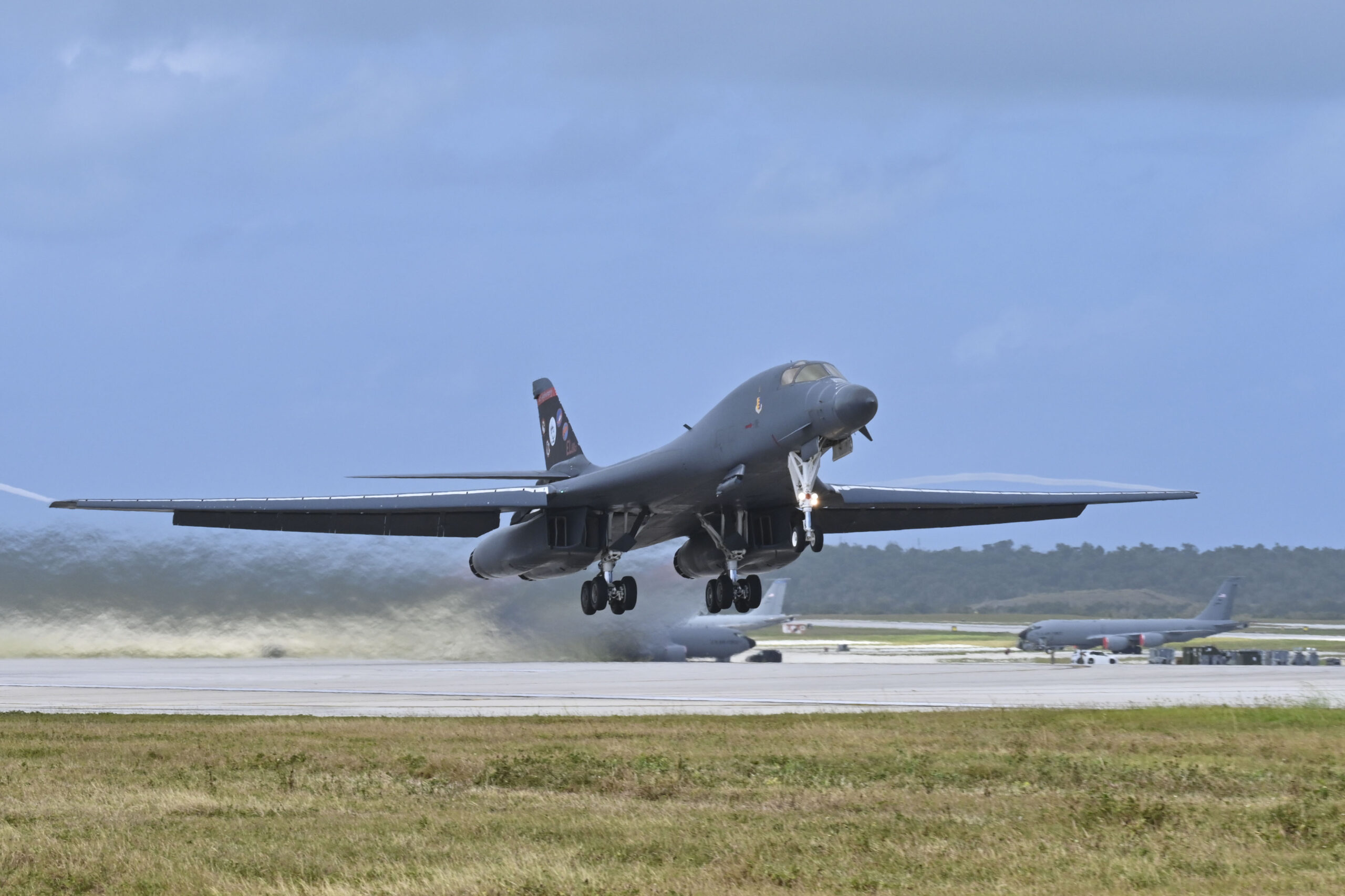
Military Sentinel, Washington – President Donald Trump warned on Wednesday, September 9, that the United States would “hit very hard” if Iran continues activity at Pickaxe Mountain, a heavily fortified underground nuclear site that U.S. intelligence has flagged for a construction surge this year, and that current American bunker-busting weapons may not be able to destroy.
Speaking at the Republican midterm convention in Dallas, Trump said U.S. intelligence had detected “a little activity” at the site and cautioned Iran “not to get cute,” adding that failing to heed the warning would mean Washington would “have to hit them very hard.”
Pickaxe Mountain known in Farsi as Kuh-e Kolang Gaz La sits roughly two kilometers south of Iran’s Natanz nuclear facility in Isfahan Province, which was damaged in earlier U.S. and Israeli strikes. The complex is a tunnel network bored beneath granite and is widely assessed to be intended for housing sensitive elements of Iran’s nuclear program, on the assumption that its depth would shield it from American ordnance.
Some assessments put parts of the facility at around 170 meters underground deeper than the 30,000-pound GBU-57 Massive Ordnance Penetrator (MOP), the weapon used during Operation Midnight Hammer, is believed capable of reaching.
A satellite imagery analysis published by the Center for Strategic and International Studies (CSIS) this week found more construction activity at the site in 2026 than in any prior year tracked by researchers. The analysis pointed to hardened tunnel portals, newly paved internal roads, reinforced access areas, and the removal or flattening of excavated rock spoil.
Notably, CSIS researchers said the imagery does not show equipment or security measures typically associated with active uranium enrichment meaning the current picture points to site preparation rather than confirmed enrichment activity. Against the underlying CSIS report directly, as figures here are drawn from secondary reporting on that analysis rather than the primary document itself.
According to a CNN report citing people familiar with the matter, the Defense Threat Reduction Agency authorized emergency preparations for a classified live-fire test at the Alternate Seismic Hardrock In Situ Test Site, an underground test facility at White Sands Missile Range in New Mexico, shortly before the U.S.-Iran conflict began. Sources told CNN the test was connected to the Iran war, though the network could not confirm whether it was ultimately carried out.
Separately, federal contracting records reportedly show approximately $1.2 million allocated for urgent work at the same test site one designed specifically to evaluate how weapons perform against deeply buried, hardened targets.
The U.S. Air Force is also developing a “Next Generation Penetrator” intended to eventually succeed the GBU-57. A prototype development contract for that program was awarded in September 2025, according to prior defense trade press reporting meaning any deep-strike capability specifically tailored to a target like Pickaxe Mountain remains, at best, in early development rather than fielded.
The gap between Trump’s public rhetoric and the Pentagon’s apparent technical limitations is the central tension here. If Pickaxe Mountain’s deepest sections genuinely sit beyond the reach of the GBU-57, a strike using current inventory would either fail to achieve a mission kill or would require a different approach altogether special operations, sabotage, or a weapon that does not yet exist in the force structure.
The fact that Pickaxe Mountain has not yet been struck, despite months of surveillance and rhetoric, is itself informative: it suggests Washington either lacks confidence in a conventional strike option or is deliberately holding this target in reserve as a signaling and pressure tool. Continued construction at the site and continued public threats from the White House make this one of the more consequential flashpoints to watch in the broader Iran conflict.

James Whitfield is a defense news writer at Military Sentinel, covering military technology, naval operations, military aviation, international security, and global defense developments. His work focuses on providing informative reporting, relevant context, and accessible explanations of modern military affairs and emerging defense technologies.
Contact: [email protected]